


Sergi Kapanadze about Bichvinta's country house: This step showed that Russia is not going to give up what it considers to be its own, and moreover, it is going to go further in relation to Abkhazia
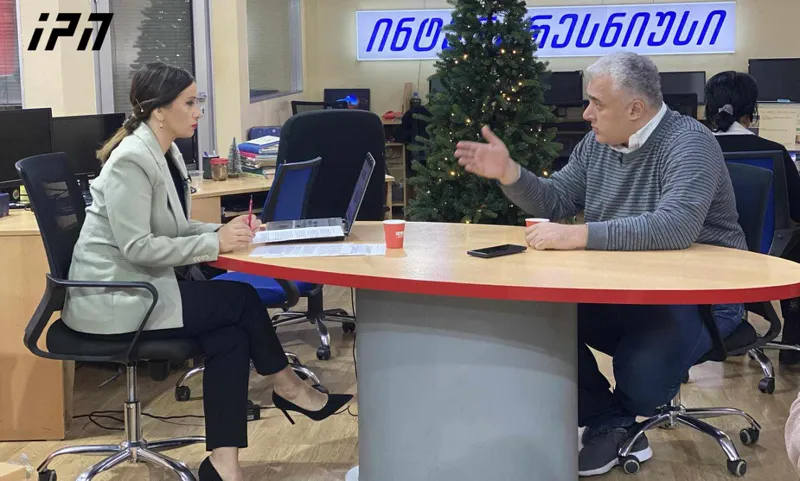
I think that the policy of "Georgian Dream" towards Russia is wrong and ultimately weakens the country, but in this policy you can find elements that have common sense, Sergi Kapanadze, the founder of "Grass" organization, told to "PalitraNews".
According to him, it is common sense not to join certain types of sanctions on the part of the European Union in relation to Russia, but it is not common sense not to join anything.
"I think that the policy of "Georgian Dream" towards Russia is wrong and ultimately weakens the country, but in this policy you can find elements that have common sense. For example, there are some types of non-joining sanctions against Russia from the European Union. There is common sense in this, why you might not join all the sanctions that are harmful to you. But, it is not common sense not to join anything. It is not common sense to have a strongly expressed anti-Ukrainian policy, to talk about NATO in this context, and to not share anything about Russia from the EU and your Western partner. It is not common sense to pass a resolution in the parliament and not mention Russia. There are many such examples, but some may have logic. It is difficult to name one word, but, in my opinion, this is a harmful policy. But here is another story, that for example, what "Georgian Dream" has done over the years is to eliminate insulting statements against Russia rhetorically and including in public speeches, which is not a bad thing, because when you insult someone, nothing brings dividends. for you. However, if they followed the same, for example, they stopped actions against Russia in some international forum, this is very bad. After the change of "Georgian Dream", the relations with Russia should change, but it should not go to extremes," said Sergi Kapanadze.
Sergi Kapanadze also evaluated the positioning of the Georgian government in the international arena and noted that one main task based on the actions of "Georgian Dream" - "staying in power in the 2024 elections" was highlighted.
"What has become apparent over the years is that, based on their actions and steps, the main task for "Georgian Dream" is to maintain the government in the 2024 elections. Therefore, everything they need for this is preferable to anything else, including international benefit or, in international relations, potential gain. That's why they risked their candidate status when they tried to introduce the so-called Russian law. That is why the candidate's status was jeopardized when the president was openly attacked while she was one of the staunchest supporters of the status quo. That's why they went against the media when Nika Gvaramia was arrested. That is, the important news for them is to bring these independent institutions under their control or to weaken them as much as possible, in order to keep the government. They managed to get the candidate status, I mean that Georgia got the candidate status not because of "Georgian Dream" reforms, but in spite of their steps. It was a geopolitical decision of the European Commission, and the countries later confirmed this decision," Kapanadze noted.
As for the issues related to Bichvinti country houses, Sergi Kapanadze said that this step showed that Russia is not going to give up what it already considers to be its own.
"This step showed that Russia is not going to give up what it considers to be its own, and what it believes belongs to it, and moreover, it is going to go further in relation to Abkhazia. In other words, that Russia has annexation intentions, it was also shown by this step. Apart from this step, there are many other things that Russia is trying to do, especially in terms of increasing Abkhazia's attitude towards Russia. Especially since it depends even more now. This is significant because Russia did this despite the great opposition of the Abkhaz population, it was one of the most controversial issues. If we can imagine, such people united against this, if they did not talk to each other, and the youth movement started, despite the opposition of the so-called municipalities, the so-called parliamentarians, they did it anyway and showed that the mood of the society is not greatly disturbed, because the country house that is being talked about was still de facto, and they did nothing to cause so much negativity," said Sergi Kapanadze while speaking in the program.










