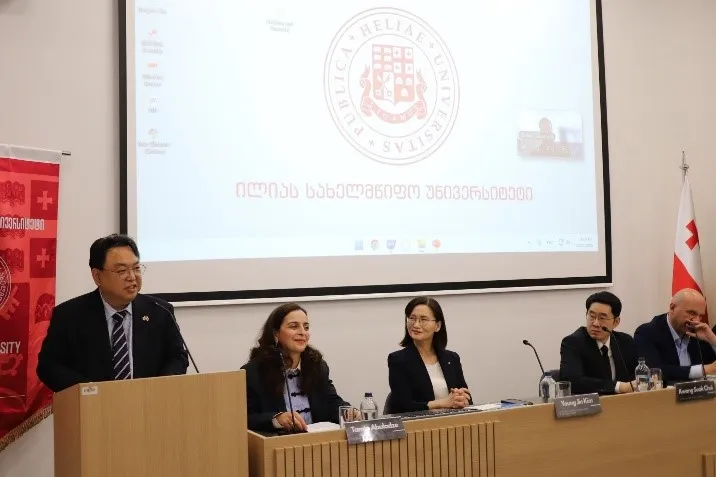
On February 6, “Media Voice” will present annual study entitled “Media Environment 2023: Challenges during Political Polarization and Crisis in Georgia”. The presentation will be made to representatives from the media industry, civil society, and academia
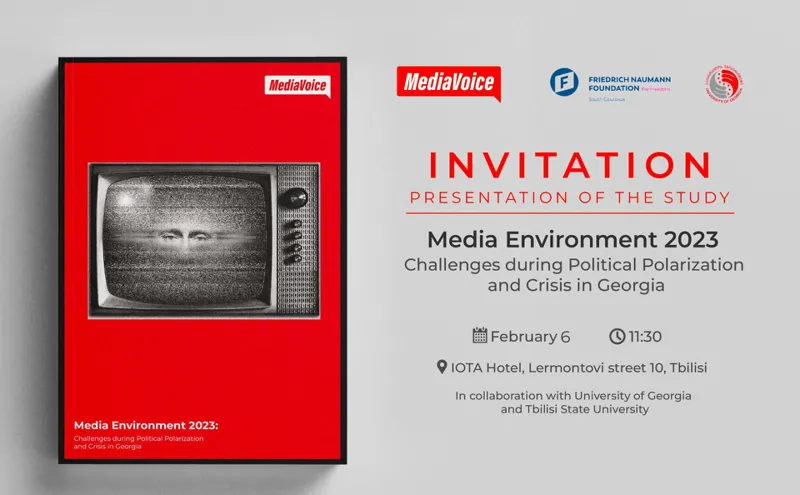
The study highlights the impact of political polarization on the Georgian media, journalistic activities, and product quality and media credibility amid global and local challenges. It analyzes how the media manages to maintain institutional viability (e.g. financial sustainability, content production, relationships with sources and access to information) in the context of political polarization.
In doing so, it assesses the obstacles and support mechanisms in the media on the part of various actors (ruling and other political parties, the civil society sector and media consumers,etc.). The study highlights how the media operates under political polarization and how it copes with the challenges of Russian disinformation. Additionally, another facet of the research involves analyzing the role and transformation process of the media environment within the context of Georgia’s European integration.Observation of the media environment, similar to the previous year’s research, was based on the evaluation of the participants involved in the research (20 representatives of the 18 media outlets) and further comparative analysis. The study encompasses recommendations aimed at mitigating polarization, ensuring the safety of journalists, combatting Russian disinformation, and reinforcing solidarity within the media industry, among other areas.
The study is authored by a team of professors from Tbilisi State University and the University of Georgia.
Ernst-Peter Fischer, Ambassador of Germany to Georgia, will address the guests.
The study was conducted with the support of the Friedrich Naumann Foundation for Freedom South Caucasus Office.