


William Courtney: Georgian Dream has taken off its democratic mask - coordinated U.S. and European measures may have the greatest effect
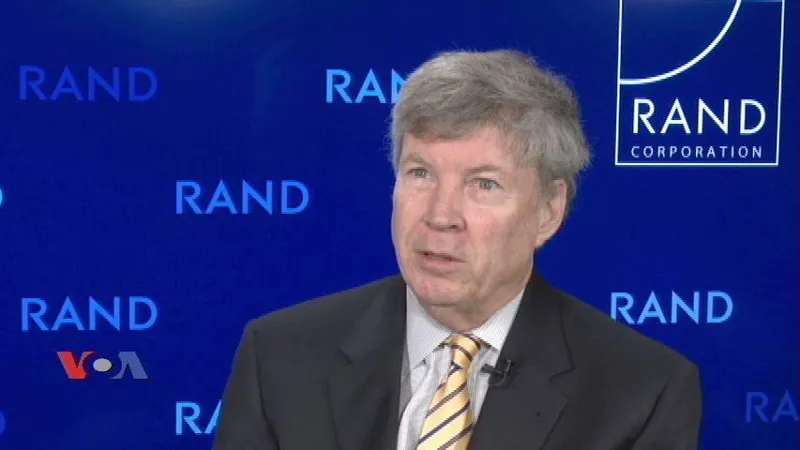
Coordinated U.S. and European measures may have the greatest effect, - William Courtney, the former US ambassador to Georgia, writes about this in the article "Georgian Epiphany".
“Georgian Dream, a coalition funded by shadowy billionaire Bidzina Ivanishvili who earned his fortune in Russia, has taken off its democratic mask. Its move to enact a repressive, Russian-style law has sparked a large public outcry. The West can help by sanctioning those who seek to rob Georgians of their freedom”, reads the article.
William Courtney notes that Georgia is of great importance for the interests of the USA.
“Georgia is important to U.S. interests. Thousands of Americans live in or visit Georgia yearly, and businesses and NGOs operate there. The U.S. seeks to continue cooperation to disrupt the flow of “critical components” to Russia and to address terrorism and nuclear smuggling. Transit through Georgia is a lifeline for Armenia. The U.S. is concerned about Russia’s plans for a naval base in occupied Abkhazia, a breakaway region of Georgia”, reads the article.
“Last month, Georgian Dream pushed through parliament a “foreign agent” law modeled on a repressive Russian law. A poll last fall found that only one-fourth of respondents supported Georgian Dream. It may seek to rig parliamentary elections in October. As in Russia, the government could abuse the law to block election monitors, ban political advertising, or disqualify opposition candidates.
Another new law may make Georgia a tax haven for dark money. A proposed law would dissolve an election advisory group of international and local experts. Like Russia, Georgian Dream could couple the foreign agent law with one that allows designation of “undesirable” organizations. In Russia, these laws have been employed to wipe out much of its independent civil society. Ivanishvili threatens that Saakashvili’s party will “strictly answer for all [its] crimes.” This hints at political show trials.
Large public protests in Tbilisi are met with water cannons and tear gas. Shevardnadze and Saakashvili left power peacefully, but Georgian Dream leaders seem less inclined to do so. Police use of lethal force could turn the protests into a second color revolution. Ukraine’s democracy was strengthened by two, the Orange and Maidan. Georgia’s could be as well.
For three decades, U.S.-Georgia relations prospered. In the early years, America provided large-scale Food for Peace aid. The West has long supported democratic and economic reforms in Georgia and independent civil society. Some 30,000Georgian troops fought and died alongside U.S. troops in Afghanistan and Iraq. In 2005, President George W. Bush visited Georgia and declared it a “beacon of liberty.”
A values-based partnership has lain at the core of U.S.-Georgian relations. But amid rising repression, values are diverging. In response, the U.S. has announced a more restrictive visa policy for those “responsible for suppressing civil society.”
On June 5, the US announced an initial wave of travel sanctions on Georgian officials involved with the foreign agent law and said more would come unless Georgia changed course. Further, targeted Western sanctions might raise the costs to Georgian Dream of deepening its authoritarian turn. The U.S. could specify anti-democratic Georgian leaders as specially designated nationals. The assets of such individuals are blocked, and U.S. persons are generally prohibited from dealing with them.
Coordinated U.S. and European measures may have the greatest effect. The leverage of the EU, with its accession privilege, is of special importance.
Georgia’s relations with the West will someday improve. Polls show that large majorities of Georgians back EU membership and see Russia as the greatest political threat. These views—and three decades of democratic progress and close Western ties—will influence Georgia’s future. So, too, in a negative way, will Russia’s occupation of one-fifth of Georgia’s territory.
The current wave of authoritarian rule will not deny Georgians their European and democratic futures. Nor will it deter the West from supporting these ambitions”, reads the article.










