Markéta Gregorová: The European Union must take much stricter measures towards Georgia
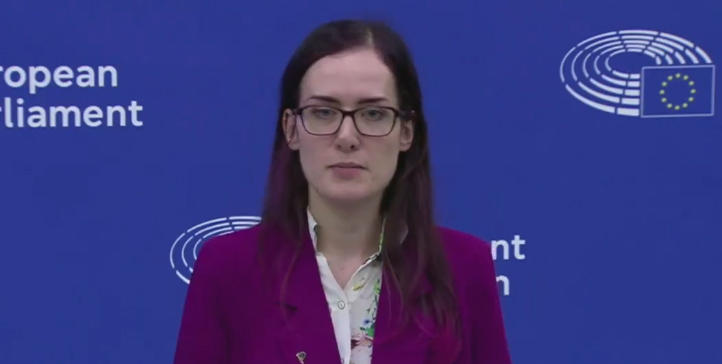
The European Union should take much stricter measures towards Georgia, MEP Markéta Gregorová stated in an interview with the Georgian service of "Voice of America."
She was commenting on the fact that the Parliamentary Assembly of the Council of Europe challenged the accreditation of the Georgian delegation—an unprecedented move regarding Georgia’s delegation.
"In my personal opinion, this was a weak political message. I would have preferred to see much stricter measures and coordinated sanctions against those who commit violence against Georgian citizens, those who rob them of their European future, or those who violate elections. However, considering how divided the Council of Europe is on this issue and the presence of forces that support the Russian path more—such as Slovakia and Hungary—this is at least some step. It is a step in support of the demonstrators and those who want a European future," the MEP said.
She also noted that there is frequent discussion in the European Parliament about political prisoners, including opposition-minded journalists and former President Mikheil Saakashvili.
"Regarding the elections, the European Parliament published its resolution a few weeks ago. Of course, some changes must be made by the ruling Georgian Dream party. For example, there should be reforms in the electoral commission. As I understand it, last year they changed the rules in such a way that Georgian Dream has a significant majority there. So, naturally, this needs to be reversed to ensure more oversight and transparency.
The elections should be conducted under the supervision of an independent entity. This could be observer missions, the OSCE, or even the UN—whatever is chosen. But it is clear that things cannot continue as they have until now, or we will end up in the same situation.
As for political prisoners, this is extremely concerning. We have discussed many political prisoners in the European Parliament, whether opposition journalists or former President Mikheil Saakashvili. But this has led nowhere. The only opposition journalist who was released from prison was Nika Gvaramia, who was pardoned by former President Salome Zurabishvili. In all other cases, Georgian Dream has done nothing to ease the situation of political prisoners. Now, as they have a majority and continue to arrest even more people, I am very pessimistic about their future. That is why I speak of the need for greater pressure and targeted sanctions from the EU," the MEP noted.
She also spoke about Georgia’s fifth president, Salome Zurabishvili, emphasizing that there was a window of opportunity while she was still in office.
"I completely agree with Salome Zurabishvili. Personally, I believe that while she was still in power, still the president, there was a window of opportunity because Georgia is not Belarus. Unfortunately, Belarus has never had democratic elections or institutions. Georgia, on the other hand, has built democratic institutions over the past 30 years. They cannot be destroyed overnight, and they can be protected—but this requires support from different actors and the people on the streets. Salome Zurabishvili could not have done this alone.
Therefore, I believe the EU had the chance to support this movement with targeted sanctions and a much stronger response—not by interfering but by maintaining the momentum that existed on the ground.
However, I think we missed this window of opportunity. No resolution will change that now. While I still strongly support sanctions, as I mentioned, I also believe that Georgian Dream has seized power. There is now a new president, and we will not have another window of opportunity until something dramatic changes. For example, if Russia loses the war in Ukraine, which would, of course, completely change the entire region," the MEP said.
She also commented on journalist Mzia Amaglobeli, saying that the government’s approach to such cases is highly symptomatic.
"The case of Mzia Amaglobeli indicates that Georgian Dream no longer has the European future it claimed to aspire to before the elections. I believe it is crucial to have information about her condition and to ensure her well-being. Even if there are political prisoners, there are basic rules: providing necessary medical treatment, healthcare, and all essential needs. If Georgian Dream cannot ensure this, it is positioning itself alongside Belarus and Russia. This is a very clear assessment and a very, very alarming situation," the MEP said.
She also discussed the EU’s decision to ban holders of Georgian diplomatic passports from traveling to Europe, strongly supporting the measure. According to her, it is crucial to exert pressure specifically on the government and members of parliament who may not realize where the situation is heading and where Georgian Dream is taking them.
"I don’t want my criticism to be misunderstood. I am very pleased that such resolutions are being adopted and that the Council is taking steps—because something is always better than nothing. I just want to see more action. That is why I am critical. However, of course, I believe these steps matter and send a certain message.
I am deeply engaged in events in Georgia and speak with many politicians, even some from Georgian Dream. Before the October elections, they believed that whatever happened with Georgian Dream would remain an internal matter and that Georgia’s European aspirations would remain untouched. However, if we make it clear to them that these aspirations are in serious jeopardy, that it will affect their passports, visa-free travel, and other similar privileges, then the silent majority within Georgia’s government might start to realize that they are truly drifting away from Europe and moving closer to Russia.
I think it is important to apply pressure specifically on the government and members of parliament who may not fully understand where the situation is headed and where Georgian Dream is leading them," the MEP said.