Shalva Papuashvili: Time has confirmed that the policy of sanctions was the result of trade between Western countries, where everyone tried to adjust sanctions to fit their country's interests and needs
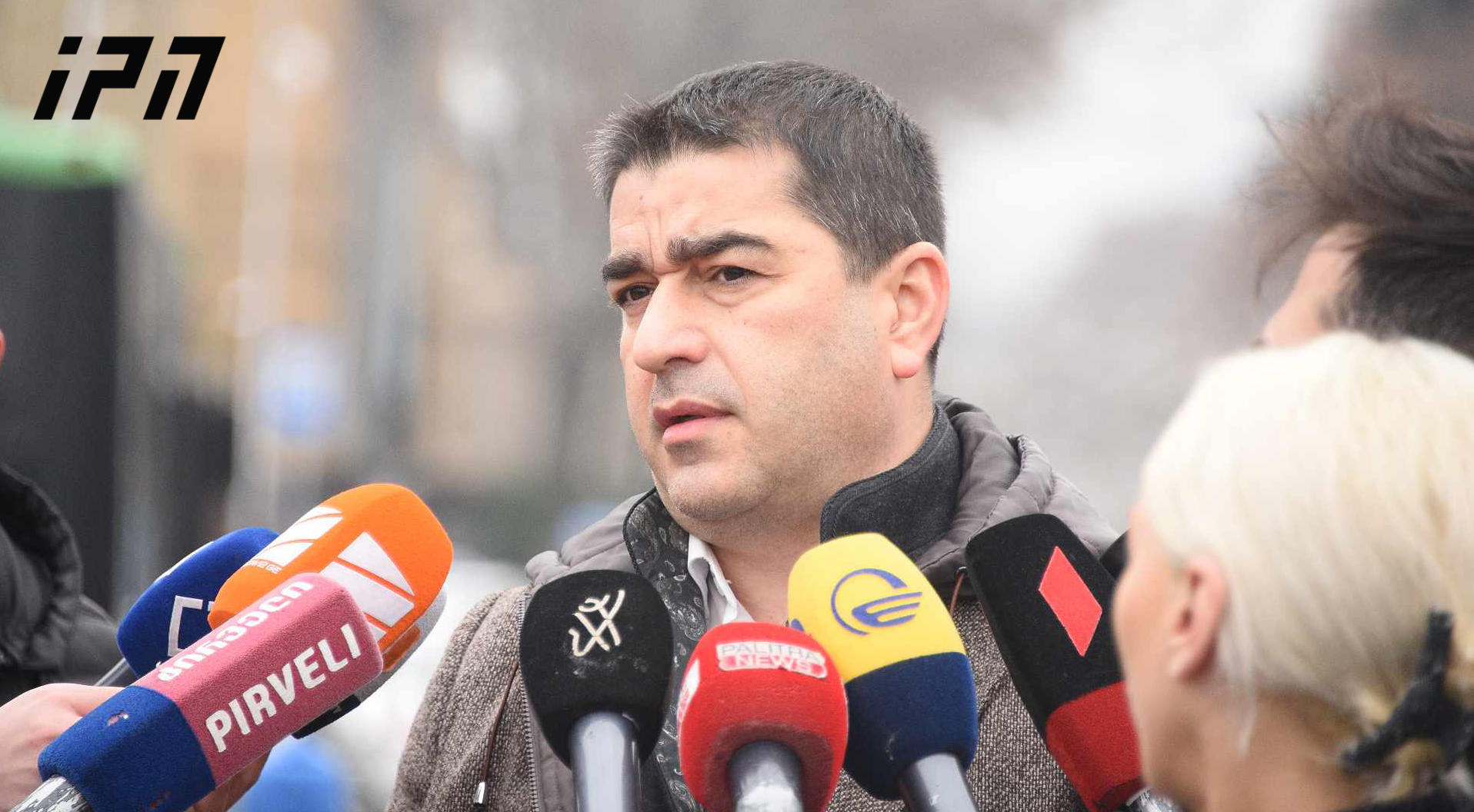
The Speaker of the Parliament of Georgia, Shalva Papuashvili, shares a post on social media recalling a meeting with the U.S. Ambassador on February 28, 2022, at the Parliament Palace.
According to Shalva Papuashvili, during the meeting, the then U.S. Ambassador, Kelly Degnan, told him that now was the moment when they had to choose "whether we are on the bright side or the dark side," which should primarily be reflected in joining sanctions against Russia.
The Speaker of the Parliament said that all attempts of the U.S. Ambassador were unsuccessful and that the Georgian government refused to engage in thoughtless and unreasonable escalation.
"This post is about Georgia's strategic partnership with the West, expectations, mistakes, and disappointments.
On the morning of February 24, 2022, the Russian Federation attacked Ukraine, and the previous glimmer of hope that this war might not start finally disappeared. As we remember, this intervention was preceded by several months of tension. As soon as the war began, the West naturally condemned Russian aggression, and on February 23-24, the first package of sanctions was approved.
On February 25, the Prime Minister of Georgia excluded joining Western sanctions imposed on Russia. This refusal, which in hindsight now seems reasonable and justified to everyone, caused a negative reaction from some Western governments, the Georgian radical opposition, and non-governmental organizations associated with them. The opposition and NGOs immediately launched an aggressive campaign against the government, labeling it as a 'pro-Russian government.' Anti-government demonstrations began in front of Parliament.
It is clear that the most influential Western country in Georgia is the United States, due to strategic partnership, historical relations, and areas of cooperation. At that time, U.S. Ambassador Kelly Degnan was not in Georgia but returned a few days after the war started and requested a meeting with me. On February 28, 2022, I met with her and her entourage at the Parliament Palace. The first thing she said was to express 'confusion and disappointment' that her government felt regarding the decision of the Georgian Prime Minister and the statement of February 25. According to her, now was the moment when we had to choose 'whether we are on the bright side or the dark side,' which should primarily be reflected in joining sanctions against Russia. The Ambassador emphasized this request, and her special assistant took detailed notes of my responses.
At that time, the scale and outcome of the war were still unclear. – 'Georgia, which has never agreed to impose Western sanctions on Russia, its content, duration, or any specifics, cannot sign such a blank sheet,' I replied. 'It is unknown what such a sharp move will bring to Georgia, what kind of retaliatory strike we might face, and what risks we might be dragged into. We are a specific country, Russian troops are on our territory, and we need to be cautious. We are neither a NATO nor an EU member, so neither NATO's nuclear umbrella nor the EU's economic mutual assistance obligation protects us.'
Along with this clear position, I also answered that the Georgian government had already taken certain steps, even in the banking sector, to prevent bypassing sanctions. I noted that on the international stage, in any format discussions and votes, Georgia supported Ukraine.
However, the U.S. Ambassador was categorical and unyielding. The only answer she wanted to hear was agreement to impose sanctions. Each time, she turned the question around, asking if we intended to join the sanctions, and after every refusal, she would signal her assistant to record it in her notes.
Later, time confirmed that the policy of sanctions was the result of trade between Western countries, where everyone tried to tailor the sanctions to fit their country's interests and needs. Specifically, considering the interests of the majority, the energy sector was largely excluded from the sanctions. Parallel to the war, Russian gas continued to flow to Europe through Ukraine. Lithuania became the leading exporter of wine to Russia, even though it does not produce wine itself.
I also explained to the U.S. Ambassador that what Ukraine needed at the time was not sanctions but military assistance—troops, weapons, and defense systems. We see that Zelensky is asking the Georgian government to send fighters, and perhaps the U.S. should have thought about this. In response to this suggestion, she immediately asked, 'Do you want to start a nuclear war?' to which I replied, 'You see, you are being cautious, but you don't like our caution. In reality, in the existing situation, any escalation and possible war for us is akin to a nuclear war.'
After our conversation, the Ambassador went to the Government Chancellery to speak with the Prime Minister. My conversation with her, as the newly elected chairman of the legislative body two months ago, seemed to be nothing more than a formality. The discussion with the Prime Minister was much more substantial and direct, beyond just the issue of imposing or not imposing economic sanctions.
All of the Ambassador's attempts were unsuccessful. The Georgian government refused to engage in thoughtless and unreasonable escalation. I don't know if this is a coincidence, but the day after these dramatic talks, the President of Ukraine, Zelensky, recalled the Georgian Ambassador, which further complicated the situation and added fuel to the fire of the ongoing anti-government protests in Tbilisi.
With the increase in anti-Russian sanctions, a well-coordinated campaign began to accuse the Georgian government of bypassing the sanctions. Foreign government representatives, Members of the European Parliament, the radical opposition, and NGOs allied with them were actively involved in this campaign.
The accusations were used to maintain constant pressure on the government. It took almost two years for us, through a high-level delegation that included coordinators of U.S., U.K., and EU sanctions, to officially achieve recognition that Georgia had never violated the sanctions regime. However, during these two years, the Georgian government had to endure baseless and malicious attacks aimed at damaging its reputation. Ultimately, opponents benefited from this as the reputational accusations were propagated by managed media and yielded corresponding results.
Despite everything, Georgia's decision not to join the sanctions did not increase the country's security risks and prevented further escalation of the process, which was based on several reasons, which, unlike harmful opponents, we understood well as a responsible government:
First, we were not participating in the process where the sanctions policy was being chosen and adopted. Therefore, we simply could not accept sanctions agreed upon by others without considering our national interests, what price we would have to pay, and what outcome we would face in response;
Second, imposing sanctions on Russia would reopen open conflict with Russia, leading to possible asymmetric retaliatory actions, which could cause the collapse of Georgia's economy;
And third, in case of military escalation, it would bring about the scale of destruction we have seen in Eastern Ukraine for the past three years, and what threat our statehood, territorial integrity, and sovereignty would face, we all see today with the discussion of possible options for ending the war in Ukraine.
Finally, in diplomacy, handshakes with carte blanche are given to weak and submissive countries, not to friends and partners, as we considered ourselves. Some were angered by the discovery that Georgia had its national interest and the ability to fight to protect it.
(By the way, these days, we are witnessing the clearest example of the struggle for national interests on the global stage...)
Last spring, I told this story to U.S. Assistant Secretary of State Jim O'Brien, who was visiting Georgia. I had only one question for him - should strategic partners behave this way?
The only excuse I heard was that at that time, all ambassadors were instructed to involve countries as much as possible in the policy against Russia, and perhaps it was not correct that Georgia's specific situation and potential consequences were not taken into account. – 'Yes, now you see this, after more than two years of war,' I replied, 'but what would have happened if we had blindly followed the then Ambassador without any guarantees or safety umbrella, where would we be now? Whose tank would be outside?' – The response was silence.
The moral of this story is that in difficult situations and real crises, no one else will do what you must do. The whole risk and responsibility are yours to bear, and if you fall into the pit, in the end, you may only be left with hopes of regret, concern, and sympathy.
When a dangerous regional conflict starts or when other threats arise, Georgia's expectation was that Western strategic partners would stand by us and protect us. Instead, some called for us to engage in conflict with Russia and contributed to internal disorder in our country. Before the war, considering the threat from Russia, the West urged us to show 'strategic patience,' asking us to stay in our shell and avoid provoking Russia. However, when the threat became real, instead of more caution, they called for thoughtless escalation.
We value strategic partnerships, but we also know that partnerships should not be about merely using each other, but should be based on mutual respect and consideration of each other's national interests. Fortunately, we showed foresight in time. Today, three years later, this lesson is clear to everyone except the desperate followers of the 'pseudo-liberal international,' who learn nothing from their own examples or others,' writes Shalva Papuashvili.