Tina Bokuchava: No one was informed about the decision to transfer Mikheil Saakashvili from the clinic; his lawyer was only just allowed to see him - this is a grave procedural violation
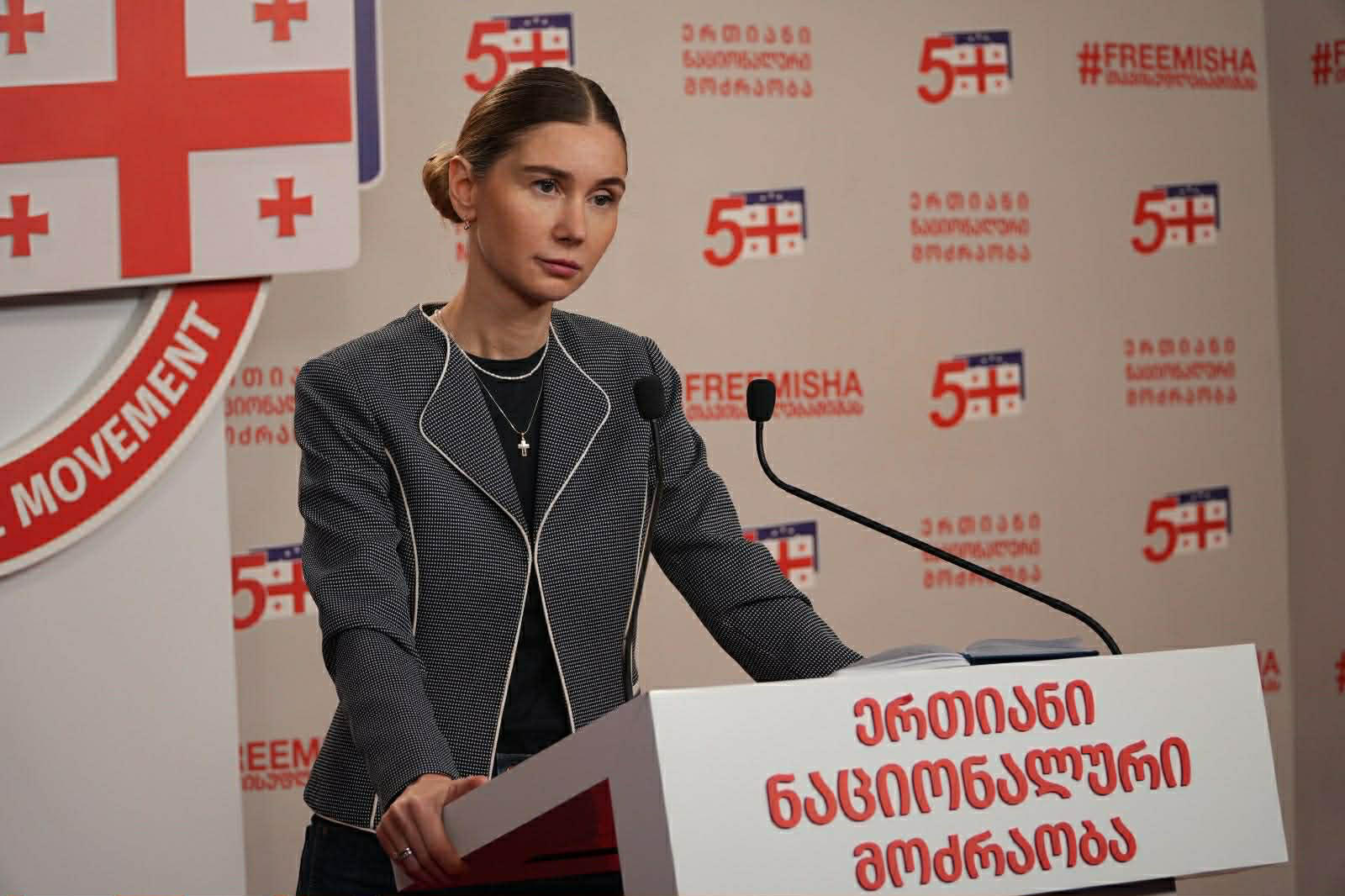
“Thirteen years later, Bidzina Ivanishvili’s main rival, both politically and personally, remains Mikheil Saakashvili — this is Ivanishvili’s desperate attempt to attract the attention of the West and the United States,” said Tina Bokuchava, Chair of the United National Movement, during a briefing in response to the return of Georgia’s third president, Mikheil Saakashvili, from the Vivamedi clinic to the Rustavi penitentiary facility.
According to Bokuchava, this decision is “part of the consolidation of dictatorship in the country.”
“This decision is based on two motives. First, thirteen years after the peaceful transfer of power, Ivanishvili’s main political and personal enemy remains Mikheil Saakashvili. This is because President Saakashvili is Vladimir Putin’s number one enemy — not only in Georgia but in the entire region, now together with President Zelenskyy. They both had the courage not to hand over their countries’ sovereignty to the enemy. They fought to preserve their nations’ statehood. This, of course, is the first reason behind such actions.
The second is Ivanishvili’s desperate attempt to draw the attention of the West, particularly the United States. You may recall how the U.S. Congress described Bidzina Ivanishvili as a ‘failed and incompetent dictator.’ Now, through the consolidation of dictatorship, Ivanishvili is trying to prove to the West that dictatorship in Georgia has been established — and that he himself has succeeded as a dictator. He is trying, at least in the rank of a dictator, to talk to the West and specifically to the U.S. What surprises me most is that a man who spent his life counting money cannot comprehend that, unlike Lukashenko, both his personal wealth and the finances of our country are entirely dependent on the West.
That’s why Ivanishvili will never be able to hold the kind of negotiating position with the West and the United States that Lukashenko has, or that Putin might have in the future when such talks take place. Therefore, our response to these desperate actions and the consolidation of dictatorship must be resistance — greater determination, unity, and consolidation. It must be a struggle for our country, for our nation’s victory, for truth — which is on our side — and for peace, which our country and our families so desperately need. We must also fight for the release of political prisoners, for the freedom of President Mikheil Saakashvili, and for returning this country to the path of Euro-Atlantic integration. Victory is undoubtedly ours, and victory will come — but it requires our united struggle to continue,” Bokuchava said.
She also noted that neither they, nor Saakashvili’s lawyers, nor his family were informed about the decision to transfer him back to prison.
“No one was informed about the decision to transfer him. Under what circumstances President Saakashvili was informed of this decision, or how the transfer took place — naturally, we have no information about that. His lawyer has only just been allowed to see him. This, of course, is a serious procedural violation — when neither the person’s lawyer nor family members are informed about such a decision. However, emphasizing procedural violations under a dictatorship would be inadequate on my part,” Bokuchava said.
When asked a related question, Bokuchava added that “it would have been much safer for Saakashvili to remain under medical supervision.”
“You know that Saakashvili’s health has been severely affected since his 50-day hunger strike, and you are also aware — as confirmed by international reports — that he was a victim of poisoning by the regime. Therefore, naturally, it would have been much safer for Saakashvili to remain under the supervision of medical personnel,” Bokuchava stated.
For context, yesterday Georgia’s third president, Mikheil Saakashvili, was transferred from the Vivamedi clinic back to Penitentiary Establishment No. 12, where he will continue serving his sentence under the general regime.
The Penitentiary Service explained that since Saakashvili’s “health condition is satisfactory and he no longer requires inpatient treatment,” he was discharged from the clinic.