Teona Akubardia: With the plan to build the ‘Government City,’ the authorities are avoiding protests just as they want to make extra money - As for the construction of a customs terminal beyond the Enguri River - this increases suspicions of secret deals with Moscow
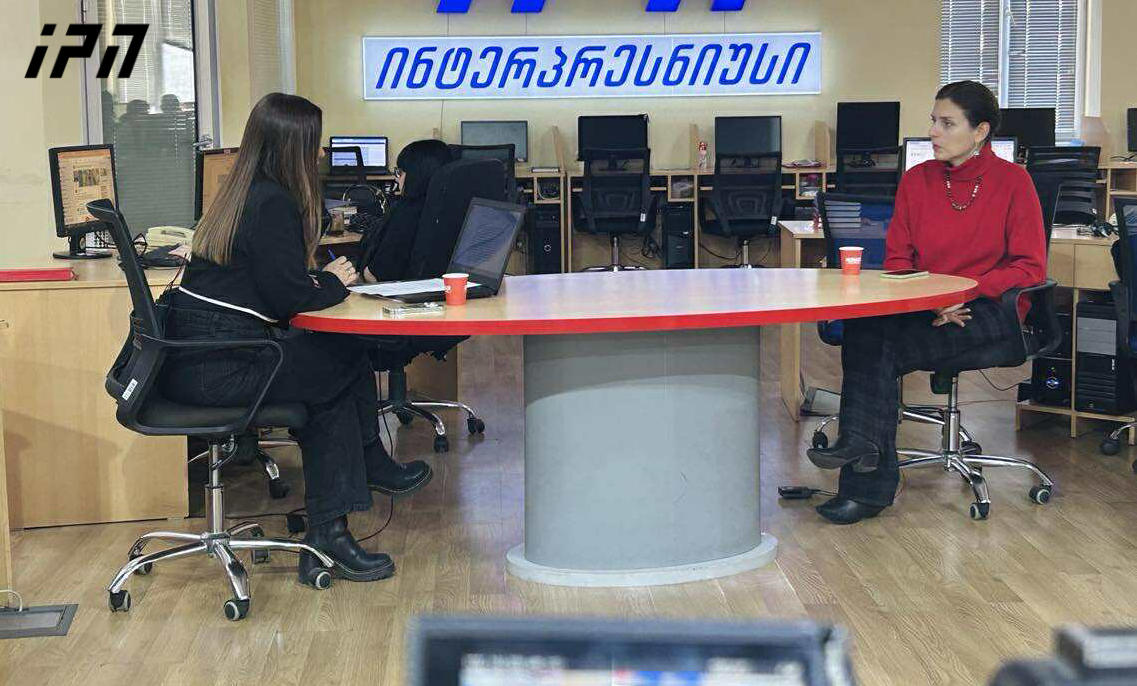
The construction of a customs terminal beyond the Enguri River raises the likelihood of secret deals between Moscow and Tbilisi, opposition politician Teona Akubardia stated on the PalitraNews program “Day’s Newsroom” regarding the construction of the terminal in the Gali district by the occupation regime.
As Akubardia noted, under Bidzina Ivanishvili’s rule, the threat to Georgia’s territorial integrity is growing, and the Kremlin will do everything to bring Georgia not only de facto but also de jure under its influence.
"The issue is that, if the border of Abkhazia exists at the Psou River, they want to move this border to the Enguri River, in the Gali district. The general director himself, who talks about this hub, says that the terminal was built with Russian and Abkhaz private investment, and that it is needed by their strategic partner, Russia, to operate under a sanctions-avoidance regime. He also says that cargo could potentially come from Iran, India, and also mentions Armenia and Azerbaijan, and that Georgian citizens will not be able to enter there with trailers," Akubardia said.
When asked what gives her reason to suspect that Russia has Tbilisi’s consent for the construction of the customs terminal on Abkhazian territory—a suspicion she also expressed in a statement on social media—Akubardia said that the central government’s silence on the issue is the primary reason.
"First of all, their silence, including regarding this terminal, which was only broken yesterday by Irakli Kobakhidze in response to a journalist’s question. Second, what gives me reason to say this is that the support for Georgia’s territorial integrity came from our Western partners, and the policy of non-recognition of these occupied territories was based on their support. Today, international partners, the West, are completely isolated; they have made it so that Georgia is distanced from this Western space and harmed, including its non-recognition policy and territorial integrity.
Also, when your country is officially blamed—by a non-legitimate parliament, based on the report of the Gulukian Betrayal Commission—for starting a war, you effectively open the door to the pressure that Russia has been exerting on Georgia in Geneva since the 2008 war, regarding the agreement on the non-resumption of hostilities. We were supposed to take the obligation not to attack South Ossetia and Abkhazia—not Russia, which is actually a party in this war. Russia has been demanding this for a long time. We unilaterally took the international obligation not to regain the territories by force, but Russia says this must be formalized with Abkhazia and South Ossetia.
When you no longer have Western partners, when there is no unity in society, and the country is weakened, and Russia is given another lever to justify its version of starting the war, you turn a blind eye to the construction of a terminal in Gali and make all of Georgia a Russian-influenced object. This, of course, further increases the likelihood of secret deals, especially as we have seen with open flights. Therefore, the threat to territorial integrity grows even more under Ivanishvili’s regime, and the Kremlin will certainly increase pressure to ultimately bring all of this about while making money and bringing a divided Georgia under its sphere of influence, not just de facto but also de jure. The main thing that prevents this is public resistance,"* Akubardia stated.
Regarding other issues, the politician also commented on the initiative to build the “Government City” on the former Arsenal Hill in Chugureti, Tbilisi, noting that the authorities are following in the footsteps of the National Movement while avoiding protests that even repressive laws could not suppress.
"I remember a similar initiative during the National Movement, like the parliament built in Kutaisi, as well as the government building. So there’s nothing new; they are following the same path as the National Movement, even though they deceive people into thinking they are fighting the National Movement. This is connected to the comfort they could not create with the repressive laws they passed, including yesterday. The authorities avoid protesters just as they want to make extra money. When Kobakhidze says in the name of education reform that some of the university buildings on Chavchavadze Avenue should be sold, this is obviously about money, just as selling the historical parliament building will bring them a not insignificant sum.
So, on one hand, it’s greed and money, and on the other, it’s avoidance of protests that they could not control, even though they are completely outside the constitutional space. This is a new page of authoritarianism, which makes them similar, in some ways, to the National Movement. A one-party parliament cannot operate well on Rustaveli Avenue, so will it work better elsewhere?! It’s clear that this is an attempt to make money and remove symbols that historically belonged to Georgia," Akubardia said.