Nino Dolidze: NGOs had to leave Georgia for other countries - this is an alternative way for them to survive - The legislative changes over the past year represent a systemic deterioration of the law
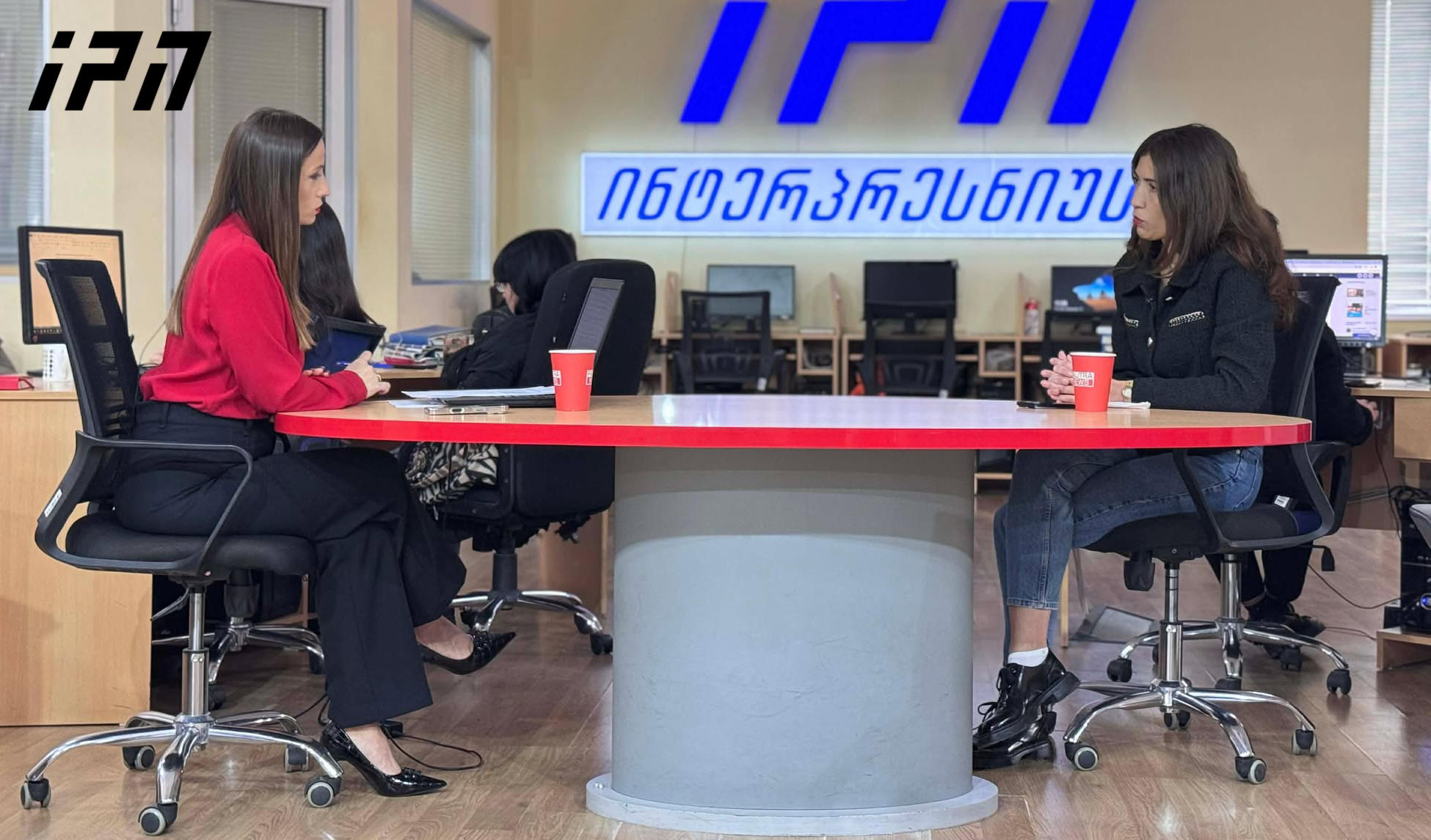
“I don’t think ‘Georgian Dream’ is strong today. They claim that this protest doesn’t bother them, but in reality, every legislative change has been taken against it. It worries them a lot. Presumably, ‘Georgian Dream’ did not expect such a prolonged protest. Now they are trying, in some way, to suppress this protest,” Nino Dolidze, former head of Transparency International Georgia, said during her appearance on PalitraNews’ program Day’s Newsroom, assessing the legislative changes made over the past year.
According to her, “Georgian Dream” wants it very much, but the protest is not slowing down and is not coming to an end.
“Several years ago, Georgia took multiple steps toward democratic development, toward European integration. Now what we see is that we have moved not just back to previous levels, but much further behind. Overall, it is a very harsh reality, both in terms of legislation and its implementation. Ultimately, the changes implemented by ‘Georgian Dream’ were directed against freedom of speech and expression and subsequently against all groups that express or expressed differing opinions about ‘Georgian Dream.’ This started with civil society organizations and independent media. The ‘Russian law’ was precisely why it became a crossroads—whether Georgia was moving toward democracy or authoritarianism. This was the first law where ‘Georgian Dream’ said, ‘Yes, we are not democrats and have fully shifted toward authoritarianism.’ After that, we see a complete deterioration of legislation. Over the past year, nothing can compare. Freedom of expression has worsened. First, there were increases in fines, then people were detained for wearing masks or blocking roads, and restrictions were introduced that conflict with international standards regarding freedom of expression and assembly.
“At the same time, legislation for public officials worsened. Last year, we saw public officials openly express support for European integration, and about 700 people were dismissed. Then there was legislative deterioration in the media sector, when media outlets cannot receive foreign funding. Similar steps have been taken to limit political parties. This is a systemic deterioration. It is not the deterioration of a single article; it is a systemic deterioration of free thought in the country—whether in civil society, media, public sector, or political parties—all actors who actually create democracy in the country.
“The most recent changes directly conflict with Georgia’s Constitution, because, under the Constitution, Georgian citizens have the right to express their protest or opinions freely, without any warnings. We have freedom of assembly and expression. The changes recently adopted are contradictory and absurd. You cannot find an international parallel. How can someone be restricted for standing on a sidewalk? And what does restriction of movement even mean? This protest is precisely about human rights, and no one is blocking anyone’s movement. A few weeks ago, OSCE/ODIHR also assessed, even before these changes, how much the legislation on freedom of expression has worsened in Georgia, and there are calls for these laws to be repealed. This is absolutely inconsistent with international standards. The state has a positive obligation to facilitate citizen participation in public life, and assemblies and demonstrations are a key part of this. Instead of fulfilling this positive obligation, the state is doing everything to suppress freedom of expression.
“‘Georgian Dream’ claims that this protest doesn’t bother them, but in reality, every legislative change has been made against it. It worries them greatly. Presumably, ‘Georgian Dream’ did not expect such prolonged protest from Georgian citizens. They thought it would last only a few weeks or months. Now they are trying by all means to suppress this protest. But at the same time, we see that citizens constantly seek alternative ways and always manage to…
“In my view, the protest is not coming to an end. ‘Georgian Dream’ wants it very much, but in my opinion, the protest is not slowing down. We see waves. In summer, relatively fewer people participated; in autumn, it increased. Notably, large demonstrations started happening on Saturdays. Georgian citizens’ attitudes toward ‘Georgian Dream’ have not changed. They see that the country is in crisis and want Georgia to return to democratic and European development. Every day, not everyone can express this, but there is a constant group, and on significant dates, people come out,” Dolidze said.
She also stated that ‘Georgian Dream’ remains internationally isolated and faces legitimacy issues.
“I don’t think ‘Georgian Dream’ is strong today, and many things indicate this. They are still internationally isolated and face legitimacy problems. Also, the corrupt schemes we saw, the internal turmoil within their team—all this makes me believe that ‘Georgian Dream’ is not strong today. They may try to project strength, but I don’t think so. On the contrary, I think these processes have revealed ‘Georgian Dream’s’ true face not only to us but also to their supporters. If until the parliamentary elections last year, some people still thought that ‘Georgian Dream’ was heading peacefully toward Europe and was a democratic force, today no one doubts internationally that ‘Georgian Dream’ is an authoritarian regime and no one questions their foreign policy. Yes, we went through a difficult period, but it is now clear who this force is, what their goals are, and what they plan for the future,” Dolidze said.
She also spoke about the work of NGOs, noting that under the new laws, they face problems in obtaining funding. According to Dolidze, the most chilling effect came from the “Law on Grants.”
“These three laws collectively affected civil society organizations. I would say that the ‘Russian law’ was certainly not intimidating for us. No major organization refused to register, saying we will continue. In the case of Ivanishvili’s FARA, we said this does not concern us. The most chilling effect was the ‘Law on Grants’ because without government approval, you cannot receive a grant. We all know that ‘Georgian Dream’ does not give grants to organizations it considers critically opposed to them. All of this, of course, had an impact, and most of all, the ‘Law on Grants.’ There were also issues with accounts being frozen. Organizations were accused for buying Georgian flags or masks, which is why their accounts were frozen. Clearly, all of this had an impact. NGOs have financial problems, but nonetheless, Georgian NGOs continue working, even with minimal resources, often voluntarily.
“‘Georgian Dream’ has become similar to the Lukashenko and Putin regimes, where civil society organizations cannot function locally, and people working on human rights or other issues had to leave the country because they could no longer work on-site. This is an alternative way for NGOs to survive. I don’t have information regarding Armenia, but I welcome any attempt to help civil society organizations survive. ‘Georgian Dream’ will obviously try to work with Armenia or other countries on this, but I hope that, just as Georgia was once a refuge for all human rights defenders in need, now Georgian citizens who defend human rights will be accommodated in other countries. A time will come when everyone will return to Georgia. It is unimaginable to me that Georgian NGOs have to think about how to survive abroad. Georgia used to be a refuge, and now we find ourselves in an unimaginable reality,” Dolidze said.
Regarding Dolidze’s assessment of Parliament Speaker Shalva Papuashvili’s statement that the NGO system is “the greatest evil the West has created in Eastern European democracies,” she said it is regrettable that a legislator is occupied with persecuting civil society organizations.
“As for Shalva Papuashvili, as far as I know, he himself worked in an international organization, and perhaps he should start questioning himself whether he represented any country as an agent. It is unfortunate that a legislator is focused on persecuting civil society organizations.
“Civil society and the NGO sector are a crucial component of governance in a democratic world. Georgia was indeed distinguished in this regard. It is an integral part of democracy when people can form associations and work on issues. Today, all of this is effectively abolished. ‘Georgian Dream’ attacks everyone—they say everyone is bad. Civil society is bad, media is bad, embassies are bad, European countries are bad, America is bad. Everyone is bad if they have a differing opinion. This is absolutely absurd and makes no sense,” Nino Dolidze said.