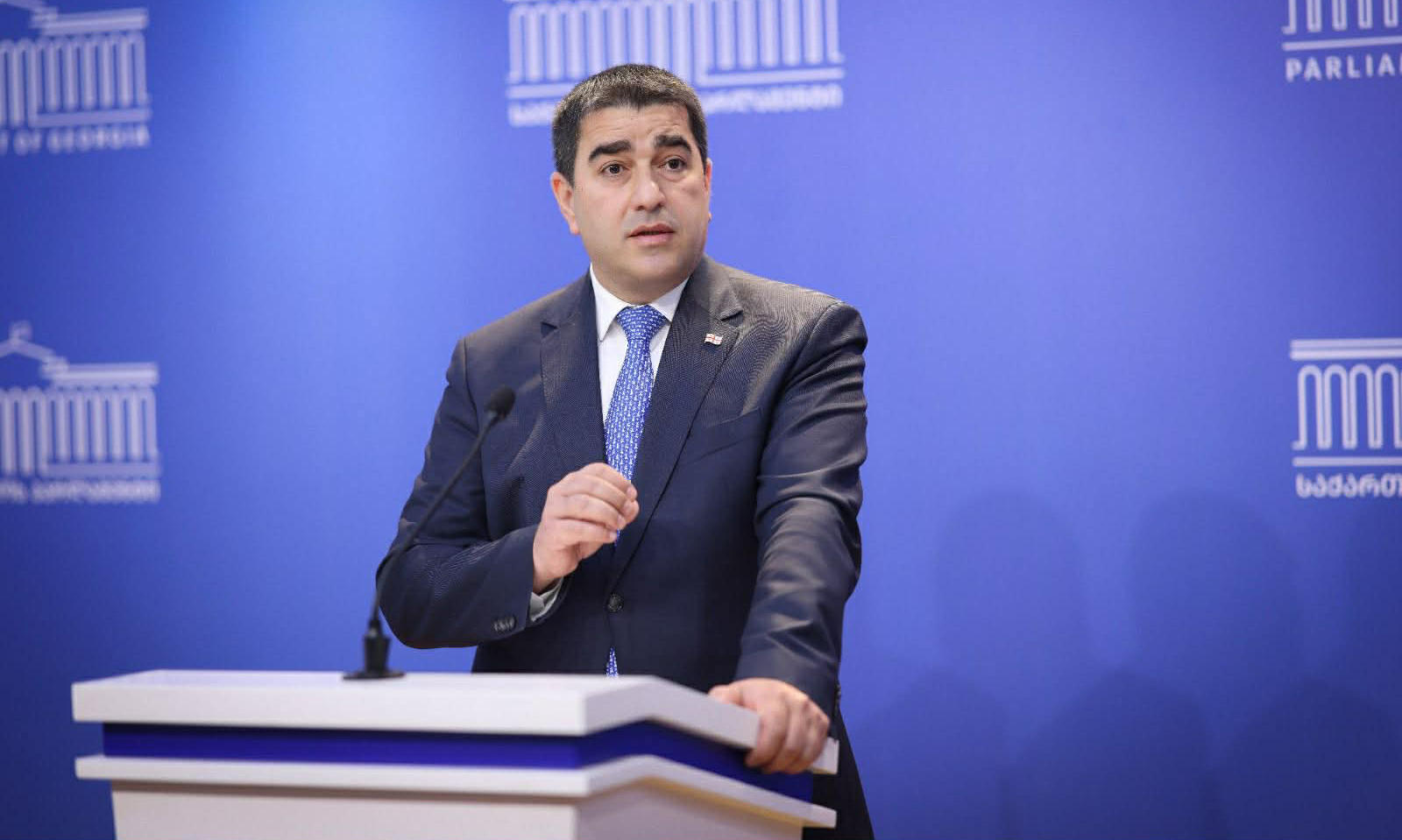
“Georgian Dream” has submitted an official complaint to the BBC. The relevant statement was made by the Speaker of Parliament, Shalva Papuashvili.
According to him, the ruling team is demanding a public apology from the BBC and the removal of the materials.
As Papuashvili explained, the complaint is fully based on the BBC’s Editorial Guidelines, the UK Office of Communications (Ofcom) Broadcasting Code, as well as the case law of the European Court of Human Rights, which clearly establishes that when disseminating serious allegations, a journalist bears the highest obligation of accuracy, verification, and fairness.
He added that if the BBC does not correct the violation itself, the next step will be to apply to the UK Office of Communications (Ofcom), and if the violation is still not remedied there, they will then turn to UK courts.
“As you are aware, on December 1, 2025, the BBC, a television broadcaster funded from public sources in the United Kingdom, published a film and other related publications containing grave, harmful, and categorical allegations, including claims that the Georgian authorities allegedly used a First World War-era chemical weapon, ‘camite.’ These allegations are false, unsubstantiated, and defamatory.
The absurdity of these accusations, as well as the nature and scale of the violations and bad-faith actions, lead us to believe that we are dealing with a political campaign aimed at damaging the reputation of the Georgian authorities through a pre-determined false narrative. The reliability of the materials used and the manner in which they were presented to the public clearly demonstrate that the publications seek to shape public perception and a political narrative, rather than to inform the audience through accurate, balanced, and properly sourced journalism. This false narrative was subsequently disseminated and amplified by numerous high-ranking foreign officials and domestic political actors, and is being used as a politically motivated instrument of attack against the ruling political party of Georgia, ‘Georgian Dream.’
Accordingly, in line with the intention we announced on the very day the defamatory BBC publications were released, yesterday we officially submitted a complaint to the BBC on behalf of the party ‘Georgian Dream - Democratic Georgia.’
As for the substantiation of the complaint and our demands:
The film and accompanying publications contain serious and unverified allegations that violate the BBC’s own editorial standards, the Ofcom Broadcasting Code, and the fundamental principles of responsible journalism.
First and foremost, there is a gross violation of the obligation of accuracy. In its publications, the BBC presented as fact the claim that Georgian law enforcement agencies used the chemical substance ‘camite’ during protest rallies. This claim is not based on any verified, independent, or credible source. On the contrary, investigations have confirmed that this substance has never been used by the Ministry of Internal Affairs, nor has it ever been in its possession.
In its publications, the BBC also inaccurately portrays events as if participants in the assemblies did not engage in violent actions against law enforcement agencies, yet law enforcement nevertheless dispersed the gatherings.
In addition, without credible evidence, the BBC falsely asserts that the Honorary Chairman of ‘Georgian Dream,’ Bidzina Ivanishvili, was involved in the decision-making process related to the dispersal of violent assemblies held in November-December 2024.
The second major issue concerns the violation of impartiality. The program develops a clearly one-sided narrative and portrays the Georgian authorities as organizers of violence, ‘pro-Russian,’ ‘aligned with Russian interests,’ and so on. At the same time, the government’s position, official explanations by law enforcement agencies, and the context necessary for an objective analysis of events are ignored.
The third issue relates to the disregard for fairness and the right of reply. The BBC contacted the Georgian authorities regarding these serious allegations only a few days before broadcast. This practice contradicts the BBC’s own editorial rules, which require genuine communication with adequate timeframes in cases involving serious and reputationally damaging allegations.
It is also important to note elements of defamation. The program uses statements from specific individuals whose credibility, conflicts of interest, and background are not disclosed to the audience. As a result, viewers receive a distorted picture in which assumptions and hypotheses are presented as established facts.
The complaint is fully based on the BBC’s Editorial Guidelines, the Ofcom Broadcasting Code, and the practice of the European Court of Human Rights, which clearly establishes that when disseminating serious allegations, journalists bear the highest duty of accuracy, verification, and fairness.
In our complaint, we demand:
-
The removal of the film and related materials from the relevant platforms;
-
A public and clear apology from the BBC;
-
An apology for making assumptions and claims without factual basis that Georgian law enforcement agencies used ‘camite’;
-
An apology for disseminating unfounded information suggesting that Georgian law enforcement agencies used physical force despite the fact that assembly participants were not attacking them;
-
An apology for unfounded claims that the interests of ‘Georgian Dream’ align with Russian interests;
-
An apology for disseminating unfounded information suggesting that the Honorary Chairman of ‘Georgian Dream’ participated in decisions to disperse violent assemblies.
I would also like to clarify that under UK law, there is an established sequence for appeals, according to which the affected party must first address the media outlet itself, which we did through our complaint yesterday.
If the BBC does not correct the violation itself, the next step will be to apply to the UK Office of Communications (Ofcom). If the violation is not remedied there either, we will then have the opportunity to turn to UK courts.
We will use all legal means to expose this disgraceful campaign against Georgia, including the right to apply to the European Court of Human Rights,” Papuashvili stated.