Irakli Pavlenishvili on the Detention of Ilia Ghudushauri: Even in the "Communist" Party there were constant internal purges and infighting - this is how authoritarian regimes work; if corruption were truly eradicated, Ivanishvili’s regime would collapse
According to Irakli Pavlenishvili, a member of the United National Movement, the detention of another former high-ranking official - former Deputy Minister of Health Ilia Ghudushauri - should be viewed in the context of how authoritarian systems function.
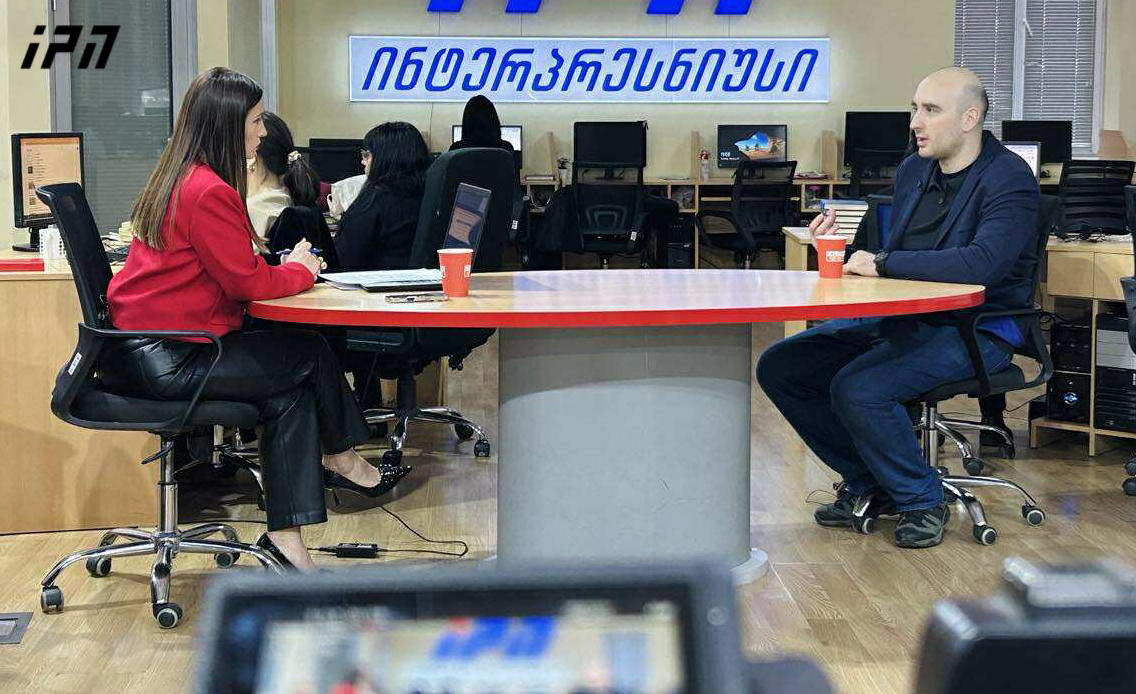
Speaking on PalitraNews program “Day’s Newsroom”, Pavlenishvili said that even the Bolshevik “Communist” Party, which he described as far more organized and pragmatic, was characterized by constant internal purges, persecution, and infighting.
“Authoritarian regimes work this way - there has never been an authoritarian regime that functioned differently,” Pavlenishvili said.
According to him, Bidzina Ivanishvili has technically transferred power to the “Irakli Kobakhidze clan,” whose members prefer to dominate all spheres themselves and eliminate competitors across various sectors.
Pavlenishvili argued that the country is governed through oligarchic and corrupt schemes, and that if corruption were genuinely eliminated, such a systemic change would not be survivable for Georgian Dream itself.
“Regimes of this type constantly generate crises - both outside and inside the party, inside and outside the country. They cannot operate under normal, constructive conditions. That’s why they always need an image of an enemy, someone to blame, and new targets for repression.
“In authoritarian systems, there is a leader. Beneath the leader are clans and various groups that are in constant conflict with one another.”
According to Pavlenishvili, Ivanishvili has handed technical control to the Kobakhidze clan. What is visible on the surface, he said, is that certain figures had already accumulated vast amounts of money. The opposition, he added, had long spoken about corruption schemes Ivanishvili was likely aware of, but the scale of money involved may have exceeded even his knowledge.
“Simply put, money was being skimmed from Ivanishvili. The system works like this: Ivanishvili is the country’s chief accountant. He has appropriated the Georgian state and runs it like ‘LLC Georgia.’ He delegated different sectors to different individuals - a group of feudal elites that became deeply entrenched. They gained enormous financial resources and contacts.
“They may have even established channels with Russia that were unacceptable to Ivanishvili, because he understands that monopoly is needed - both over financial power and relations with Russia. Figures like Farkhaladze and Liluaashvili established such extensive contacts and accumulated so much hidden wealth that they became dangerous to Ivanishvili. Drawing on instincts shaped in 1990s Russia, he sees a threat and reacts accordingly.”
Pavlenishvili added that Kobakhidze and his clan do not possess the same level of financial resources or connections that would pose a comparable threat to Ivanishvili. Their rhetoric, he said, has also been more acceptable to him. At the same time, the Kobakhidze clan benefits from the ongoing purge, as they prefer to monopolize power and remove competitors across different sectors.
“The old clan will collapse and disintegrate, and all resources and leverage will pass into the hands of the Kobakhidze clan.”
According to Pavlenishvili, if corruption were truly eradicated in Georgia, Ivanishvili’s regime would collapse, because it is an oligarchic system built on shadow schemes.
“The country has become a hub for call-center scams, skimming money from tenders is part of the system, and if corruption is eliminated, Georgian Dream would not survive such systemic change. The regime is welded together by a ‘street-smart Georgian’ logic,” he said.
Addressing measures taken against political opposition, including legal actions, Pavlenishvili said that Ivanishvili has no tools left other than repression and political persecution.
He argued that Georgian Dream is suffering from a legitimacy crisis and is resorting to aggressive repressive actions precisely to conceal that crisis.
“The regime has no legitimacy. When we talk about an illegitimate government, this is reflected in concrete political realities. Government propaganda has convinced part of society that someone can artificially create a crisis in the country. But just as artificially created revolutions do not exist, it is impossible to artificially create a legitimacy crisis - no matter how much the opposition might want it.
“When you take steps completely contrary to the country’s foreign policy course, when you fight constitutionally guaranteed civil rights, and when elections become a mere formality - which society has clearly witnessed over the past year and a half - you have a legitimacy crisis. And it is precisely to cover up this crisis that you resort to aggressive repression.”
Pavlenishvili recalled Ivanishvili’s behavior prior to 2020, when he was more inclined toward compromise.
“What has changed? Ivanishvili was not more benevolent then, nor has he suddenly become more malicious now. Back then, they still operated within some boundaries of legitimacy, which is why they were less aggressive. Today they are aggressive because they are operating outside those boundaries,” Pavlenishvili concluded.