GTU professors, lecturers, and students demand that authorities halt the merger process with Tbilisi State University and hold public discussions prior to parliamentary hearings
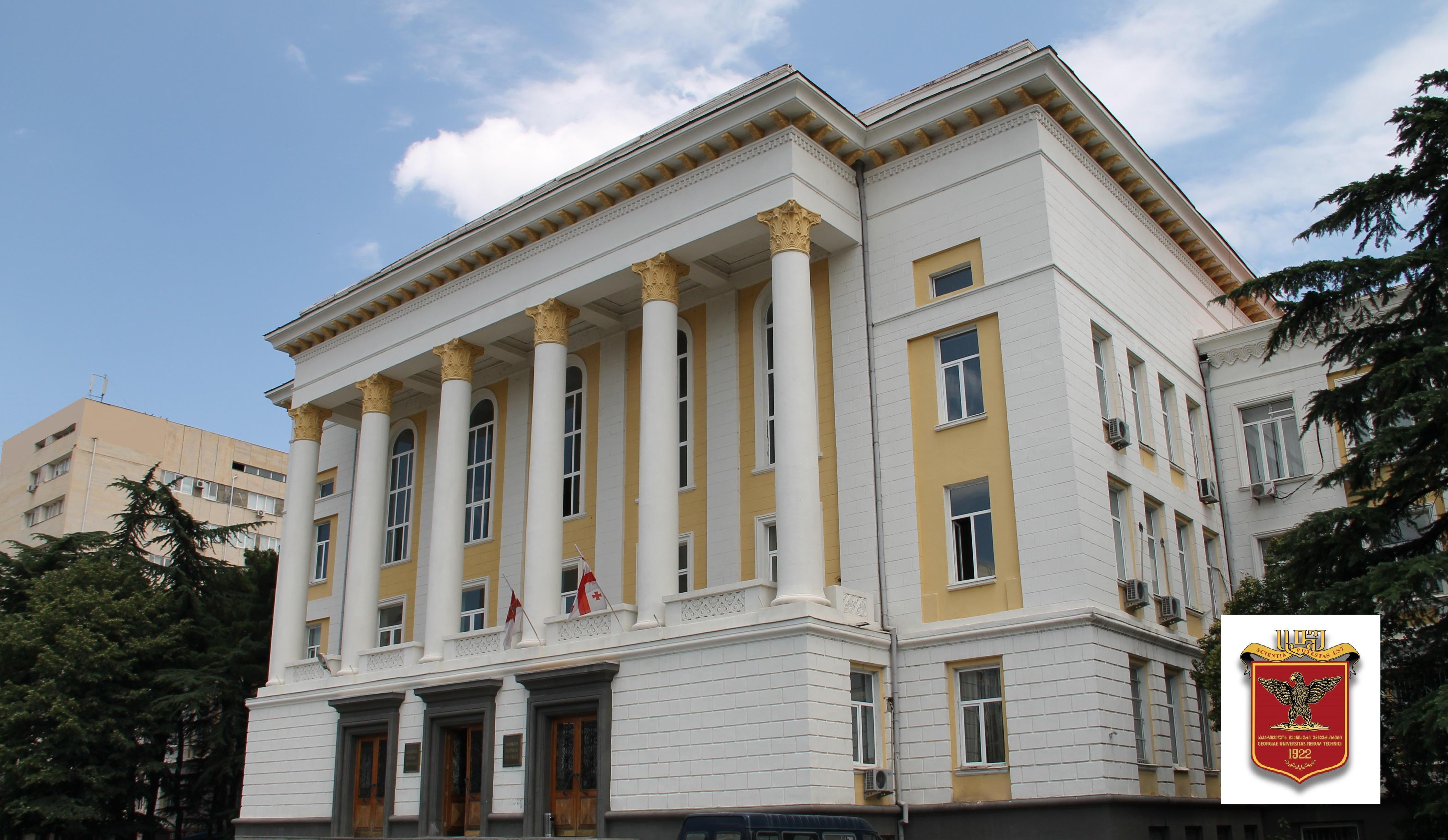
Professors, lecturers, researchers, and students of Georgian Technical University (GTU) are appealing to the Parliament of Georgia and the Government of Georgia with the demand that the process of merging GTU with Tbilisi State University (TSU) be halted and that public discussions be held before parliamentary hearings on the issue.
The authors of the statement have also prepared a petition demanding the suspension of the university merger.
As noted in their statement, any structural decision must be based on public and well-substantiated discussion.
To the Prime Minister of Georgia, Mr. Irakli Kobakhidze;To the Speaker of the Parliament of Georgia, Mr. Shalva Papuashvili;To the Minister of Education, Science, and Youth of Georgia, Mr. Givi Mikanadze:
Professors, scientists, researchers, students, graduates, and individuals interested in the educational process of Georgian Technical University express deep concern regarding the possible merger of Georgian Technical University and Tbilisi State University.
The 104-year-old Georgian Technical University represents the foundation of Georgian technical and engineering education. Its establishment is associated with prominent Georgian scientists and public figures such as Ivane Javakhishvili, Niko Nikoladze, Nikoloz Muskhelishvili, Andria Razmadze, Aleksandre Didebulidze, Giorgi Nikoladze, and many others, who believed it was essential to develop a national technical education system as an independent institution.
Immediately after Georgia regained independence, Georgian Technical University was formed as a comprehensive teaching and research institution. The university played a decisive role in the development of the country’s industrial, energy, transport, and infrastructure sectors. Given its century-long history, the Technical University may also be regarded as a monument of Georgia’s cultural heritage, the only temple of engineering and technological knowledge in the country. The century-long contributions of Georgian Technical University were internationally recognized by the global community and were commemorated under the auspices of UNESCO. The great Ilia Chavchavadze once said: “If a country has 12 educated engineers, it will develop faster and more solidly than with people who think only in words.” Georgian Technical University has not only produced 12 engineers—over its 104-year history, it has educated more than half a million professional engineers who built and sustained the country. Neither our history, present, nor future deserves such treatment. We cannot be the generation that allows the destruction of a temple of knowledge and the country’s return 100 years backward to a rootless, futureless Georgia.
Without any arguments, reasoning, or discussion, the artificial merger of the largest universities will not lead to higher rankings or development of either institution in Georgia or internationally. Instead, it will create unmanageable administrative processes, hinder healthy competition, lower the quality of education, and restrict students’ freedom of choice.
Under Article 27 of the Constitution of Georgia, institutional academic freedom is protected, and the state is obligated to promote the development of education and science.
Articles 3 and 10 of the Law of Georgia on Higher Education establish the fundamental principles of higher education, including academic freedom and institutional autonomy.Article 16 affirms a university’s right to independently determine its development strategy and structure. A systematic interpretation of these norms clearly shows that the forced merger of a university with another institution without the consent of its academic community constitutes a restriction of autonomy and contradicts the purpose and spirit of the law.
Furthermore, Georgia is a participant in the Bologna Process and recognizes its fundamental principles, among which institutional autonomy of universities, academic freedom, and the universality and diversity of higher education systems occupy a central place. In full compliance with the standards established by the Bologna Process and Georgian legislation, Georgian Technical University has repeatedly undergone authorization and program accreditation and has secured its place as a worthy partner among the world’s leading scientific and research centers. We have a strong voice in leading global scientific institutions such as CERN, KEK, Fermilab, Jülich, and many others. Experiments using innovative technologies developed by our scientists are currently underway in centers dedicated to understanding the origin of the universe and shaping the future. Our engineers launched the first Georgian space object into orbit and are now working with NASA on its modern version. We are advancing mining science and geology, metallurgy, and take pride in a unique mine-laboratory whose equivalent is difficult to find even in Europe. We have an ultra-modern construction laboratory, are leaders in transport and architecture, and our agricultural programs are recognized in Europe. We implement critically important international dual-degree programs in food technology, viticulture and winemaking, and design. We have an ABET-accredited Biomedical Engineering program, and soon will have accreditation in Civil Engineering, Computer Science, Computer Engineering, Electrical and Electronic Engineering. Our scientists rank first in Georgia in citation indices and international recognition. However, the mechanical sum of all these achievements combined with those of Tbilisi State University will not serve to increase TSU’s ranking—on the contrary, it will lead to the decline of both historic institutions.
The declaration (charter) defining the fundamental values of universities worldwide—the Magna Charta Universitatum (1988)—explicitly states that a university is an autonomous institution, independent of political and administrative pressure, and determines its own strategic directions in teaching and research.
Public governance operates on the principles of proportionality and reasoned decision-making, meaning that any reform must serve a legitimate and clearly defined goal, be necessary, and be the least restrictive means available. The merger of Georgian Technical University with another university cannot be considered a less restrictive measure when the goals can be achieved through the independent development of the university.
Therefore, we demand:
That the process of merging Georgian Technical University with Tbilisi State University be halted;
That any structural decision be based on public and well-substantiated discussion;
That prior to parliamentary hearings on the merger of GTU with TSU, representatives of the Parliament’s Education Committee and the Government come to Georgian Technical University and hold a public discussion with our university community.
Alternatively, representatives of the academic and scientific community of Georgian Technical University should be allowed to attend the parliamentary hearing of the Committee on Education, Science, and Youth Affairs.
The protection of Georgian Technical University’s autonomy and academic freedom is a matter of national importance and serves the country’s long-term educational, scientific, and technological development,” the statement concludes.