Nino Tsilosani: At one time, we all participated in working meetings with NGOs, but unlike them, I did not receive a blood transfusion - I did not renounce my Georgian identity or my country’s interests
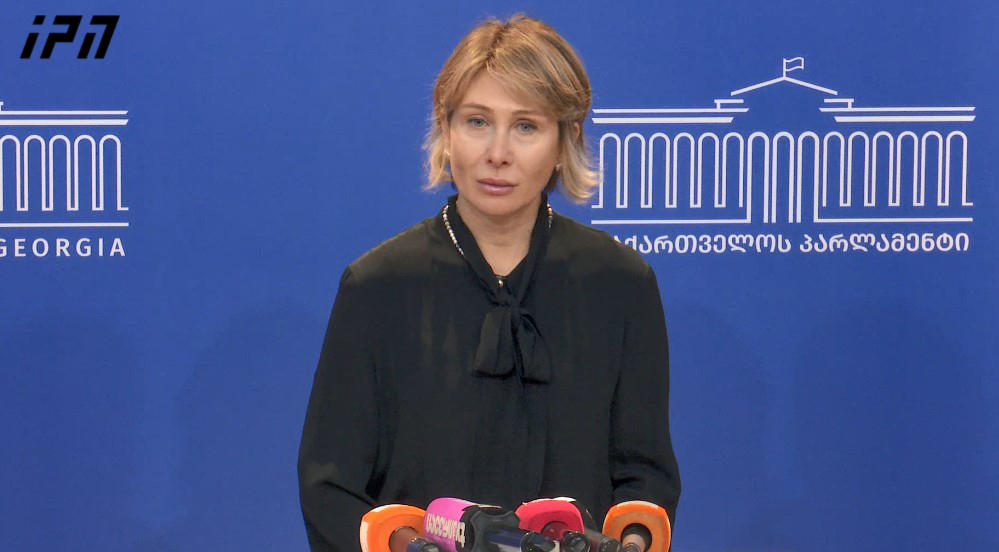
“All of us, naturally, participated in cooperation, consultations, and similar activities together with NGOs. I attended every training and received the necessary and essential knowledge I was supposed to gain, but unlike them, I did not receive a blood transfusion,” Vice Speaker of Parliament Nino Tsilosani told journalists.
According to Tsilosani, unlike certain individuals, she has not renounced her Georgian identity, citizenship, or national interests, adding that “those people truly need a cooling-off period.”
She also stated that there is nothing new in the fact that Irakli Kobakhidze and Shalva Papuashvili once worked in international organizations.
Tsilosani emphasized that the motivation behind adopting the Law on Grants has not changed - the Georgian public must know what funds are coming from abroad and for what purposes. If society agrees with this goal, she said, it is the state’s obligation to improve the law.
“I am aware of numerous cases of attempts to bypass this law, including threats that all possible ways would be found to finance NGOs while circumventing it. I do not understand why it was necessary to bypass the law or what kind of activities required this. One way to bypass it became opening branches abroad. If we agree on the objective, then we must also agree that the law needs additional mechanisms to make funding coming from abroad - whose purposes are unknown - more transparent,” Tsilosani said.
She stressed that it should be clear to everyone that money transfers to emigrants or funds received for education are not affected by this legislation. “The key issue is the purpose of the funding, and based on the law’s objectives, I believe its implementation will be properly interpreted,” she added.
Tsilosani reiterated that mentioning Kobakhidze’s or Papuashvili’s past work in international organizations does not present anything new and is not about NGOs per se.
“We all cooperated and consulted with NGOs at some point. I recall an important comment from one NGO representative who told me, ‘How many of our trainings have you attended?’ My response is this: at all those trainings, I certainly received the necessary and important information and knowledge - but unlike them, I did not receive a blood transfusion. Meaning, I did not renounce my Georgian identity, citizenship, or this country’s interests, unlike those who truly need a ‘cooling-off period,’” Tsilosani said.
For reference:Under the planned amendments, the definition of a “grant” is being expanded. A grant will also be defined as any funds - monetary or in-kind - transferred by any person to any other person, which are intended or may be used, with the belief or intent of influencing the Government of Georgia, state institutions, or any segment of society, through activities aimed at shaping, implementing, or changing Georgia’s domestic or foreign policy. This also includes activities derived from the political or public interests, approaches, or relations of a foreign government or a foreign political party.
Receiving such a grant will be allowed only with prior approval from the Government of Georgia.