Shalva Papuashvili: What is considered “protection” in one country is seen as “restriction” in another - what is praised in one system is criticized in another - if we take cooperation seriously, the rules must be the same for everyone
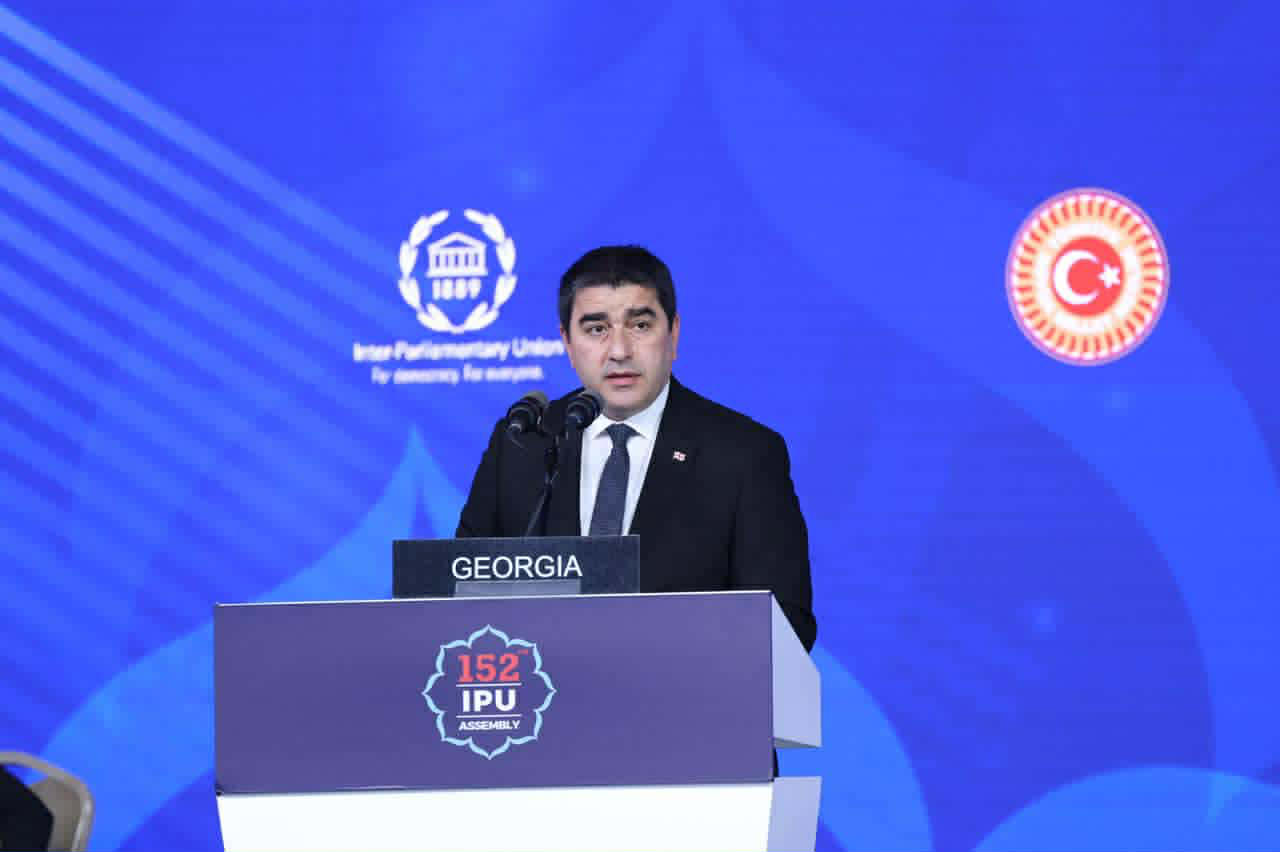
“There are double standards. What is considered ‘protection’ in one country is regarded as a ‘restriction’ in another. What is praised in one system becomes a subject of criticism in another. This inconsistency undermines trust. If we take cooperation seriously, the rules must be the same for everyone,” said the Speaker of the Parliament of Georgia, Shalva Papuashvili, during his speech at the General Assembly of the Inter-Parliamentary Union (IPU).
"In an era of uncertainty, the voice of national parliaments must not fade, it must rise.
We are not observers of history. We are its authors. It is in our chambers that the sovereign will of nations takes shape. It is through us that the people speak - clearly, legitimately, and decisively. And it is our duty to ensure that this voice is never diluted, never overshadowed, and never replaced.
We hear it often said that the global order is weakening. Perhaps it is. But one foundation remains unshaken: national interest.
This is the only true compass of foreign policy. Not abstract doctrines. Not imposed ideologies. Not artificial systems of values detached from the will of the people. Any system that seeks to override national interest will ultimately collapse. Because what is not rooted in the people cannot endure.
True international cooperation is not built on illusion. It is built on reality. And reality is simple: nations act in their interests. When those interests are expressed through democratic will, cooperation becomes stronger, peace more durable and order more stable.
Today, we face a defining challenge: foreign interference.
In an age of information warfare and invisible influence, sovereignty is no longer defended only at borders, it is defended within our institutions and societies. Protecting the integrity of our political systems is no longer optional, it is essential.
This is why nations are acting.
This is why we see the emergence of legislative frameworks across the world: The Foreign Agents Registration Act (FARA) in the United States, the Democracy Shield in the European Union, the Foreign Interference Law in France, the Foreign Influence Registration Scheme (FIRS) in the United Kingdom, or the Foreign Influence Transparency Law in Georgia. Though they differ in name, we see the same principle taking legal form: democracy must be shaped by the people, not by foreign power.
And yet, there are double standards. What is called “protection” in one country is labeled “restriction” in another. What is praised in one system is condemned in the next. This inconsistency undermines trust. If we are serious about cooperation, then the rules must be the same for all.
Let me turn to my region, the South Caucasus.Once seen as volatile, it is becoming more stable and predictable. This is not accidental. It is the result of sovereignty in action. Georgia, Armenia, and Azerbaijan are increasingly acting in line with their national interests. And when sovereignty is respected, stability follows.
In the Parliament of Georgia, we have made this choice clear. We have strengthened transparency, refined our legislation, acted to ensure that political power belongs to the people and to no one else.
And we will continue to adapt. Because a parliament that does not reflect reality will lose relevance. And a parliament that loses relevance cannot defend sovereignty.
Peace is never guaranteed. Peace is a responsibility. It requires vigilance, restraint and long-term vision. Strong institutions, transparent systems, forward-looking laws are not technicalities, they are the foundation of peace.
And this is why we must act together.
We must recognize foreign interference and hybrid warfare for what they are: one of the greatest threats to democracy and sovereignty in our time. And we must move beyond declarations. We must build a common, legally binding international framework, clear in principle, fair in application, and consistent in enforcement.
Because sovereignty cannot be selective. And security cannot be one-sided.
If we succeed, we will not only defend our states.We will strengthen peace, restore trust and secure a more stable and just international order for generations to come", Papuashvili said.