Gia Volski: Paweł Herczyński’s statement is a threat - he should be summoned to the Ministry of Foreign Affairs - this is both a political démarche and there must be a substantive discussion on what grounds he is threatening Georgia
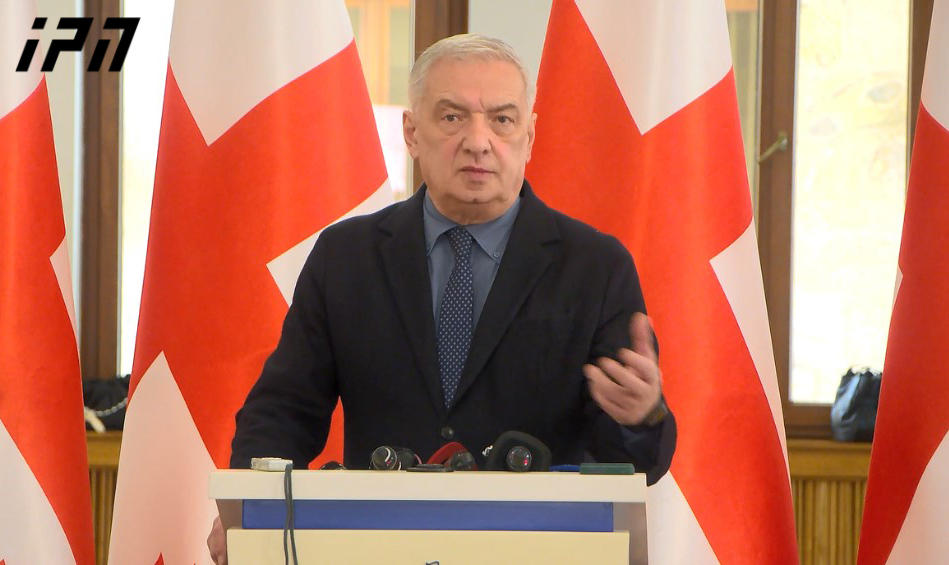
“A new level of threat has been put forward. However, I don’t think this is Herchinsky’s personal responsibility — he is carrying out instructions. Especially since his term in Georgia is coming to an end soon, he is a suitable candidate to voice such threats and, at the same time, to hypocritically appeal to the public,” said First Vice Speaker of Parliament Gia Volski while commenting on the statement of EU Ambassador Paweł Herczyński.
According to him, Herczyński’s statement constitutes a threat.
“Given the situation, the European Union clearly sees that the vast majority of society understands very well the importance of peace, what is happening in the world, and the challenges we face — and largely bases its support for the government on this understanding. This is a threat that returning to a dark past, bloodshed, and confrontation is exactly the path the Brussels administration will follow if this part of society does not comply.
Previously, they referred only to those gathered on Rustaveli Avenue as ‘the people’; now they are addressing society as a whole, suggesting they have the ability to create a situation in Georgia associated with bloodshed and economic collapse. This is a threat.
You may recall the personal threat voiced toward the Prime Minister — that if he did not step back and show submission, he could face the same fate as Fico, who was shot six or seven times. This was directly stated by a European commissioner to Irakli Kobakhidze — to be obedient, otherwise he might face the same as the Slovak Prime Minister. Then there were other forms of threats. Now we are seeing a new level of threat, although I do not think this is Herchinsky’s own doing. He is following instructions, and given that his term in Georgia is ending soon, he is a convenient figure to deliver such messages and to superficially appeal to the public,” Volski said.
Regarding whether the EU ambassador should be summoned to the Ministry of Foreign Affairs, Volski stated that he should be summoned and that a substantive discussion must take place regarding the grounds on which he is threatening Georgia and its society.
“If this concerned only a state institution, a ministry, or the government, perhaps there would be no need to escalate to this level of tension, and the debate could continue on various issues. But here, an individual is threatening the entire society, all of Georgia, without any basis. It is absolutely inconceivable that, based on current data — including what the Atlantic Council has recently published — Georgia is facing the kind of disaster that Herczyński described. Perhaps he knows something we do not. Therefore, he should be summoned — this is both a political démarche and an opportunity for a substantive discussion about the grounds on which he is threatening Georgia and its society,” Volski stated.
For context, EU Ambassador to Georgia Paweł Herczyński said in Brussels, at the European External Action Service, during the opening of the documentary photo exhibition “Georgia in Focus,” that Georgia is no longer on the right trajectory.
According to the ambassador, “the authorities have chosen an alternative, authoritarian model and are distancing Georgia from the European Union.”
“Georgia stands at a crossroads. The country’s future is not yet written, but what is decided in the coming weeks and months will determine whether Georgia belongs to the family of European nations based on democracy, the rule of law, and human rights, or whether it will unfortunately return to its dark past. My main message to the Georgian people is: ‘do not lose hope.’ We must not allow Georgia and its wonderful, warm, and hospitable people to return to the dark times of violence, civil war, poverty, hardship, and corruption. This is not the future they deserve. As soon as the government expresses willingness to cooperate with us, we will do everything to help Georgia become a member of the European Union,” Herczyński said.