Prosecutor: The court assessed that Elisashvili’s actions constituted an attempted terrorist act - the judge also explained that the defendant did not deserve the minimum sentence because he did not admit guilt or show remorse
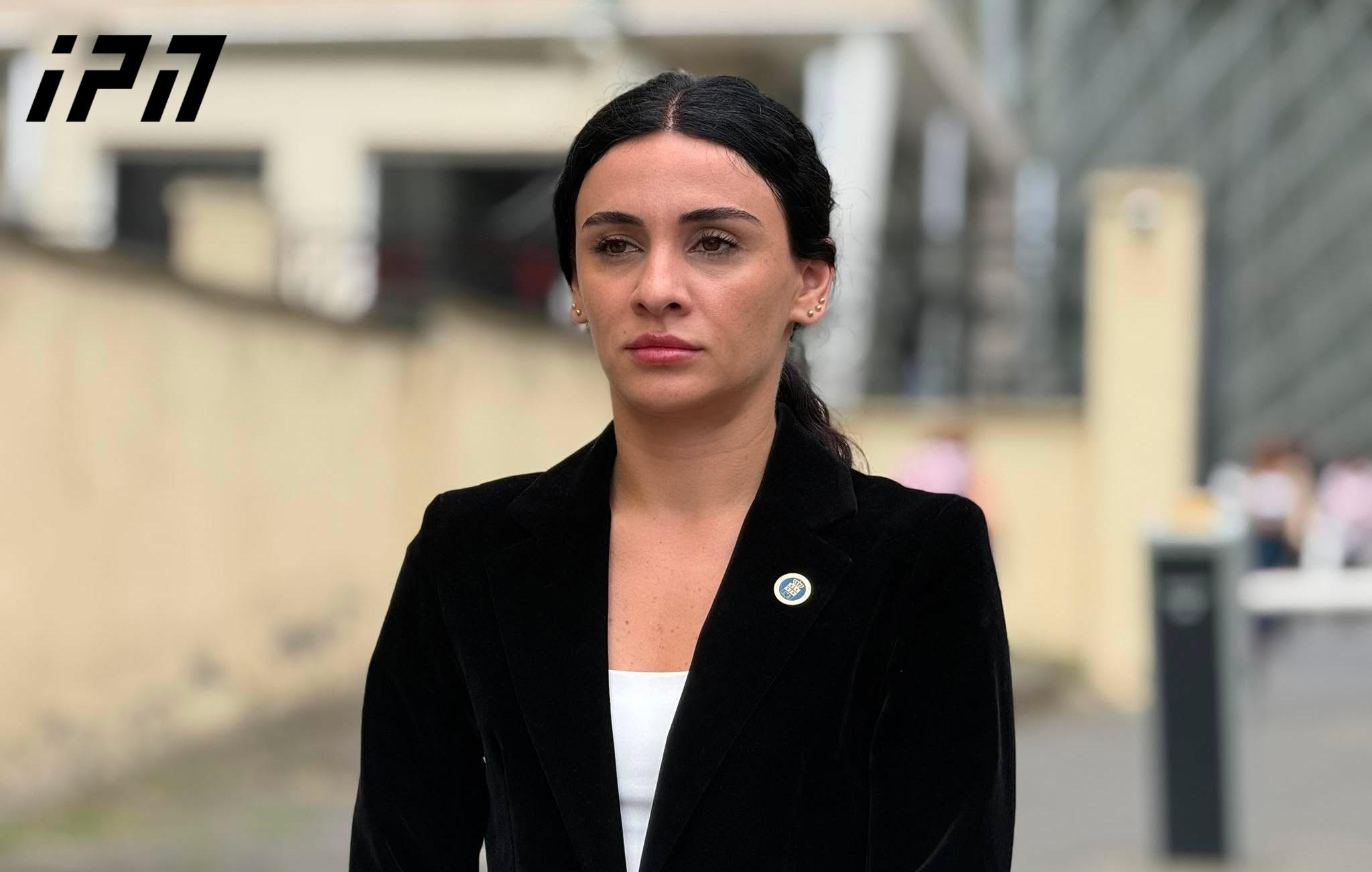
"The judge discussed the issue of sentencing and explained that 13 years of imprisonment was proportionate to his actions. The judge also stated that the defendant did not admit his actions or express remorse at any stage, and therefore did not deserve to receive the minimum possible sentence," Ani Khubejashvili, the prosecutor in the case of Aleko Elisashvili, one of the leaders of the Strong Georgia coalition, said after the court hearing.
According to the prosecutor, the court assessed that Elisashvili’s actions were clearly an attempted terrorist act aimed at destabilizing the judiciary.
"Through the examination of evidence, we proved that Alexander Elisashvili attempted to commit a terrorist act. The court accepted the evidence presented by the prosecution, which was reliable and consistent. The court referred directly to the video footage in the case, which clearly documented all of the defendant’s actions, as well as the statements of eyewitnesses, which were also consistent and fully reconstructed every aspect of the act committed by Alexander Elisashvili.
The court also assessed that the defendant’s actions clearly constituted an attempted terrorist act and that he had a terrorist motive. In this case, that motive was specifically the destabilization of the judiciary, which was clearly and explicitly demonstrated.
The judge also discussed the sentence and explained that the punishment imposed—13 years of imprisonment—was relevant to the act committed. Regarding the minimum sentence, the judge explained that because the defendant, both through his statements during the hearing and through his behavior, as well as by refusing to admit the act and showing no remorse at any stage, effectively did not deserve to have the minimum sentence imposed," the prosecutor said.
For reference, politician Aleko Elisashvili, one of the leaders of the Strong Georgia – Lelo coalition, who was arrested on charges of attempting to commit a terrorist act, was found guilty by the court and sentenced to 13 years in prison.