Transparency International Georgia – The Georgian Dream uses new accreditation rules for the legislative body as a mechanism to penalize critical media outlets and journalists
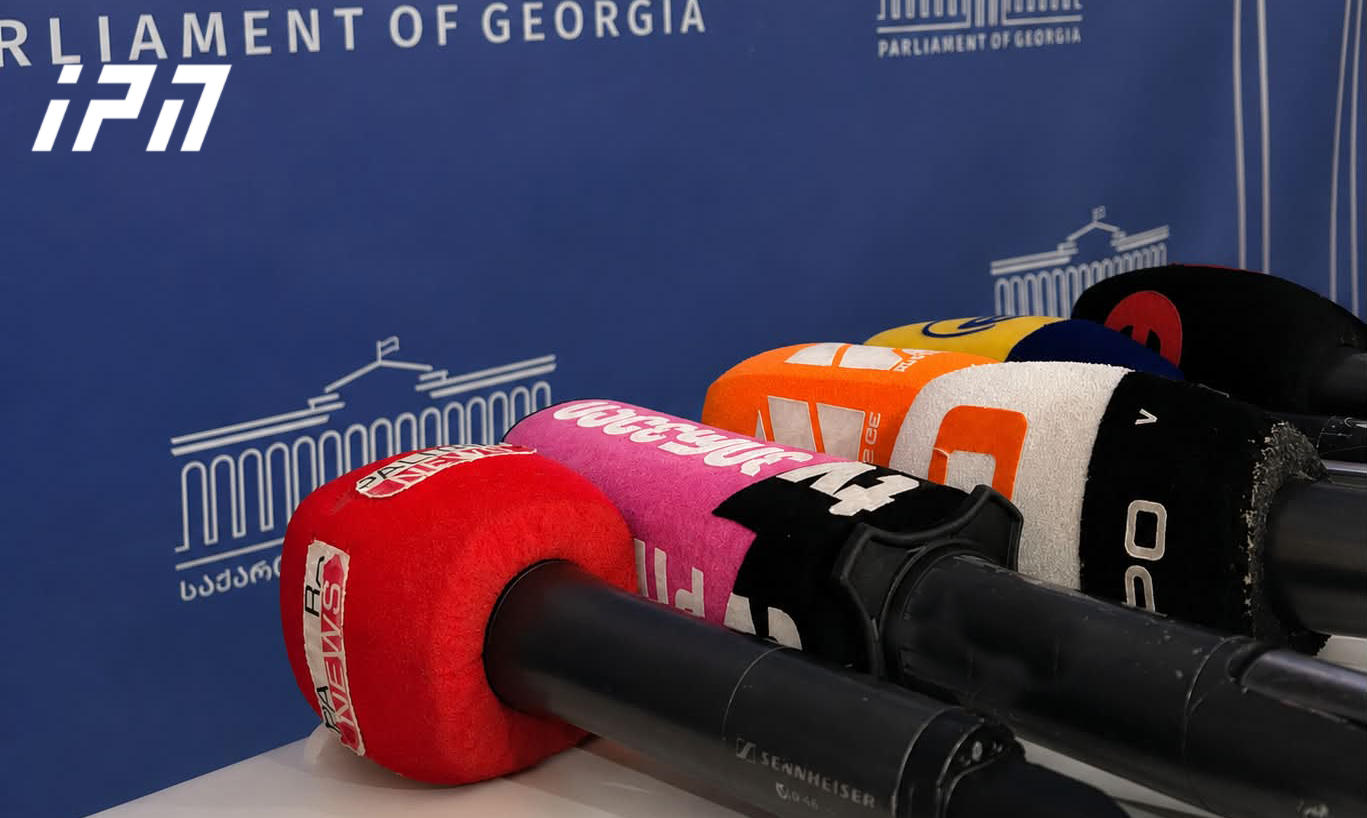
The Georgian Dream uses new accreditation rules for the legislative body as a mechanism to penalize critical media outlets and journalists, according to the non-governmental organization Transparency International Georgia.
According to the information released by the organization, over the past two months, up to 15 representatives of critical media have had their parliamentary accreditation revoked or their activities in parliament restricted due to asking critical questions to MPs.
“The Georgian Dream party continues to restrict the activities of independent and critical media outlets through various means, using state institutions and bodies under its influence to do so. In this regard, the Parliament of Georgia is of particular concern, where an already draconian accreditation procedure for journalists has been turned into a tool for targeting independent media. Based on this procedure, over the past two months, parliamentary accreditations have been revoked and/or journalistic activities within the legislative body have been restricted for up to 15 representatives of critical media outlets due to their attempts to ask critical questions to members of parliament. Naturally, this significantly undermines the public’s ability to receive adequate information about the processes taking place within the legislative body.
On June 29, journalist Natalia Kajaia from “Nodari Meladze’s Saturday,” an investigative program of “TV Pirveli,” was suspended from conducting journalistic activities in Parliament for one year for asking questions to a member of parliament. The journalist questioned Georgian Dream MP Guram Macharashvili about how his wife moved from the pharmacy chain “Aversi” to the Georgian National Energy and Water Supply Regulatory Commission after Macharashvili joined the Georgian Dream parliamentary team.
On June 23, accreditation in Parliament was suspended for six months for Formula TV journalist Nini Balanchivadze, also for asking questions to a member of parliament. She was questioning Georgian Dream MPs about the case won by the non-governmental organization “Georgian Young Lawyers’ Association” (GYLA) against Russia before the European Court of Human Rights concerning the August 2008 Russia-Georgia war.
On June 22, for the same reason, parliamentary accreditation was also suspended for one month for “Nodari Meladze’s Saturday” journalist Maka Andronikashvili. The journalist asked Georgian Dream MPs what mission members of the so-called “group” of Ramzan Kadyrov, the head of the Chechen Republic, had when visiting Georgia, and whether they were bringing gold into the country through illegal channels.
On June 8, for the same reason, another “Nodari Meladze’s Saturday” journalist, Maka Chikhladze, was banned from carrying out journalistic activities in Parliament for six months. The journalist asked Georgian Dream MPs why some of their party colleagues - including Eka Chichinadze, for example - had not submitted documents confirming their higher education qualifications to Parliament.
Earlier, in May, parliamentary accreditations were terminated ahead of schedule for journalists from the online publication “Publika” and the investigative outlet “Monitori.” Each of the outlets had four accredited journalists in the legislative body. The reason cited for revoking the parliamentary accreditations was the journalists’ absence from the legislative body over the previous 10 weeks.
Furthermore, on June 26, the journalist of the online publication “Publika,” Mindia Gabadze, was not even granted a one-time pass to enter Parliament to cover the report of Georgian Dream Prime Minister Irakli Kobakhidze.
The new accreditation rules for the legislative body were introduced by the Georgian Dream party in February 2023, establishing rules of conduct for media representatives in Parliament. According to one of the provisions, “if a member of Parliament, an employee of the Parliamentary Staff, or a person present as a guest refuses to give an interview,” a journalist must terminate the interview. The Georgian Dream has used this provision as a mechanism to avoid critical questions and to penalize critical media outlets and journalists. Based on this provision, dozens of representatives of critical media outlets have had their parliamentary accreditations suspended for various periods and their journalistic activities in the legislative body restricted in recent years.
It is noteworthy that in May 2026, after the European Parliament suspended the accreditation of the British-sanctioned, pro-government propaganda outlet “Imedi” for one year, Georgian Dream Speaker of Parliament Shalva Papuashvili stated that they would also review the accreditation rules of the Georgian Parliament. This statement was immediately perceived as a threat against critical media outlets. Shortly after this announcement, approximately one month later, Georgian Dream indeed amended the accreditation rules and further tightened sanctions for violations of these rules. Specifically:
- The six-month suspension periodfor a journalist’s accreditation for repeated violations of the accreditation rules was increased to one year.
- “Taking into account the severity and frequency of the violation,” parliamentary accreditation may be revoked not only for the individual journalist concerned but also for the media outlet they represent.
- In the case of a first violation, a journalist’s accreditation is suspended for one month.
For years, the Georgian Dream has targeted independent and critical media outlets that expose alleged criminal schemes and corruption-related dealings involving, or potentially linked to, members of the ruling party and individuals associated with them. The Georgian Dream team is uncomfortable with any questions raised around such issues and, in an effort to avoid providing answers, has actively used institutions under its influence to silence critical media. Instead of serving the public interest, these institutions have taken on the role of political extensions and now serve the interests of maintaining the power of a particular political group. Public officials must remember that they are funded by taxpayers and are accountable to citizens, including by answering even the most difficult and critical questions directed at them. Therefore, it is unacceptable to abuse formal rules existing within the legislative body and transform them into a tool for preventing journalists from asking questions on matters of significant public interest.
For representatives of independent media outlets, who already have to perform their professional duties under conditions of limited resources, the ability to work fully within the legislative body and ask questions is of critical importance. This is particularly significant given that representatives of the Georgian Dream refuse to engage with them in other formats, while, at the same time, the Communications Commission - also operating under the influence of the Georgian Dream - imposes substantial financial sanctions on them for alleged violations of the principle of balance. Transparency International Georgia stands in solidarity with all journalists who, despite the hostile working environment created by the authorities in recent years, continue to perform their duties with integrity and uphold their professional dignity”, reads the statement.