Nikol Pashinyan - In parallel with deepening friendly relations with neighboring Iran and Georgia, we continue to establish interstate relations with Azerbaijan and Turkey
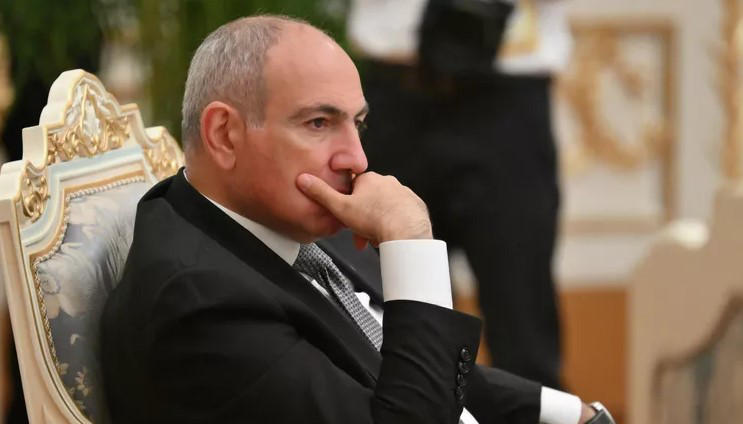
Armenia pursues a multi-vector foreign policy, which we call a balanced foreign policy, - Armenian Prime Minister Nikol Pashinyan stated at a meeting held in the Shanghai Cooperation Organization Plus Format.
“The essence of this policy is as follows: when the force of attraction of one geopolitical pole becomes so strong that it may threaten our independence, we activate relations with another pole, which in this situation has sufficient attraction to maintain balance on the difficult path of sovereignty and independence. The main goal of such a policy is to preserve and strengthen sovereignty and independence. When developing these strategies, we came to the conclusion that it is impossible to have independence and sovereignty by living in conditions of conflict, and in this regard, multipolarity should be manifested, first of all, in the region where you live. That is why, in parallel with the deepening of friendly relations with neighboring Iran and Georgia, we continue to establish interstate relations with our two other neighbors - Azerbaijan and Turkey,” Pashinyan noted.
According to him, Armenia is working with Azerbaijan and Turkey to open interstate communications, including through the implementation of the project “Trump Route to International Peace and Prosperity”.
“We are currently working with Azerbaijan and Turkey to open interstate communications, including through the implementation of the TRIPP project, the practical implementation of which will begin on the ground in the coming months. This will open up new transport opportunities not only from east to west, that is, from the Caspian Sea to the Mediterranean Sea, but also from south to north, connecting the Persian Gulf with the Black Sea. Therefore, all countries in the region will benefit from the implementation of the project,” Pashinyan noted.
Speaking about the multipolar policy, Pashinyan stated that in recent years, Armenia has been establishing strategic relations with Georgia, China, Kazakhstan, the United States, France, the Netherlands, Germany, Luxembourg, the United Kingdom, Bulgaria, Croatia, Lithuania, and the European Union.
“Our relations with India and Iran are essentially strategic in nature, and we are currently working on their formalization,” the Armenian Prime Minister noted.
According to him, the Republic of Armenia shares the vision of a multipolar world and emphasizes the key role of the United Nations in the formation of a multipolar world.