Beka Basilaia: It is impossible for a statement made on a podcast in Baramidze’s case to constitute sabotage - He explained that there had been no unconventional treatment of either those ready to surrender or those who had been taken prisoner
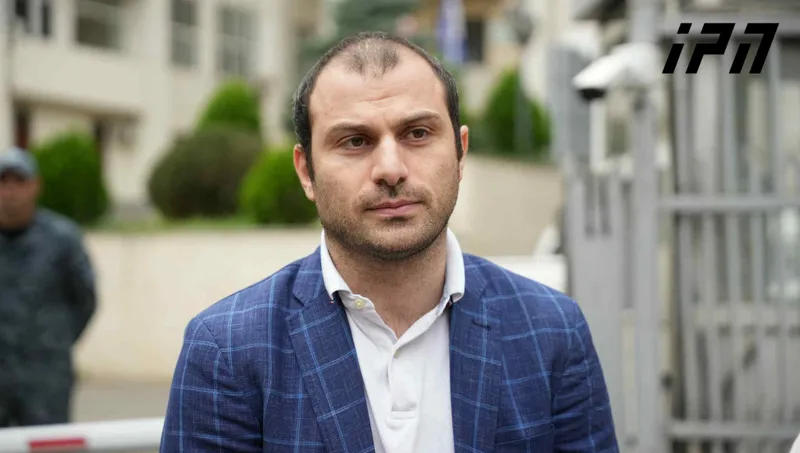
“Gia Baramidze has provided an explanation regarding the fact that there was no unconventional treatment of either those who were ready to surrender or those who had been taken prisoner,” Beka Basilaia, the lawyer of Giorgi Baramidze, one of the leaders of the United National Movement, said before the court hearing.
According to him, there are no legal grounds for the charges brought against Giorgi Baramidze.
“The charges brought against him are completely inconsistent with the requirements of the Criminal Code of Georgia. For sabotage, two components are important: one is an active act, and the second is a predetermined purpose of weakening Georgia. The active act must be directed toward obstructing the normal functioning of state bodies or other institutions.
It is impossible, in Gia Baramidze’s case, for a statement made on a podcast - regardless of its content - to constitute the offense of sabotage under Article 318 of the Criminal Code of Georgia. Accordingly, if there is no sabotage, then Article 307 also does not apply, as it sets out what may be considered treason against the state.
As for what Gia Baramidze said during the program, which caused significant public controversy and, naturally, had certain grounds for doing so - Gia Baramidze subsequently provided an extensive explanation. This was not two weeks later; he spoke in detail and stated that during Iago Khvichia’s program, he had not said that the Georgian side had treated any prisoner or anyone ready to surrender in violation of international conventions.
What he said was that there had been no combat objective requiring them to necessarily capture prisoners. This happens not only in Georgia, but in any war - even if we take the Russia-Ukraine war as an example. Capturing prisoners is not a primary objective. The objective is victory.
In the process of achieving victory, whether prisoners are captured or whether a situation arises in which one of the warring parties takes someone prisoner is a separate matter. We clearly state that Gia Baramidze has explained that there was no unconventional treatment of either those ready to surrender or those who had been taken prisoner,” Basilaya said.
Asked what he would say about the phrase uttered during the program - “We did not take prisoners because we shot them on the spot” - Basilaia responded:
“Those are completely different words, but those words also required clarification. He provided an explanation the very next day. The reference to executions was very disturbing to everyone. No one is saying that what was said on Iago Khvichia’s program was easy to hear, easy to understand or acceptable, but it was followed by a clear explanation.
At the same time, I want to emphasize that even under the interpretation presented by the prosecution, Article 318 does not apply. For Article 318 to apply, there must be clear, substantiated evidence that a person deliberately acted against the national interests, that the action was intended to weaken Georgia, and that this active action resulted in interference with the functioning of state bodies or various institutions.
None of these components exists in the present case,” Basilaia said.
For reference, United National Movement leader Giorgi Baramidze was detained on charges of treason against the homeland, specifically sabotage. The case concerns statements Baramidze made about the war in Abkhazia, namely that “at the initial stage of the 1992-1993 armed conflict in Abkhazia, members of the Georgian armed forces did not take prisoners and instead shot them on the spot.”
According to the Prosecutor’s Office, his statement damaged the reputation of Georgia’s Defense Forces and undermined the honor and dignity of veterans who participated in the Abkhazia war, as well as fallen military service members.
At the same time, the Prosecutor’s Office says Baramidze’s actions threatened the process of reconciliation and confidence-building with populations affected by the conflict, damaged Georgia’s peacebuilding and de-occupation policy, and obstructed the normal functioning of state institutions, including the activities of the Office of the State Minister for Reconciliation and Civic Equality and the effective operation of mechanisms established by the office to promote confidence-building and cooperation.
The charge carries a sentence of up to four years in prison.