Davit Matikashvili – It creates the impression that the forces issuing orders to the National Movement are alarmed by the policy of peace; consequently, Gvaramia, Saakashvili, and Baramidze are making statements intended to derail this process
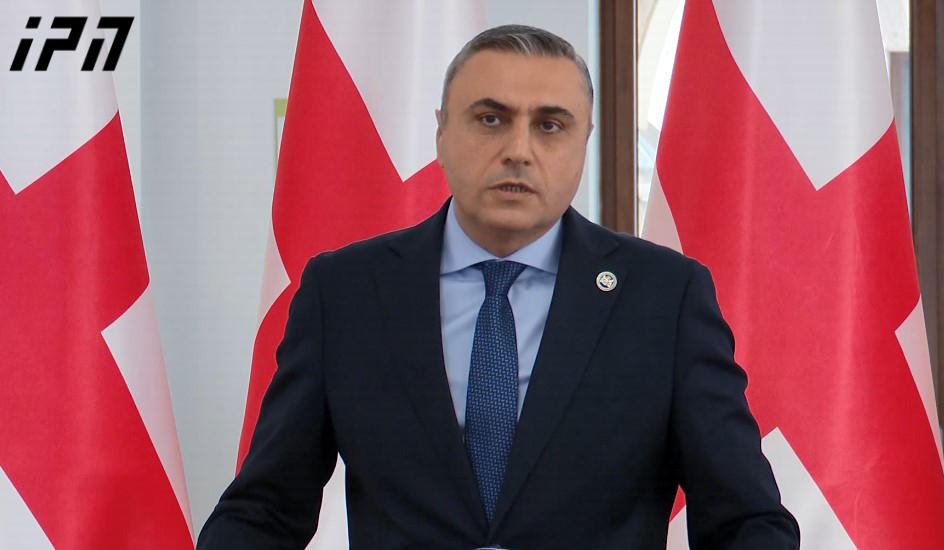
The statement we heard amounts, quite literally, to an act of treason—these are not merely empty words; the statement carries a grave accusation and aims to obstruct the functioning of our country's state institutions. The ball is now in the court of law enforcement agencies! – This statement was made by the Chairman of the Parliament's Procedural Issues Committee in response to the detention of Gia Baramidze, one of the leaders of the National Movement.
According to him, Baramidze accused the Georgian army and the state of committing a heinous crime. This extremely grave and shameful statement by Baramidze has both moral and legal dimensions. From a moral standpoint, Baramidze accused the Georgian army and the state of committing a heinous crime. He characterized the Georgian army’s conduct in a shameful and immoral manner, implying that it had executed prisoners it had captured. Naturally, this constituted an insult to the entire Georgian state and its military forces. It is particularly distressing to hear such words from a former Minister of Defense; yet, the statement carries not only a moral burden but also legal implications. One gets the impression that the forces directing the National Movement are alarmed by the peace-oriented policy our country is pursuing to restore its territorial integrity. That is why Gvaramia, Saakashvili, and Baramidze make such statements—to hinder and derail this process. The statement we heard amounts, quite literally, to an act of treason against the homeland. Indeed, this is precisely how the Prosecutor's Office characterized it when bringing charges against Baramidze. It is evident that these are not merely empty words; this statement carries a grave accusation and aims to disrupt the functioning of our country's state institutions. That is precisely why the legal proceedings against Baramidze, which the public witnessed, were initiated. Naturally, the next step now lies with law enforcement agencies," stated Davit Matikashvili.
For context, Giorgi Baramidze, a leader of the National Movement, was arrested on charges of high treason—specifically, sabotage. The case concerns a statement Baramidze made regarding the war in Abkhazia—specifically, that "during the initial stage of the 1992–1993 armed conflict in Abkhazia, representatives of the Georgian armed forces did not take prisoners but instead executed them on the spot."
According to the Prosecutor's Office, the statement damaged the reputation of the Georgian Defense Forces and tarnished the honor and dignity of veterans who participated in the Abkhazia war and of fallen military personnel. At the same time, Giorgi Baramidze’s actions jeopardized the process of reconciliation and confidence-building with the conflict-affected population, undermined Georgia’s peace and de-occupation policy, and impeded the normal functioning of state agencies—including the operations of the Office of the State Minister of Georgia for Reconciliation and Civic Equality and the effective functioning of mechanisms established by the Office for confidence-building and cooperation.
The aforementioned charge carries a penalty of up to four years of imprisonment.