UNFPA Director in Georgia: People want to have children, yet they realize that achieving their desired family size requires economic stability today and financial security in the long term.
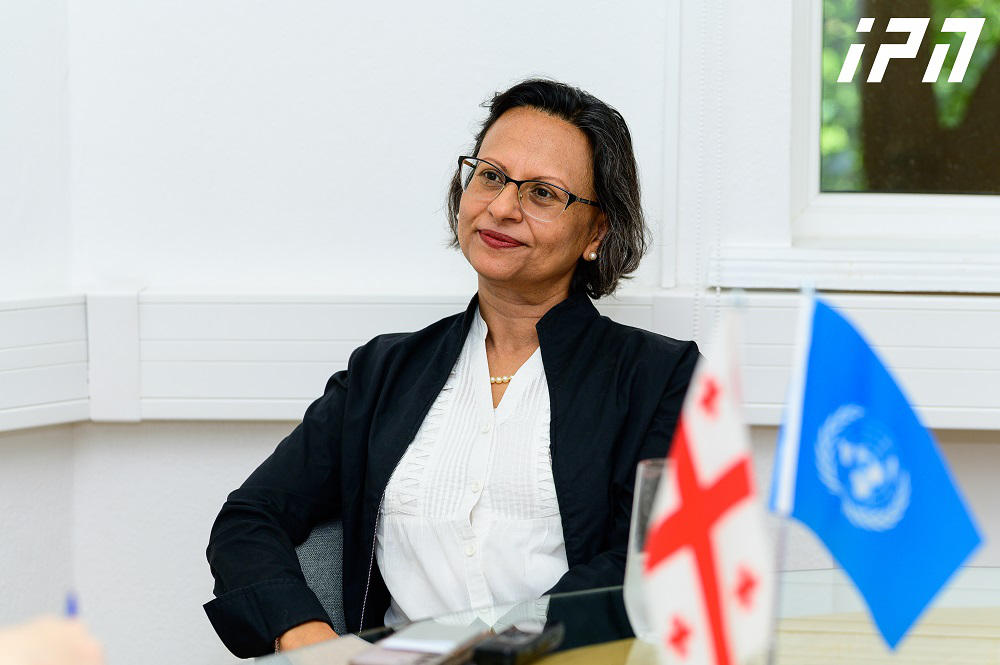
According to UNFPA Director in Georgia, people want to have children, they view this as a source of immense happiness; however, they recognize that having a family of their desired size requires economic stability in the present and financial security for the future. Consequently, it is evident—including in Georgia—that while the desired number of children exceeds two, the actual fertility rate remains below two. The key questions are: what causes this discrepancy, and how can we help? The above was stated by Mariam Khan, UNFPA Resident Representative to Turkiye, Country Director for Azerbaijan and Georgia, in an interview with InterPressNews.
According to her, the birth rate in Georgia is currently below the replacement level, while young people—including women of reproductive age—are leaving the country.
In terms of demography, essentially, it's three factors we have to look at: fertility, mortality and migration. Now across the world, in every part of the world almost, we know that lifespan is increasing and we all agree that's a good thing. When it comes to fertility and migration, they are more politically complex matters, and especially for fertility, we notice disproportionate attention only to this dimension”, she said.
According to her, when considering aspects of fertility, a crucial factor is acknowledging that the decision to have children is one a couple makes independently and freely, based on their vision for the future. Viewed from a broader perspective, it is vital to understand the stance and reasons behind a couple's choice regarding family size. “The United Nations Population Fund (UNFPA) recently conducted a study on demographic futures. We surveyed approximately 100,000 young people across 73 countries—including Georgia—to understand their outlooks and intentions regarding their families and their futures. We found that people do want to have children; they view it as a source of immense happiness. However, they also recognize that achieving their desired family size requires both current economic stability and long-term financial security. When weighing these factors, they realize the difficulty of providing for a family at the quality and standards they want for their children. Consequently, it is evident—including in Georgia—that while the desired family size (i.e., the preferred number of children) exceeds two—standing at approximately 2.6—the actual fertility rate is below two, at around 1.5. The key questions here are: what causes this discrepancy? How can we provide support—from the perspectives of macroeconomic, social, childbirth, childcare, education, and equality policies that benefit both women and men—and how can we help couples realize their ambition of having the number of children they desire?" stated Mariam Khan.
Furthermore, the Director of the UN Population Fund in Georgia explained that it is a perfectly normal trend for family size to change—often decreasing—amidst increasing urbanization, education, and prosperity.
"As trends shift and a country becomes increasingly urbanized, you will see family sizes change. We know that homes in rural areas tend to be larger than those in urban settings, and that the costs of housing and education differ between the two. We also know that the more a person invests in higher education, the later they tend to marry and have children. This is a normal trend as a society achieves prosperity and becomes more educated, urbanized, and developed; there is nothing surprising about it. The real challenge lies in better understanding and forecasting how to maintain stable birth rates in the future. I believe that is the 'million-dollar question.'
That brings me back to the study on our demographic future, in which we asked young people what would help them. I will highlight four or five key factors identified by young people globally—and the views of Georgian youth are no different—starting with financial stability today and financial security tomorrow; access to housing; opportunities for balanced and comprehensive childcare—addressing the question of who will look after children aged 0 to 3; education system policies and early childhood education; and flexible work opportunities. A dimension of hope also emerged here regarding peace, prosperity, and stability," stated Mariam Khan.