Metropolitan Zenon: True dialogue between peoples begins with a shared commitment to truth—where one respects the other's pain—rather than through attempts to rewrite history
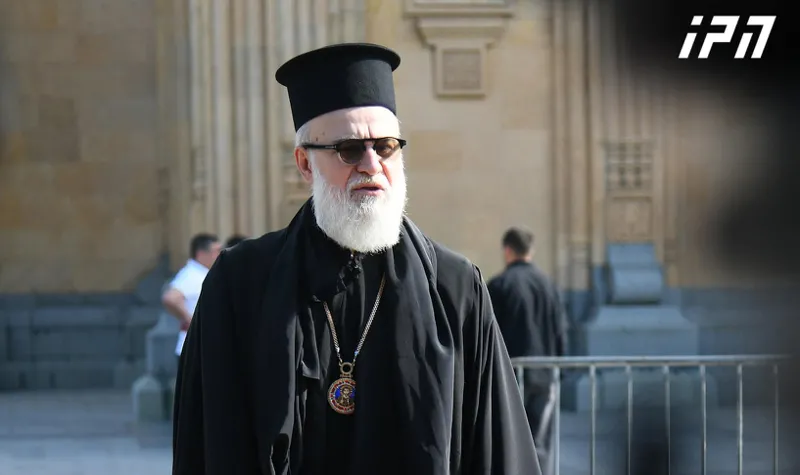
"True dialogue between peoples begins with a shared commitment to the truth—where one respects the other's pain—and not with attempts to rewrite history," Archbishop Zenon of Dmanisi and Agarak-Tashir writes on social media.
Discussing Iran, Archbishop Zenon notes the existence of a small cemetery and a modest church for Christian Georgians in Tehran. He states that it would be a clear expression of good-neighborly relations—and a gesture readily understood by the Georgian people—if this church were to become active under the name of the Holy Great Martyr Queen Ketevan and if a Georgian clergyman were granted permission to celebrate the Divine Liturgy there at least once a year.
In his detailed statement, the Archbishop recalls the 2001 visit to Iran by Patriarch Ilia II, undertaken at the invitation of Iranian President Mohammad Khatami.
“In 2001, at the invitation of Iranian President Mohammad Khatami, His Holiness and Beatitude Ilia II visited Iran. The visit took place under the auspices of the dialogue between cultures and civilizations. I accompanied the Catholicos-Patriarch on this visit.
Iran welcomed us with characteristic Eastern hospitality and a high level of culture. In addition to official meetings and a visit to the Georgians of Fereydan, the itinerary included tours of the Shahs' palace-museums in Isfahan and Tehran. As we walked through halls filled with precious artifacts, we were watched from the walls by portraits of Shahs whose names are linked in our chronicles to the tears and blood of our ancestors. Sorrow and distress were visible on all our faces. We remarked that it was painful for us to look at the portraits of these Shahs, for they had ravaged our homeland and mercilessly slaughtered people over the course of centuries.
The high-ranking cleric—an Ayatollah—who was accompanying us replied: "I fully understand, and..." "I sympathize with you. The Shahs of Iran walked the path of evil." I remember these words to this day. Indeed, true dialogue between peoples begins with a shared commitment to the truth—when one respects the pain of the other—and not when attempts are made to rewrite history.
A vivid embodiment of this suffering is the Holy Great Martyr Queen Ketevan, who was tortured in Shiraz in 1624 by order of Shah Abbas. No matter how great the effort, nothing can alter the dramatic and epic image and name of the Queen of Kakheti within the historical memory of the Georgian people. Even if every letter and document were to be called into question, nothing could replace the words—penned with such pain and truth—that her son, the poet-king Teimuraz I, inscribed upon the page with tear-stained ink.
In Tehran, there is a small cemetery and a modest church for Christian Georgians. It would be a gesture readily understood by the Georgian people and a clear expression of good-neighborly relations if this church were to be consecrated in the name of the Holy Great Martyr Queen Ketevan, and if a Georgian clergyman were granted permission to celebrate the Divine Liturgy there at least once a year—on the feast day commemorating the Holy Queen Ketevan. On this day, the bright memory of those who perished on the arduous journey of forced deportation from Eastern Georgia by the Shahs of Iran, those who passed away in a foreign land, and, of course, those who rest in this cemetery today, was honored and commemorated before God.
"True good-neighborliness between peoples is born when one nation takes the pain of another to heart, honors the truth of the past, and responds to the memory of the departed with prayer and good deeds. It is in this way that historical memory shifts from a legacy of hostility to a path of mutual respect, empathy, and peace," writes Metropolitan Zenon.