Ministry of Education: Using the issue of school infrastructure upgrades for political interests harms the process; as for the reports concerning the sale of school grounds, they are false
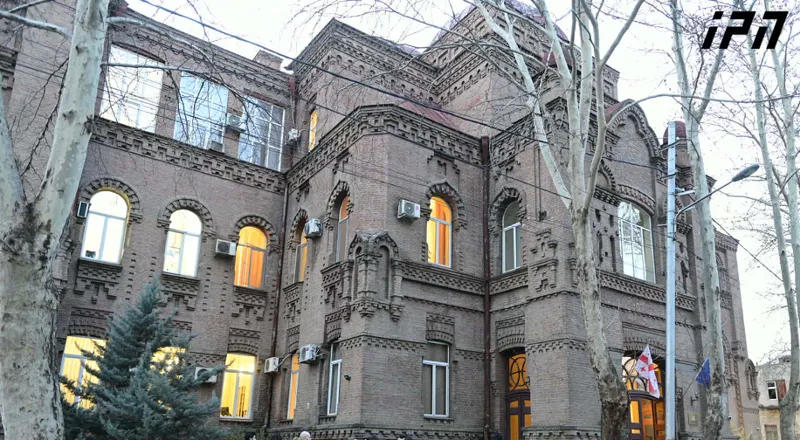
The Ministry of Education, Science and Youth has issued a statement regarding planned infrastructure works at public schools.
According to the ministry, moving the educational process to alternative premises is a temporary necessity aimed at ultimately allowing students to return to their schools and continue their education in an improved, safe, and appropriate environment.
“The purpose of carrying out infrastructure works in schools is solely to create a safe learning environment that meets modern standards for students and teachers. As for moving the educational process at some schools to alternative premises, this is a temporary necessity so that students can eventually return to their schools and continue their education in an improved, safe, and appropriate environment.
Information is also circulating on social media concerning the sale of school grounds, which is completely false and has nothing to do with reality.
Given the high level of public interest, we would once again like to explain the process in detail. This year, with the aim of renewing and developing school infrastructure, the Ministry of Education, Science and Youth identified a list of public schools where infrastructure works are required. The list was sent to the Ministry of Regional Development and Infrastructure so that, based on the relevant expert assessments and conclusions of the Levan Samkharauli National Forensics Bureau, the nature and scope of the necessary works could be determined for each school - whether the school would undergo full rehabilitation or, based on its existing condition, a new school would need to be built on the same site.
We would also like to inform the public about what happens when a particular school building is assigned Category IV based on an expert assessment by the Levan Samkharauli National Forensics Bureau. According to a government resolution, Category IV means that 30-50% of the building is damaged, its operation poses a safety risk, and there is a risk that individual structural elements could collapse suddenly in the event of external impact.
Accordingly, as soon as Category IV is determined for a particular school, the Ministry of Education, Science and Youth immediately takes a preventive decision to temporarily move the educational process to remote learning, for approximately one week.
It is important to note that assigning Category IV does not automatically mean that a new school building must be constructed. Each case is assessed individually, based on additional expert evaluations and a joint decision by the relevant agencies.
Specifically, an interagency commission is convened to examine each case individually. Within their respective areas of competence, each agency assesses the condition of the school building and considers two main issues: whether the educational process can continue in the same building, what work is essential for this, and for how long teaching and learning can safely continue there; and, if continuing the educational process on site is impossible, how an appropriate alternative educational space can be found immediately while work simultaneously begins on planning and implementing large-scale construction of a new school.
The commission’s decisions are based on two fundamental principles: protecting the safety of students and staff and maintaining continuity of the educational process.
Depending on the actual condition of each school building, the commission’s decision may differ from one school to another. The commission may decide, in accordance with expert recommendations, that all necessary works should be carried out at a school so that the educational process can temporarily continue in the same building, while the condition of the building continues to be monitored throughout its operation.
In such cases, the works will be carried out by a contractor under strict technical supervision and monitoring by appropriately qualified specialists from the Municipal Development Fund. Specialists from the Levan Samkharauli National Forensics Bureau will also exercise continuous individual expert control over the progress and quality of the works.
During the works, all necessary measures will be taken to ensure the safety of students and school staff. To protect their safety, the Ministry of Education, Science and Youth’s Mandaturi Service will allocate additional personnel. At the same time, the ministry will continue searching for suitable alternative premises so that further large-scale works related to the school building can be planned and implemented.
In cases where continuing the educational process in the existing school building is prohibited, the commission will decide to move the educational process to an alternative space. At the same time, the Ministry of Regional Development and Infrastructure will begin work on a specific timetable determining when the school building will undergo full rehabilitation or when construction of a new school will begin, in how many stages, within what timeframe, and when the process will be completed.
We fully understand that school infrastructure is one of the major challenges facing the education system. That is precisely why we have launched a large-scale school infrastructure renewal process aimed at addressing existing challenges systematically and consistently and creating a safe, modern, and dignified learning environment for every student.
It is important for the public to know that decisions within this process are made with the involvement of relevant agencies, experts, and local communities, based on specific circumstances and professional assessments. Unfortunately, attempts by certain individuals to use this issue for political interests and to mislead the public harm not only the ongoing process but also the interests of students and teachers.
We call on individuals and media outlets to approach this issue responsibly and refrain from spreading inaccurate information,” the statement said.