Iran’s ambassador was summoned to Georgia’s Ministry of Foreign Affairs
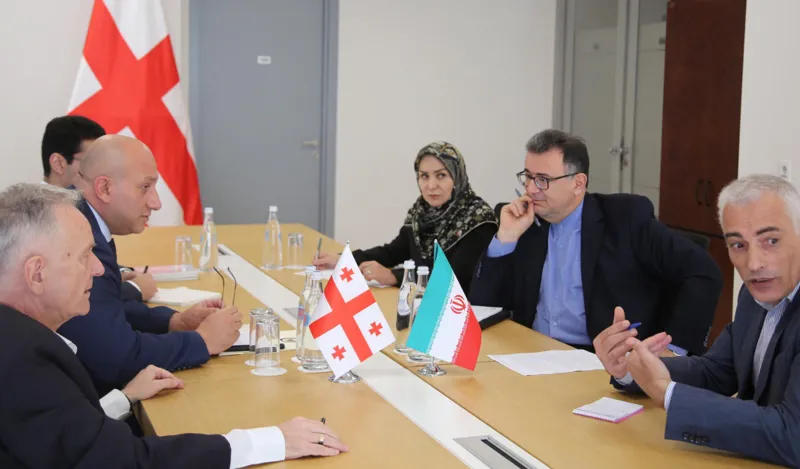
Iran’s Ambassador Extraordinary and Plenipotentiary, Seyed Ali Moujani, was summoned to the Georgian Ministry of Foreign Affairs over statements he had posted on social media. The Iranian diplomat has already appeared at the ministry.
According to information released by the Ministry of Foreign Affairs, Deputy Foreign Minister Alexander Khvtisiashvili explained to the Iranian ambassador that the statements he had posted on social media go beyond the scope of diplomatic activity.
According to the deputy minister, such statements have a negative impact on public sentiment. He expressed hope that the Iranian side would take appropriate measures and that similar incidents would not be repeated, so that it would not become necessary for the Georgian side to take additional measures.
Alexander Khvtisiashvili also explained to the Iranian ambassador that diplomatic missions accredited in Georgia must conduct their activities within the scope of their diplomatic mandate and competence, observe established norms of diplomatic relations, and refrain from interpreting the history and internal affairs of the host country.
For reference, a few days ago, Iran’s ambassador to Georgia wrote on social media that in the near future he would share with readers the results of his preliminary research concerning “both Queen Ketevan and the documents and historical sources preserved in Iran and Georgia.”
“An image of Queen Ketevan on the façade of the Iranian Embassy in Tbilisi - this evening, the façade of the Embassy of the Islamic Republic of Iran in Tbilisi was illuminated with a beautiful and sacred image of Queen Ketevan.
For me, this image is connected not only with the memory of a historical figure; it is a symbol of the historical memory about which there are still many different accounts to this day.
Soon, I will share with the readers of this page the results of my preliminary research concerning both Queen Ketevan and the documents and historical sources preserved in Iran and Georgia.
The material presented will be neither an official version nor a claim that I am having the final say on Ketevan; it will be a historian’s personal perspective and assessment at this stage of the research.
Naturally, this assessment should be supplemented, analyzed, critically reviewed, or revised in the future on the basis of additional sources and joint research by Georgian and Iranian scholars.
Perhaps rethinking such histories could be less about returning to the past and more about giving us an opportunity to get to know each other better and more deeply today,” the Iranian ambassador wrote.