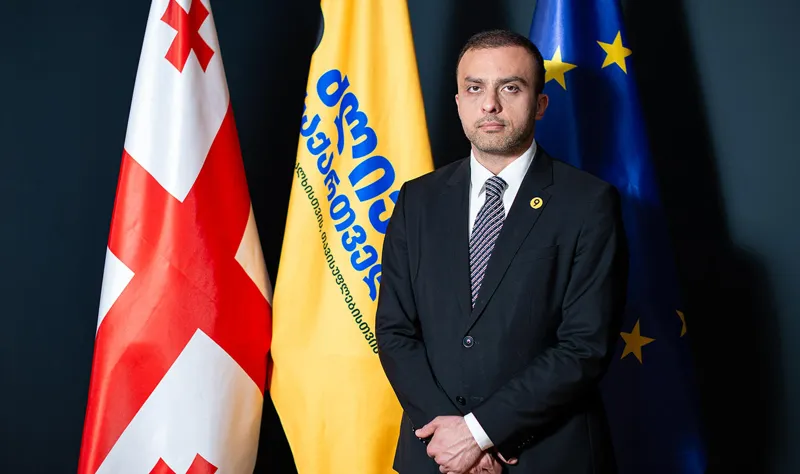
Nika Gvaramia: Ivanishvili has "lost his grip" on the street—the very street that, alongside the police, served as a primary pillar of his support and which he considers a decisive factor in terrorizing the public
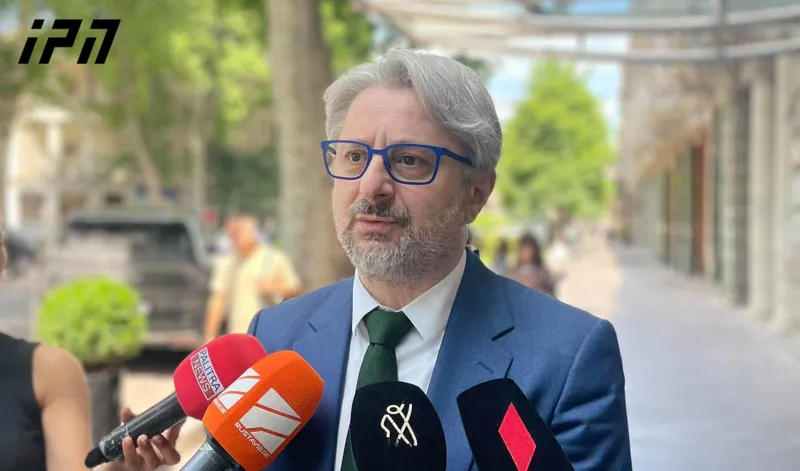
Today, it is not the public that fears Ivanishvili, but rather Ivanishvili who fears the public—prisons are at peak capacity and severely overcrowded; the majority of major criminals allied with Ivanishvili have been arrested and handed heavy sentences; the most prominent members of Ivanishvili’s elite are behind bars; and every opposition party is on the verge of being abolished. So, friends, this is an extremely hysterical form of self-preservation and self-defense—and we must certainly take advantage of it, - writes Nika Gvaramia, one of the leaders of the Coalition for Change.
As Nika Gvaramia notes, it is also likely that, by Ivanishvili’s own reckoning, the public has largely overcome other types of fears—such as those stoked by constant speculation about war. Furthermore, in Gvaramia’s assessment, the streets have also "slipped out of Bidzina Ivanishvili’s control."
"Why has the situation in prisons become so dire?
It is no secret that the Dream camp used to keep a close watch on the situation inside the prisons. This is understandable: one of the central pillars of the propaganda narrative known as the "bloody nine years"—alongside actual problems within the prison system—was built upon prison mythology. This included claims such as the rape of 26,000 men and the staged "mop-handle" footage (the circumstances of which—specifically how such a video could be staged within a high-security environment—remain unexplained to this day), among other things.
Against this backdrop, the rapid deterioration of the situation in prisons seems puzzling: incidents of prisoner beatings, torture, and even rape have become more frequent and have even come to public attention.
One could speculate on various reasons, but in my view, the most logical explanation is that Ivanishvili has lost his grip on "the street"—an element that, alongside the police, served as his primary base of support. Ivanishvili regards "the street" as a decisive factor in terrorizing society. This is a Russian phenomenon, and Ivanishvili recognizes no methods of governance other than Russian ones. It is also a fact that people no longer fear Ivanishvili and his system: numerous prisoners—especially political prisoners—have demonstrated to society that prison does not mark the end of one’s life; one can endure it, emerge even stronger, and continue the fight against the system.
These two distinct events created a unified context that shaped Ivanishvili’s decision: the threat of imprisonment for everyone—though not a "resort" stay, for in these prisons, people are raped, beaten, and tortured. Prison can indeed become the end of one’s life—whether a physical end (often disguised as suicide) or a psycho-social one (the destruction of the ego through severe humiliation). This is precisely the message Ivanishvili is conveying.
This form of societal terrorization has become particularly pronounced of late. It appears Ivanishvili has firmly resolved to counter the waning fear of him by employing a strategy of even greater intimidation. It is also likely that, by his own assessment, society has largely overcome other types of fears—such as those stemming from constant speculation about war.
We can best judge Ivanishvili’s situation by his actions; anything else is mere guesswork and gossip. It is inconceivable that a securely entrenched autocrat would resort to such extreme forms of intimidation—methods that, as Ivanishvili knows well from experience, are utterly unacceptable to Georgian society. Such tactics are employed only in moments of extreme vulnerability. Today, it is not society that fears Ivanishvili, but Ivanishvili who fears society.
Other facts reinforce this conclusion:
Prisons are at peak capacity and severely overcrowded (Gldani Prison alone holds nearly as many inmates as the entire country of Armenia);
Most of the major criminals allied with Ivanishvili have been arrested and handed lengthy prison sentences;
The most prominent figures of Ivanishvili’s elite are behind bars; Ministers responsible for security—that is, for protecting the individual and the system—are being replaced at a dizzying pace.
On the other hand, the country has so many political prisoners that it has set a record-breaking high—even for the post-Soviet space, let alone Europe.
Every opposition party is on the verge of being abolished.
So, friends, this is an extremely hysterical form of self-preservation and self-defense—the kind never resorted to by those who are balanced and standing on firm ground.
And we must certainly take advantage of this," writes Nika Gvaramia.