Shalva Papuashvili: Foreign interference remains a hostile act, regardless of whether it originates from an adversary or a friend—the time has come to establish an international standard for regulating foreign interference and funding
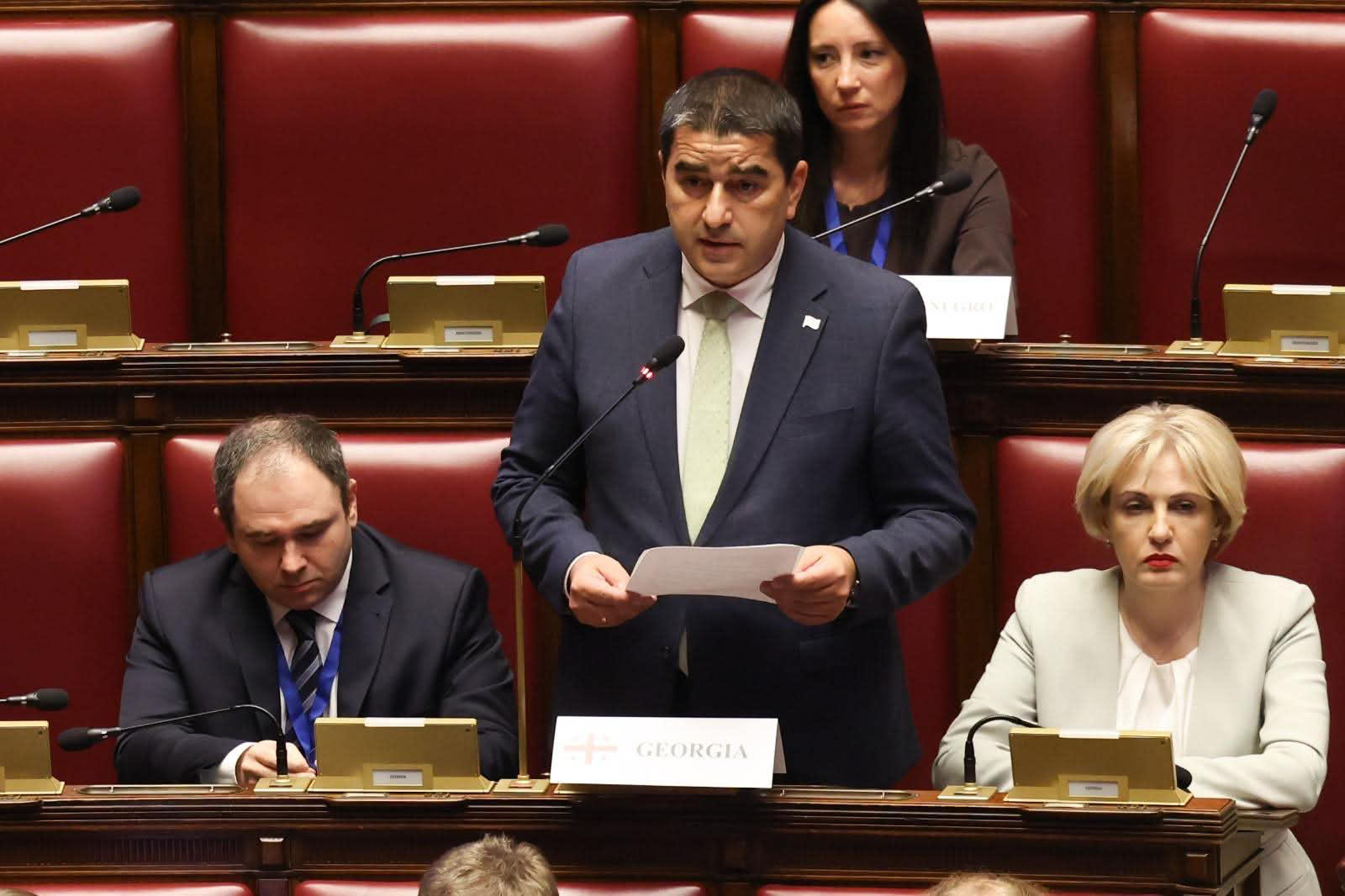
Democratic resilience begins with one simple truth: a democracy that is not accountable to its own citizens, or that does not act in accordance with its own national interests, is already in a weak position—even before any threat emerges. This was stated by the Speaker of the Parliament of Georgia, Shalva Papuashvili, while addressing the European Conference of Presidents of Parliaments of the Council of Europe in Rome.
As the Speaker of the Parliament noted, covert foreign funding warrants particular attention, as it is often the least visible—yet most damaging—means of undermining democracy and sovereignty.
According to him, ensuring transparency in foreign funding is not a departure from democratic values; on the contrary, it is a means of safeguarding them. Hybrid threats—including disinformation, cyberattacks, covert financing, and foreign interference—rarely operate in isolation. They reinforce one another, targeting the credibility of our democratic institutions and the decisions they produce.
“Among these tools, Foreign Information Manipulation and Interference (FIMI) is the most widespread and carries the most severe consequences. It typically manifests as coordinated disinformation campaigns, which intensify particularly during elections or periods of political instability.
In Georgia, two years ago, despite the presence of technical defensive mechanisms, disinformation and false allegations regarding electoral irregularities deepened polarization and fueled unrest surrounding the elections. Certain groups, funded from abroad, sought to undermine public trust in the fairness and legitimacy of the electoral process itself. This serves as a clear reminder that resilience in the information space can prove decisive for safeguarding state sovereignty—and, by extension, democratic processes.
Covert foreign funding warrants particular attention, as it is often the least visible yet most damaging means of undermining democracy and sovereignty. When external actors fund specific domestic political forces, they exacerbate existing divisions, transforming routine political discourse into a tool for advancing their own preferred agendas and deepening political polarization.
A growing number of states—including some that once criticized similar legislation elsewhere—are now confronting these risks themselves. Australia, Canada, France, the United Kingdom, the United States, and many others are tightening regulations concerning transparency and foreign funding. Such legislation has become a vital instrument for ensuring a "defensive democracy" and strengthening democratic resilience. Ensuring the transparency of foreign funding is not a departure from democratic values; on the contrary, it is a means of protecting them. The principle is this: a government accountable to people must have information regarding the money and influence entering the country’s political sphere," noted the Speaker of Parliament.
According to him, interference is rarely one-sided.
"Many states that condemn the erosion of the international order simultaneously attempt to exert influence over the internal affairs of other countries. National parliaments should not face this challenge in isolation. The recent activities of the Council of Europe—including a resolution on foreign interference and ongoing discussions regarding the protection of democracy and elections—already provide a solid foundation.
Foreign interference poses a danger to sovereignty and democracy, regardless of whether it is carried out by a hostile or a non-hostile actor. Foreign interference is, in itself, a hostile act, as its objective is to curtail the freedom of people and undermine democracy. Consequently, it remains a hostile act, whether it originates from an adversary or an ally.
The only way to break this vicious cycle is through developing a common international standard. The time has come to establish a standard for the transparency and regulation of foreign interference and funding—one rooted in sovereignty, accountability, and consent.
Only resilient and accountable democracies, operating under common rules, will be able to effectively counter hybrid threats,” stated Shalva Papuashvili.