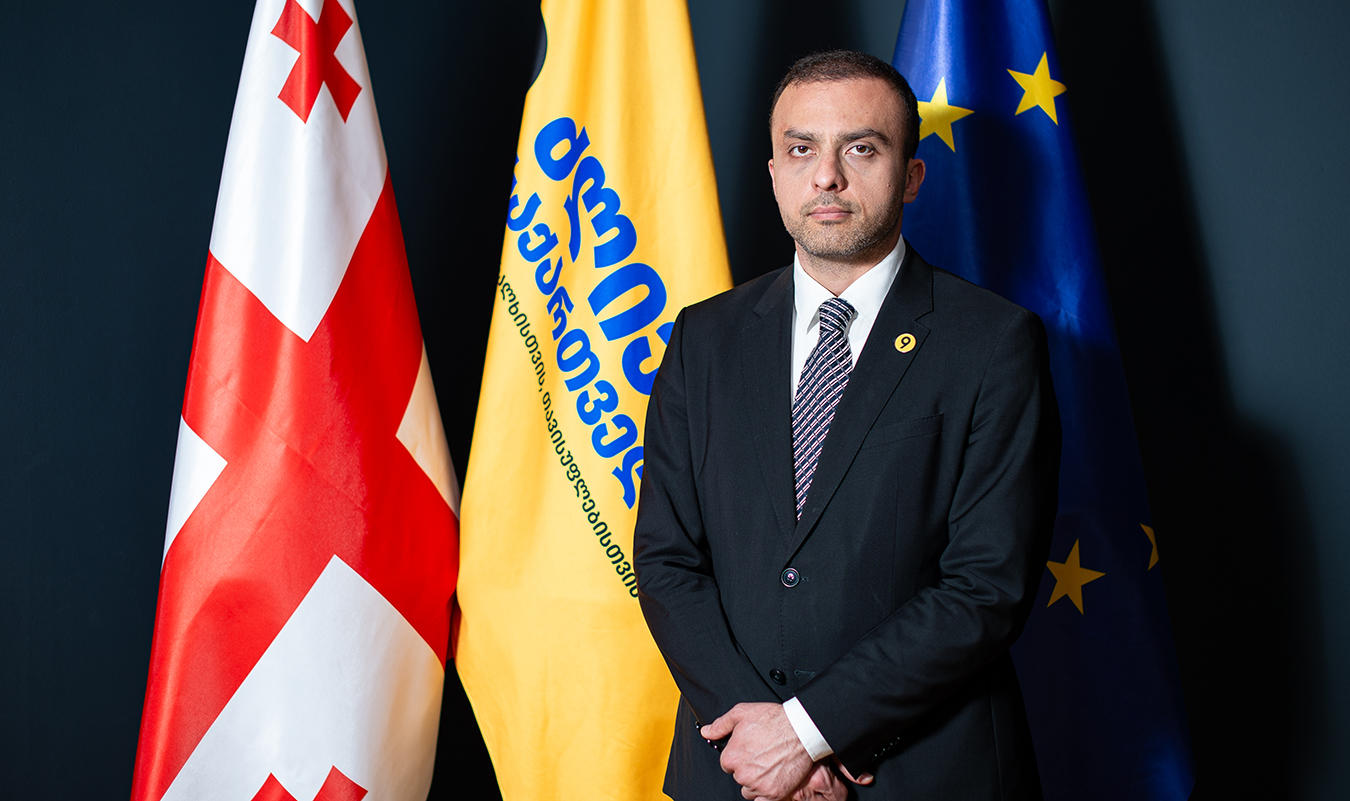
Shalva Papuashvili: The growing practice of turning international organizations into a political weapon causes concern; PACE must return to the foundations of international law - it is necessary to clearly distinguish dialogue from interference!
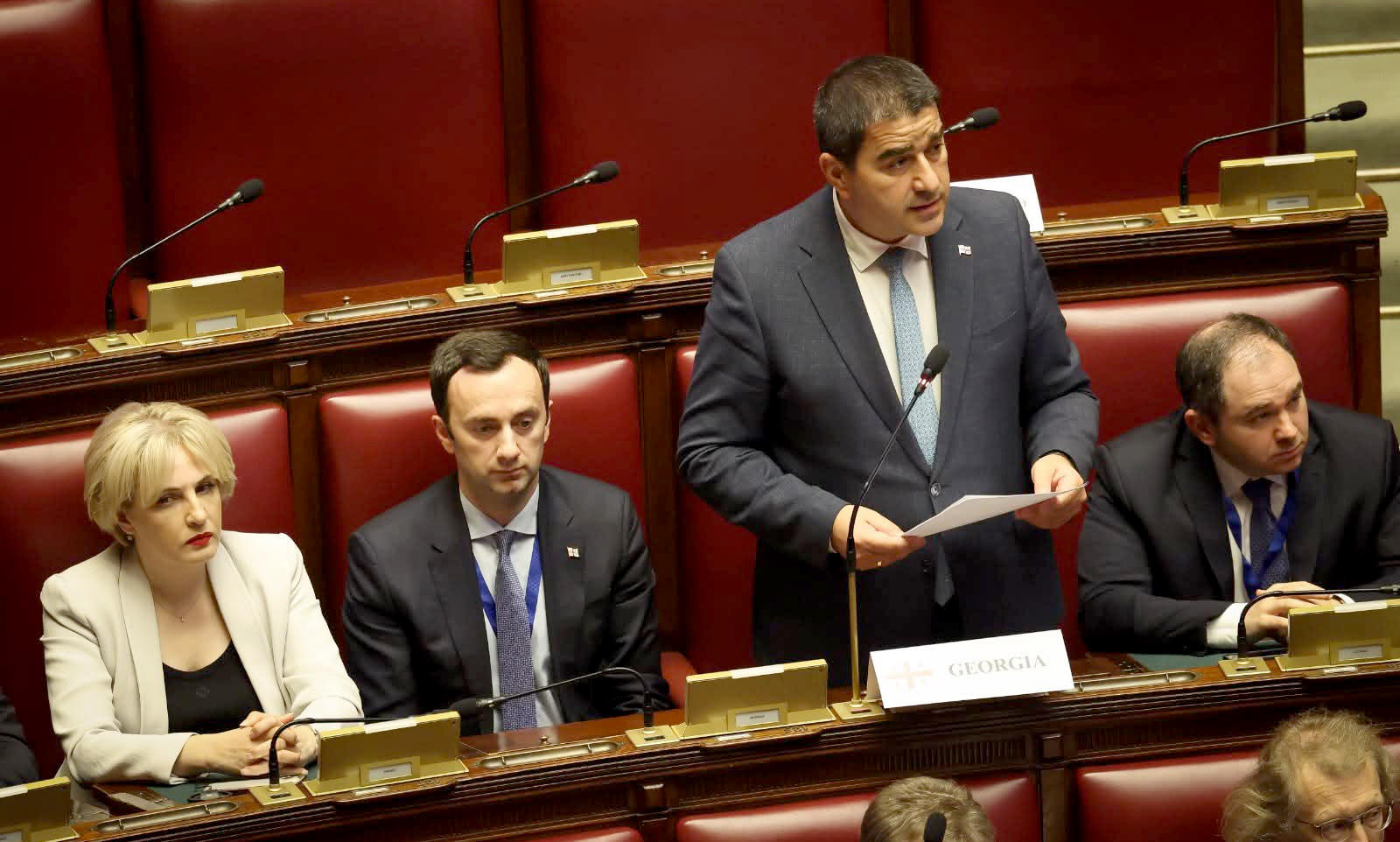
A rules-based international order does not collapse by itself – it collapses when the international institutions that are based on our common values and rules weaken, – this was stated by Speaker of Parliament Shalva Papuashvili while delivering a speech in Rome at the European Conference of Presidents of Parliament of the Council of Europe.
According to Papuashvili’s statement, “the growing practice of using international organizations to advance politically motivated and perception-based positions and of turning them into a weapon causes concern.”
According to him, an institution that is used as a weapon is no longer an institution – it becomes a conductor of someone’s interests.
“International institutions are only as strong as the trust and loyalty toward them. Their authority is based on legitimacy: the belief that the rules apply equally to all; that decisions are based on facts and fair procedures and not on political expediency; and that no one stands above these rules.
When legitimacy weakens, no text of any treaty will any longer be able to restore it.
Why do these institutions weaken at a time when the international order continues to collapse before our eyes? Often because they are instrumentalized. The growing practice of using international organizations to advance politically motivated and perception-based positions and of turning them into a weapon causes concern. When some states and political groups use institutions to advance a narrowly defined political agenda, to put pressure on some members and to protect others, or to turn monitoring and assessment into a political weapon, they deprive these institutions of their main purpose. An institution that is used as a weapon is no longer an institution – it becomes a conductor of someone’s interests.
The attitude of the Parliamentary Assembly of the Council of Europe toward Georgia is a clear example of this. In October 2024 parliamentary elections were held in Georgia. OSCE/ODIHR assessed the elections in detail and concluded that the elections were held in a competitive environment and, overall, expressed the will of the people. The OSCE/ODIHR report described the strengths and weaknesses of the elections and defined subsequent steps,” – stated Shalva Papuashvili.
According to the statement of the Speaker of Parliament, contrary to the OSCE/ODIHR report, the Council of Europe delegation, which consisted of PACE members, chose a completely different path.
“Unlike the OSCE/ODIHR assessment, PACE prepared a report that cast doubt on the results of the elections. Despite the fact that Georgia’s international partners, including the European Union, emphasized that the OSCE/ODIHR report would be decisive in assessing the elections, this promise was not fulfilled by some European governments and political groups. On the basis of this report containing much false information, PACE adopted a resolution that effectively rejected the legitimacy of Georgia’s democratically elected parliament. Almost two years later it became clear that all the accusations and pretexts put forward by PACE were erroneous, unsubstantiated and factually false. Nevertheless, PACE refuses to acknowledge its deliberately committed mistake, while the process has reached a deadlock.
Thus, the organization that we joined in order to protect our sovereignty and popular democracy continues to violate the democratic will of the Georgian people and, accordingly, their freedom. PACE must return to those foundations of international law for the protection of which it was created. The situation is unacceptable when democracy, sovereignty, human rights and freedom have become merely formal slogans. The final result of this process is the loss of trust and the stripping of the organization of its essence.
Parliamentary diplomacy is an important instrument that can contribute to the strengthening of a rules-based order; however, it is necessary to clearly distinguish dialogue from interference. Dialogue implies the exchange of views, the sharing of best practices and the observance of standards common to all states – those standards on which all members voluntarily agreed. Thus, the restoration of a rules-based order begins with the renewal of the integrity of those institutions and organizations that underlie this order. Georgia remains committed to this task,” – stated Shalva Papuashvili.