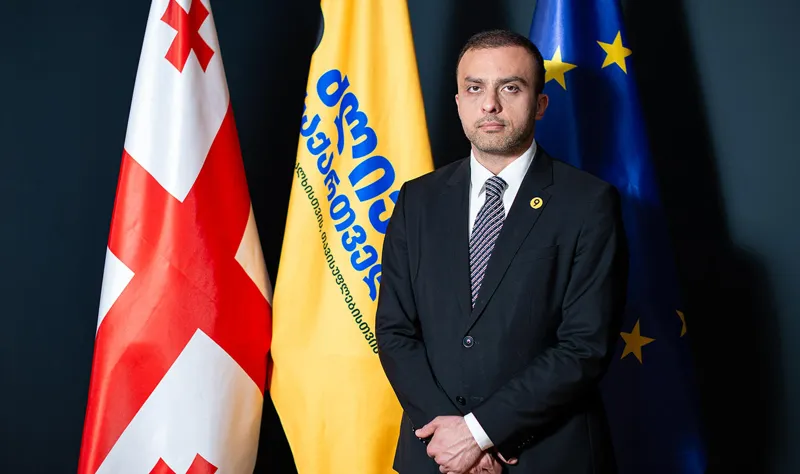
Constitutional Court Judge Vasil Roinishvili: Before 2012 I was not Deputy Prosecutor General - in my case there is no conflict of interest
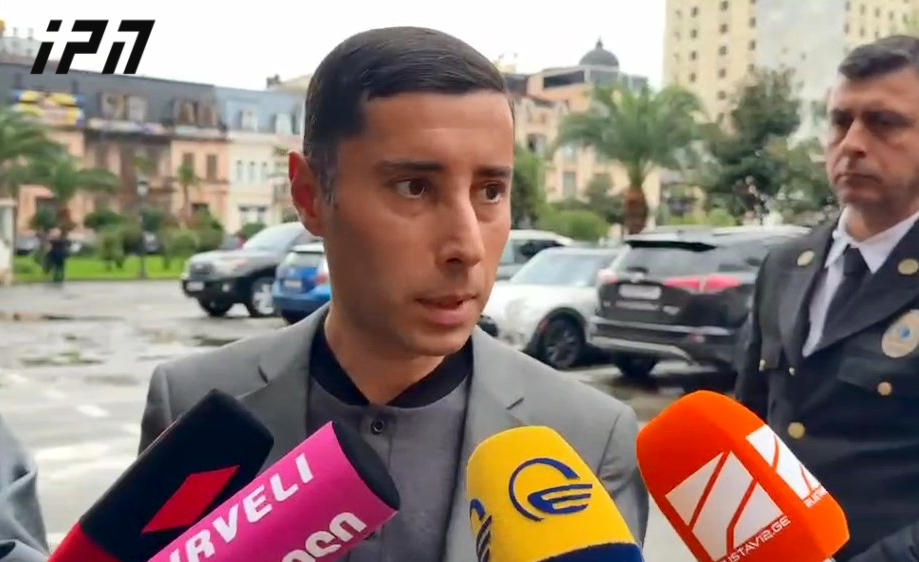
Before 2012 I was not Deputy Prosecutor General. At that time I was a procedural supervisor, who is an ordinary prosecutor and who has a supervisor, and he in turn has a supervisor; I was the supervisor of that person, roughly according to this scheme. In my case there is no conflict of interest, — this is how Constitutional Court Judge Vasil Roinishvili responded to the phrases voiced yesterday in the Constitutional Court in connection with the claim that before 2012 he was Deputy Prosecutor General and that he had a connection with the case of Roin Shavadze.
According to him, the arguments related to the request for recusal do not correspond to the truth, because before 2012 he was not Deputy Prosecutor General and there is no conflict of interest on his part.
“Probably we will not manage to complete the consideration, but this is a usual matter; the consideration will not go over into the weekend.
Before 2012 I was not Deputy Prosecutor General. As for the case of Roin Shavadze, an investigation was conducted in connection with this and a verdict has also been delivered. You should imagine what the authority of a prosecutor is. A prosecutor is the procedural supervisor of a case. Procedural supervision means that certain types of procedural actions require agreement with the prosecutor, in some cases the consent of the investigator when he is investigating a case on a fact that has occurred. What can a prosecutor do under these conditions? For example, a crime has occurred — with the agreement of the prosecutor prosecution is initiated or terminated, whether an investigation is started or not. In the case of Shavadze the investigation was carried out operationally.
At that time I was a procedural supervisor, who is an ordinary prosecutor, who has a supervisor, he in turn has a supervisor, and I was his supervisor, according to this scheme. In my case there is no conflict of interest. Then we can say the same about any activity. If a member of Parliament were a member of the Constitutional Court and the Constitutional Court were examining the laws whose repeal is taking place, then this would also be automatic grounds for recusal,” Vasil Roinishvili stated.
To journalists’ question whether the court considers the conclusion of the Temporary Investigative Commission an “unconditional truth,” the judge explained that “the recognition of something as an unconditional truth in advance is ruled out.”
“I cannot tell you in advance how events will develop. Suppose a party has brought a newspaper article to support its position — should the court accept this as evidence or not. In the event of admitting the evidence, its recognition as an unconditional truth cannot take place; this is ruled out. For something to be considered an unconditional truth in advance is ruled out,” Roinishvili stated.