Giorgi Shaishmelashvili: Corruption was the reason people mobilized in Serbia; I don’t think the same thing will happen in Georgia; corruption is not the issue that makes people here angry
Giorgi Shaishmelashvili: “Corruption was the reason people mobilized in Serbia. I don’t think the same will happen in Georgia; corruption is not what makes people here angry.”
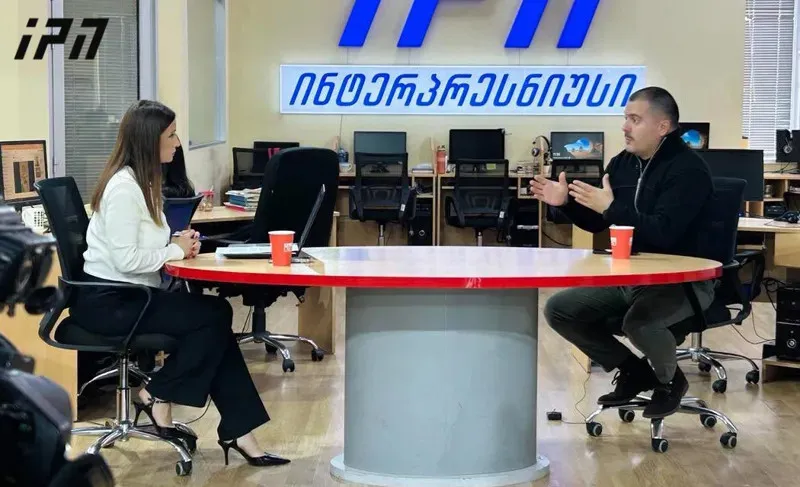
“I am convinced that Georgian Dream did not expect opposition parties to appear before the Constitutional Court. Otherwise, it would not have allowed either public coverage of the proceedings or the consequences that followed from that coverage. Everyone can see that Georgian Dream’s lawsuit fails to meet either legal or political standards. The ruling party’s attempt to clear the political field and its legally unjustified actions are directly linked to the growing public protest in the country,” Giorgi Shaishmelashvili, one of the leaders of the Freedom Square party, said on PalitraNews’ program "Day’s Newsroom".
According to him, Georgian Dream’s constitutional lawsuit fails to meet either legal or political standards.
“This goes beyond political retribution. The ultimate goal is for Georgian Dream to remain in power indefinitely and, to achieve this, clear the political field. Although the opposition does not appear to pose a major electoral challenge at first glance, Georgian Dream knows very well that behind these political forces lie public sentiments that could translate into concrete political outcomes at any time.
By initiating this process, Georgian Dream has acknowledged what some people have known for a long time: that the public has the power to defeat Georgian Dream.
The second part of the lawsuit concerns the country’s national interests and the August War. In this respect, the propaganda Georgian Dream is promoting becomes genuinely comical. On the one hand, they talk about why the United National Movement signed that well-known PACE resolution, while, on the other hand, they established a parliamentary commission whose conclusions included statements far worse than those contained in the PACE resolution.
In practice, they provided a basis for Russian propaganda and the Russian information narrative suggesting that Russia was conducting a peacekeeping operation in August 2008 and that the Georgian side started the escalation and the war.
Now they have taken all of this, along with the proposed ban on political parties, to the Constitutional Court. If the lawsuit is upheld, these claims will become established legal norms within Georgia’s legal system,” Shaishmelashvili stated.
Shaishmelashvili also addressed the practice of banning political parties in other countries, explaining that courts everywhere impose a very high standard on the parties bringing such cases.
“By that standard, the threat a particular party poses to the Constitution must be immediate and measurable.
The Constitution of Georgia also allows political parties to be banned if they threaten the constitutional order. In the example cited by Archil Gorduladze, the parties in question are primarily pro-Russian political parties. A country engaged in a war was forced to ban parties for advancing the national interests of a hostile state, thereby threatening Ukraine’s constitutional order.
In other words, a party may be banned if its statements and actions openly contradict the principles enshrined in the Constitution. Courts in every country where such proceedings have taken place impose a very high standard on the party bringing the case. This means that the threat posed to the Constitution must be immediate and measurable. Only then can such action be taken.
The party must also pose a real possibility of unconstitutional action; there must be a tangible likelihood of such conduct. Simply holding theoretical anti-constitutional views does not mean that a party will be banned.
In our case, Georgian Dream’s arguments are extremely weak. I am convinced that they did not expect opposition parties to appear before the Constitutional Court. Otherwise, they would not have allowed the proceedings to be publicly covered or the consequences that followed from that coverage, because everyone can see that Georgian Dream’s lawsuit fails to meet either legal or political standards,” Shaishmelashvili said.
The Freedom Square leader also discussed changes of government in several European countries, including developments in Serbia.
“Corruption was the reason people mobilized in Serbia. I have no doubt that the same would happen in Georgia if the circumstances were similar, given our difficult past. Soviet-era corruption is not, however, what makes people in Georgia angry. Nevertheless, the defeat of authoritarian regimes of a similar type naturally gives people some hope.
For us, this event is as significant as Garibaldi’s struggle was for Ilia Chavchavadze,” Shaishmelashvili noted.
Giorgi Shaishmelashvili also answered a question about a protest march organized by the Opposition Alliance several days ago and responded to Georgian Dream representatives’ claims that the opposition lacks public support.
The fact is that they know what happened at Sunday’s rally was merely a symptom of the much greater dissatisfaction that exists in the country. Behind it stand many more citizens who are unhappy with the situation Georgian Dream has created.
This is not about restrictions on political freedom. People are troubled by the disproportion between their incomes and expenses.
There was a particularly visible mobilization of analysts affiliated with Georgian Dream around this rally, and they claimed that its purpose was to support LGBT people and recognize same-sex marriage. I do not know how they made that connection,” Shaishmelashvili explained.