

Foreign Ministry: It is concerning that the European Commission’s report, containing factual inaccuracies and erroneous assessments, contributes to the reinforcement of anti-Georgian narratives, thereby narrowing the space for dialogue
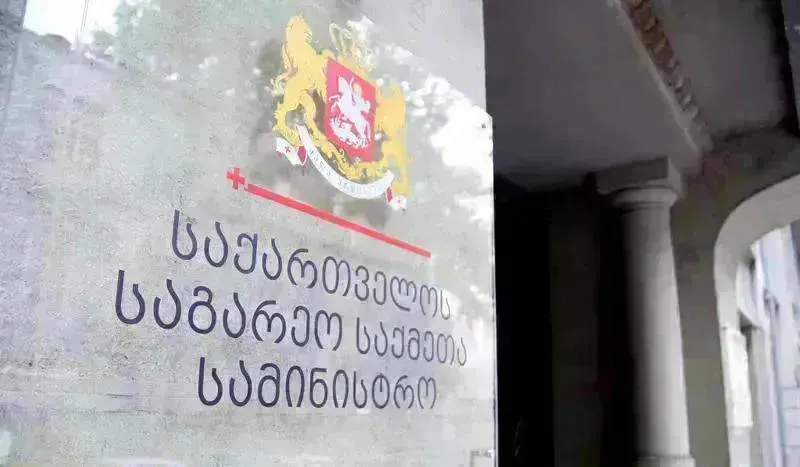
It is concerning that the European Commission’s report, with its factual inaccuracies and erroneous assessments, contributes to the strengthening of anti-Georgian narratives—which, in turn, reduces the scope for constructive engagement and dialogue between the European Union and Georgia. This is stated in a release issued by the Ministry of Foreign Affairs of Georgia.
As noted in the statement, the Georgian side will study the European Commission’s report in detail and submit substantiated comments to the European Commission.
“On November 4, 2026, the European Commission published a joint communication on enlargement policy, which includes a report on the efforts made by candidate and potential candidate countries—including Georgia—on their path toward European Union accession.
As is known, the European Commission’s report reflects progress made over the year, based on information provided by the candidate countries, as well as work carried out within the framework of dialogue formats established by the Association Agreement with the European Union.
It is regrettable that, during the reporting period, the EU side—citing the suspension of dialogue with Georgia (based on the European Council conclusions of June 27, 2024)—once again failed to hold any of the meetings stipulated by the Association Agreement at any level. This significantly limits the European Commission’s ability to objectively assess progress.
It is concerning that with its factual inaccuracies and erroneous assessments, the European Commission’s report contributes to the reinforcement of anti-Georgian narratives, which, in turn, narrows the scope for constructive engagement and dialogue between the European Union and Georgia.
It is unacceptable that the European Commission’s report attempts to characterize the governance of the state by an administration elected by the people with a significant mandate as "state capture"—when, in any democratic society, such governance is precisely the obligation an elected government owes to the state and its own voters.
It is concerning that the report, based on selective analysis, facilitates attempts to politicize legal matters; this undermines the principle of the rule of law and constitutes an overt attempt to interfere in the country’s internal affairs.
Labeling the responses of Georgian politicians—made in reaction to actions taken against Georgia by various actors—as "hostile rhetoric" amounts to an attack on the principle of freedom of expression; it serves to erode trust and damages the foundations of the partnership between Georgia and the European Union.
Although the enlargement report concerning Georgia is being used largely to voice biased assessments and to fuel political speculation; the Georgian side will study the European Commission’s report in detail and present substantiated comments to the European Commission.
The Ministry of Foreign Affairs of Georgia reaffirms the Georgian government’s readiness for an open and constructive dialogue with the European Union, based on mutual respect," reads the statement.