Irakli Garibashvili: The decision to hold my trial behind closed doors is a clear example of "shadow justice"; the authorities’ decision is driven by fear and intended to ensure that the proceedings take place "in the dark" - this is a classic example of a "kangaroo court"
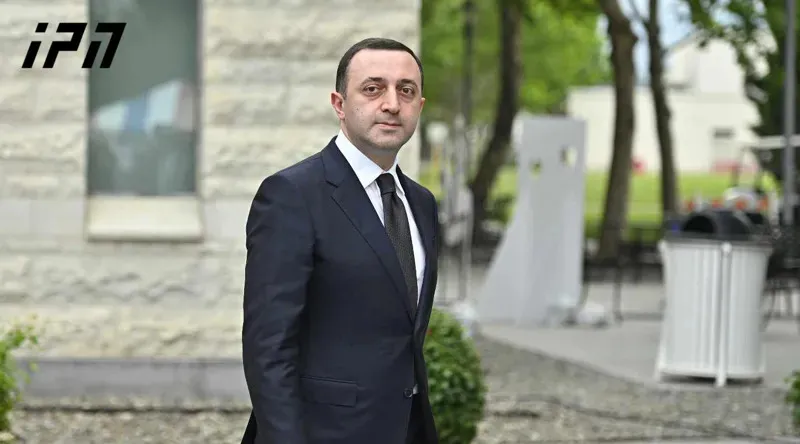
Former Prime Minister of Georgia Irakli Garibashvili has released another letter from prison.
Garibashvili describes the decision to hold his ongoing trial entirely behind closed doors as “shadow justice” and political persecution. According to the former Prime Minister, the authorities’ decision is intended to remove public oversight and conceal incidents of psychological terror and blackmail allegedly carried out against him.
Garibashvili says that “this is a classic example of a kangaroo court.” He accuses the authorities of applying double standards and selective justice, claiming that the prosecution is seeking to conceal evidence of blackmail and psychological torture allegedly inflicted on him.
Irakli Garibashvili reiterates that his case does not concern an “ordinary criminal offence” but rather “politically motivated persecution”.
“On November 2, the substantive hearing in my case began in court, where I intended to make a public statement about the political persecution and pressure to which I have been subjected. As the public is aware, the authorities made yet another unjust decision and ordered that my court hearings be held entirely behind closed doors.
Closing court hearings while similar cases have been heard in public constitutes discrimination, demonstrates double standards and grossly violates the fundamental principle of open justice.
The authorities’ motive is absurd and unfounded. This is clear evidence of a double standard: cases involving other individuals in the same context or facing similar charges have generally been heard in public, whereas my trial has been closed. This means that the procedure is being used not to uphold the rule of law but as an instrument of selective justice.
This is a clear example of ‘shadow justice’ and an attempt to eliminate public oversight. The closure of the trial is intended to conceal how political interests, mechanisms of pressure and fabricated evidence intersect in this case. When proceedings are closed, public and media scrutiny is removed, making it possible to hide systemic shortcomings, as well as the political persecution and retaliation being carried out against me.
This is a clear example of political isolation, aimed at completely isolating a political figure, silencing his voice and transferring the proceedings to a format in which the truth cannot be revealed in the public sphere.
The authorities’ decision is driven by fear and is intended to ensure that the proceedings take place ‘in the dark’. I want to make it clear that I have nothing to hide. Accordingly, I requested that the proceedings be open and conducted ‘in the light’.
Under international law and European standards, when the closure of court hearings serves not an objective necessity but rather the concealment of political processes, it constitutes a fundamental violation of the Convention. Furthermore, closed, non-public and selective judicial proceedings are among the main indicators that a case concerns not an ordinary criminal offence but politically motivated persecution.
During the closed hearing, I informed the judge about the psychological terror and combination of criminal acts carried out against me, involving psychological pressure and torture, mental and moral suffering, coercion and obstruction of my political activities. These actions constitute an extremely serious combined violation of Articles 3, 6 and 18 of the European Convention on Human Rights.
The entire process goes beyond the legal framework and represents a classic example of politically controlled justice.
I made a statement about the political persecution and serious crimes committed against me on August 17 via social media, when I published a letter sent by the authorities. Since then, I have been waiting for the authorities to respond by launching an investigation, which has still not happened. I would also remind you that, upon receiving information about a crime, the Prosecutor’s Office was obliged to launch an investigation.
When the Prosecutor’s Office and the court were aware of the blackmail and the letter but not only failed to investigate these circumstances but instead brought new, absurd charges against me in accordance with the ultimatum set out in that letter, then closed the proceedings and concealed the materials, the state itself assumed responsibility for this crime.
I would also like to point out that my defence team was not permitted to submit a key piece of evidence in court – the blackmail letter. Furthermore, the defence is being denied access to certain case materials, in gross violation of the principle of equality of arms. Under international law, such proceedings have no legitimacy whatsoever – they are a classic example of a ‘kangaroo court’ (a sham judicial process).
To conclude, I would like to state that the closure of the trial fits directly into the same pattern I have previously brought to the public’s attention: pressure and blackmail in prison, the disregard of evidence (the letter), refusal to provide access to case materials, and, finally, concealing the proceedings from the public by closing them. All of this is part of a single, deliberate process that has nothing to do with justice and is entirely characterised by political persecution and retaliation,” Garibashvili writes.