


Kakha Kaladze: I understand every person who loses significant time due to Tbilisi traffic jams; we are not prohibiting anyone from driving, but we must understand that street space is not infinite - the number of vehicles has doubled in 9 years
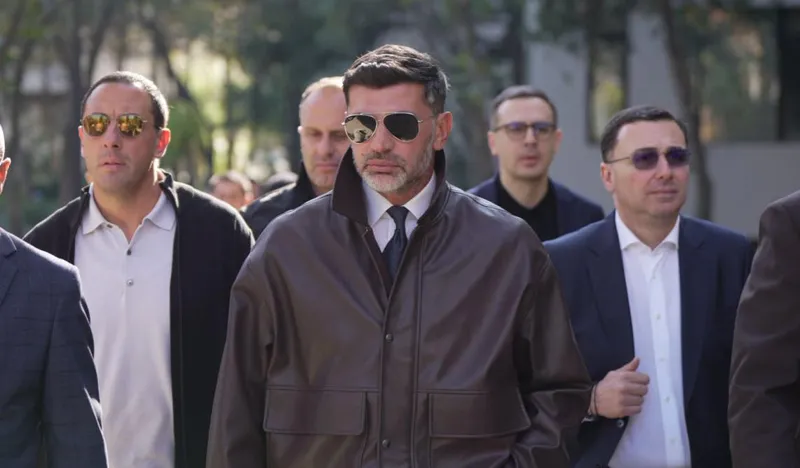
"We are not prohibiting anyone from traveling in their own car, but we must understand one simple thing: the space on the city's streets is not infinite," Tbilisi Mayor Kakha Kaladze stated in a video address posted on social media.
According to Kaladze, data from Tbilisi City Hall's camera monitoring system indicates that up to 900,000 vehicles are recorded in the capital within a single day.
"I understand every person who travels daily on the streets of Tbilisi and loses significant time due to traffic jams.
I know what it means when you are in a hurry to get to work in the morning, taking your child to school, and in the evening, tired, you want to return home and have to sit in traffic. Clearly, this is not just a transport problem. This is lost time for people, stress, and the hours they should be spending with their own families, children, and loved ones.
According to Geostat data, approximately 474,000 vehicles were registered in Tbilisi in 2017, whereas by the second quarter of 2026, this figure reaches approximately 948,000. In nine years, the number of vehicles registered in the capital has doubled. Added to this is the fact that Tbilisi is the economic and business center of the entire country. People travel to the capital daily from various regions of Georgia for work, business activities, and to receive services. Many vehicles are used for taxis and other commercial activities. We are not prohibiting anyone from traveling in their own car, but we must understand one simple thing: the space on the city's streets is not infinite," Kakha Kaladze noted.
According to Kaladze, numerous developed European cities have begun transitioning to a multimodal transport system, and Tbilisi's transport policy has been based on this exact principle since 2017.
"Numerous developed European cities, which faced the same problems we have today, began transitioning to a multimodal transport system — since 2017, we have based Tbilisi's transport policy on this very principle.
We often hear criticism alleging that the existing traffic jams are solely the result of transport changes implemented by Tbilisi City Hall. We do not shy away from responsibility. Managing the city's transport system is our direct obligation, but it is essential to separate the root causes of the problem from the steps we are taking to solve it. Tbilisi has its own geography, relief, historic neighborhoods, residential buildings, pedestrian spaces, and green areas. It is impossible to respond to the constant growth in the number of vehicles merely by widening roads and building new overpasses. For decades in Tbilisi, just as in many major cities around the world, road infrastructure was primarily tailored to private cars. However, international experience has shown us that simply creating more space for cars is certainly not a long-term solution to traffic congestion. That is precisely why numerous developed European cities, where the same problems existed as we have today, began transitioning to a multimodal transport system," Kakha Kaladze noted.
As Kaladze explained, the multimodal principle means that a city street must serve everyone—pedestrians, public transport passengers, car drivers, cyclists, and people using other means of mobility.
According to him, the municipality's goal is for the city's streets to be safe, orderly, and accessible to all road users.
"Everyone should have the opportunity for safe and accessible movement. We probably remember that years ago, walking on sidewalks was impossible. Chavchavadze Avenue was a good example of this. Sidewalks were overcrowded with cars, and a mother could not walk her child in a stroller. Since 2017, we have based Tbilisi's transport policy specifically on the multimodal principle. In cooperation with foreign experts, we developed a transport plan. Significant changes are planned based on relevant studies and transport modeling. With this approach, we renovated Chavchavadze, Tsereteli, Ketevan Dedofali, and Melikishvili avenues, as well as other important streets. The rehabilitation of Rustaveli Avenue is also being carried out under this same principle," Kakha Kaladze noted.










