Aleko Elisashvili: Constitutional Court judges ask 'Lelo' why they won't distance themselves from Elisashvili, saying he's a terrorist - I'm not a lawyer, but doesn't the presumption of innocence exist?
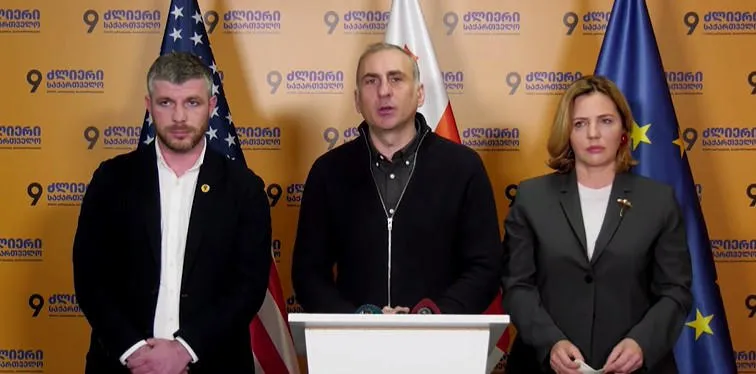
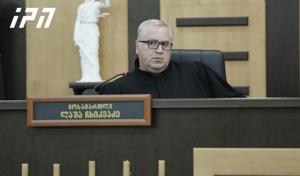
"Constitutional Court judges are asking 'Lelo' why they won't distance themselves from Elisashvili, given that he is a terrorist. I am not a lawyer, but doesn't such a thing as the presumption of innocence exist, which means that until a court issues a final decision at the national level across all three instances, a person is innocent?" — stated opposition politician Aleko Elisashvili, who is currently in detention, during the court hearing.
According to him, the ruling party built its lawsuit on something that has not yet been proven.
"Two incomprehensible things are happening to me. First, a review is currently underway in the Constitutional Court regarding the banning of parties, and one of the things being discussed today is that the party 'Lelo' should be banned because I am a terrorist, that Alexandre Elisashvili committed a terrorist act, and therefore 'Lelo' should be banned. I have never been and am not a member of 'Lelo,' but because I am on the list, the party must be banned. What is baffling to me is that the plaintiff is the Chairman of the Legal Issues Committee of Parliament, and he states as a settled fact that I am a terrorist and committed a terrorist act, and this is written in the lawsuit—that because I am a terrorist, the party must be banned.
Even the Constitutional Court judges are asking 'Lelo' why they haven't distanced themselves, assuming Elisashvili is a terrorist. I am not a lawyer, but doesn't the presumption of innocence exist, meaning that until the court issues a final decision—all three instances at the national level—a person is innocent?
How could the ruling party build a lawsuit on something that has not yet been proven?
Right now, isn't the discussion about whether I am a terrorist or not? The first instance court said I am a terrorist; my lawyers and I do not agree that I committed a terrorist act, which is why I am appealing. If you [the court] make the decision I expect and return this case to the City Court, what is the Constitutional Court supposed to do then? Is the country really this reckless and unhinged?" Aleko Elisashvili noted.
During the appeal hearing, Elisashvili also spoke about the fact that he is denied the right to visits and communication with family members, and asked on what basis this ban is imposed on him, especially when the Prosecutor's Office released the Director of the Penitentiary Establishment and the prison director on bail.
"For a year, I have been locked up in a strict-regime prison and cut off from the outside world; I see my family members here, but I haven't seen my mother and father for a year. They won't let me make calls, I can't send letters, and visits are banned. Why? Because the Prosecutor's Office decided that I might put pressure on witnesses—in a case where there is not a single human witness, and the only 'witness' is a four-legged dog! And what came of this?
On Saturday, the Prosecutor's Office charged the head of the Penitentiary Department and the director of Gldani Prison, whom the court then released on bail. In what case? These individuals committed a staggering crime. They planned and carried out something that—I state with full responsibility—did not happen even during Saakashvili's time: they committed a pre-planned, shocking systemic crime when a group of criminals was led into a person's cell, and for four days, they had him beaten and tortured. The head of the Penitentiary Department and the director of Gldani Prison denied this fact for a month. Eventually, the Prosecutor's Office was forced to admit that this had happened, claiming only that Vato Kipiani called the director of the penitentiary to let him into that cell, and so he let him in.
What does this mean? That Gldani Prison is an abandoned, ownerless building where anyone can just break in and walk around? In reality, it's not just two people at fault in this case; dozens of people are involved. Video monitoring is ongoing—how can you watch someone being tortured on a video camera for four days and not react? If the camera was turned off, why was it turned off? Why didn't the medical staff pay attention? Why am I saying this now? There are dozens of files and numerous pieces of evidence in this case, and destroying this evidence or pressuring these witnesses would be very easy.
The court released such people on bail, and the Prosecutor's Office sees no problem that they might pressure witnesses, yet they see a problem in me—that I am locked up in prison, in a strict-regime prison, with three video cameras installed on me, and all communication is forbidden under this demented allegation that I might call a dog from prison and exert pressure.
I could have imagined anything, but I didn't think I would develop a sense of responsibility toward that man [Geka Geladze]. After Bera instructed the SSG [State Security Service] to torture the Peikrishvilis in prison, he instructed Geka Geladze—who, to my surprise, turned out to have a very high sense of responsibility and principles, refused to take part in such malicious acts, and was fired from his job for it. I want to send my thanks to Geka Geladze from here," Aleko Elisashvili stated.