


Lasha Parulava: Commercial surrogacy creates risks of exploitation, oppression of women, and human trafficking, however commercial and altruistic surrogacy must be separated from one another
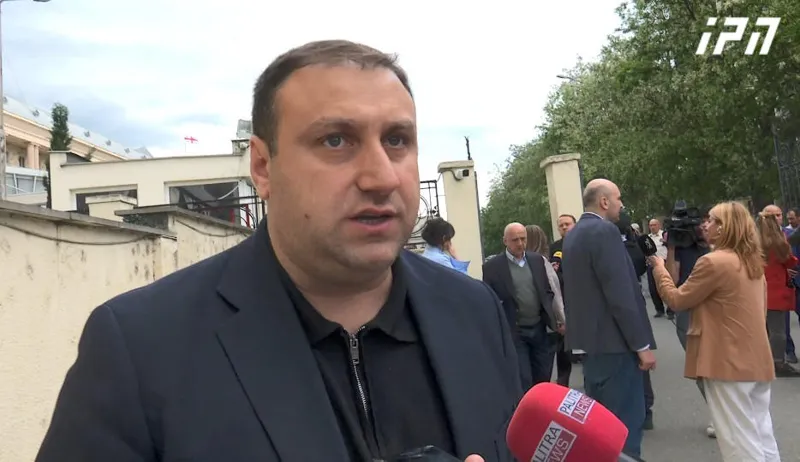
"If anything constitutes a direct violation of women's rights, it is commercial surrogacy, which creates risks of exploitation, oppression of women, and human trafficking. At the same time, it is important that we separate commercial and altruistic surrogacy from one another," wrote Lasha Parulava, one of the leaders of the "United National Movement," on social media.
According to Lasha Parulava, the "United National Movement" fully shares the vision of the Georgian Church!
"Regarding the topic of surrogacy, our position is clear and unshakeable. Our team, personally I and my friends, fully share the vision of the Georgian Church!
We believe that human life and the essence of motherhood should not become the subject of a transaction; therefore, commercial surrogacy is categorically unacceptable to us. If it is banned in Christian and democratic countries, it is all the more unacceptable for a conservative society such as Georgia.
If anything constitutes a direct violation of women's rights, it is commercial surrogacy, which creates risks of exploitation, oppression of women, and human trafficking. At the same time, it is important that we separate commercial and altruistic surrogacy from one another. Moreover, in vitro fertilization is a completely different medical procedure, and banning surrogacy does not mean banning it.
Approaches in European countries differ: in some places surrogacy is completely banned, while in others it is permitted in an altruistic form under strict regulations and oversight. In this regard, the experience of Orthodox Greece is particularly interesting, where altruistic surrogacy is permitted by law and is subject to prior court permission and strict conditions.
This means that childless families can use this opportunity not as a commercial service, but as human support and by the grace of God.
The problem with 'anti-Georgian Dream' is not that it has a position on this issue, but that it is trying to introduce a ban without discussion, arguments, and talking with society. Moreover, when it comes to real problems, their toughness and principality suddenly disappear.
Where is their unshakeability when it comes to fraudulent call centers and drug trafficking?
Where strict state action is needed, they do not bother.
Instead, they hypocritically raised a fuss over this topic when covering up the discontent caused by removing taxes for their own gambling business and raising utility tariffs became equivalent to survival for them.
Commercial surrogacy must be banned, but that does not mean the issue should be decided without discussion.
Society must know what dangers commercial surrogacy contains, why banning it is necessary, and how we should protect the possibility of altruistic surrogacy.
Such important decisions require talking with society, arguments, and responsibility, and not 'Dream's' next political manipulation," Parulava wrote.
According to Parliamentary Majority Leader Irakli Kirtskhalia, at a majority session a decision was made regarding the ban on surrogacy in Georgia. As Kirtskhalia noted, the main basis for the decision is significant ethical and legal risks related to surrogacy. "The main basis for the decision is significant ethical and legal risks related to surrogacy, especially in the direction of human trafficking, potential exploitation of women, and protection of children's rights. Let's take in a 100% slice the developments occurring in this sphere: 98% are not citizens of Georgia who use this service in our country. Somewhere around 2% are citizens of Georgia, and the state will do everything to give maximum support to our citizens. As for international practice, almost no country remains, including if we take European Union countries, where it is either banned or very strictly regulated. In fact, there are 5–6 countries, including Georgia, from the post-Soviet space, where this topic still remains," Kirtskhalia stated.










