


According to GYLA, the actions carried out against Tornike Razmadze across various platforms bear the character of a unified, targeted, and campaign-style harassment, and it is the state's obligation to assess these risks in a timely manner
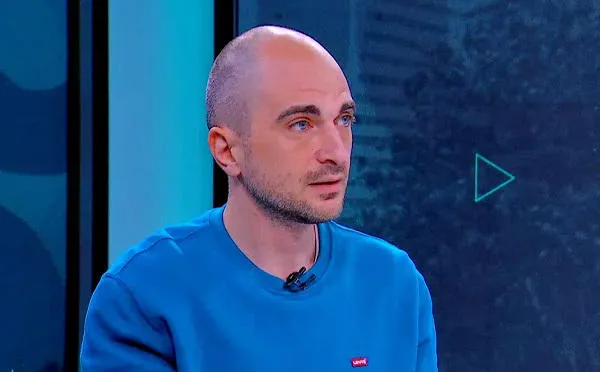
According to a statement by the Georgian Young Lawyers' Association, the actions carried out against civic activist Tornike Razmadze across various platforms bear the character of unified, targeted, and campaign-style harassment.
As noted in the organization's statement, these circumstances contain signs of a targeted persecution campaign against the civic activist, and furthermore, they must be assessed in the context of impersonation.
"GYLA responds to the dissemination of artificial intelligence (AI)-generated videos and false information on social media in recent days aimed at discrediting civic activist Tornike Razmadze.
According to a November 23, 2026 publication by Myth Detector, several materials containing discrediting content against civic activist Tornike Razmadze were spread on social media on November 21–22; specifically, [[.. 'On November 21, an anonymous Facebook page discrediting the opposition, Politikani (archive), disseminated a video on behalf of activist Tornike Razmadze in which he allegedly addresses a drug dealer and states that he wants to start working for him as a courier for "weed, 1-gram packs." The video is accompanied by the comment: "Now it is clear why he became buddies with Akhobadze." On November 22, a video was spread on the TikTok page DaDash Pirveli showing a man entering an apartment building hallway and bending down near gas meters. The video is accompanied by the caption: "Didn't Tornike Razmadze say he wasn't a drug dealer?"
On November 22, another anonymous Facebook page discrediting the opposition, Ganulebuli Opozitsia, published a photo of Tornike Razmadze alongside a mourning woman dressed in black, whose identification is impossible from the disseminated visual, with the caption: "Mother of a young man who died of an overdose: 'Drug dealers like Tornike Razmadze claimed my son's life.'" The post's description specifies that it refers to an emotional letter published on social media by Davit Buachidze's mother; however, neither the identity of the letter's author nor a link to the post is indicated.' ]]
Furthermore, during the same period, pro-government media outlets linked Razmadze to a Facebook page that presented old footage of a residential building collapse in Batumi as breaking news and spread false information about casualties.
In GYLA's assessment, these circumstances contain signs of a targeted persecution campaign against the civic activist, and furthermore, they must be evaluated in the context of impersonation, which entails using another person's identity in such a way as to create the impression that this person themselves is speaking, making a specific statement, or carrying out a certain action.
In the given case, the videos created and disseminated through the artificial use of Tornike Razmadze's image and voice attribute non-existent statements and actions to him, which contains clear signs of using his identity and imitating communication on his behalf. In the context of freedom of expression, it is decisive whether such material is perceived by a reasonable audience as obvious satire, parody, or an evaluative opinion, or whether it is presented as real audiovisual evidence.
In this case, according to GYLA's assessment, the materials are not accompanied by any clear indication of a satirical nature, nor could they be deemed or evaluated as such by an independent observer. This increases the severity of the impact on Tornike Razmadze's rights to honor, privacy, identity, and security.
One's image is one of the primary characteristics of a person. In the context of the false material disseminated against Tornike Razmadze, this principle is important because identifiable characteristics of a person are used in the disseminated false material to fabricate behavior that he did not commit. Thus, the person loses control not only over their visual representation, but also over what statement or action is attributed to them.
According to GYLA's assessment, the purpose of the targeted dissemination of false videos of such content is to mislead the public and an attempt to create a hostile environment against a person through the manipulative use of digital technologies—especially given that Tornike Razmadze is an active figure in public life.
GYLA believes that the actions carried out across various platforms bear the character of unified, targeted, and campaign-style harassment, the cumulative goal of which may be to cause mental suffering to the person, force a change in their lifestyle, and/or provoke violence against them."
It is particularly noteworthy that the dissemination of false information regarding the person's involvement in drug dealing is accompanied by the public disclosure of his personal phone number. Thus, in the given case, the false materials disseminated in the digital space may lead to the harassment of the person beyond the online environment as well, threaten his safety, and hinder his public activities. All of this could pose a threat to Tornike Razmadze's safety as a civic activist.
Accordingly, it is the state's obligation to assess these risks in a timely manner, take appropriate protective measures, and ensure effective legal remedies.
- AI-generated videos are circulating to discredit Tornike Razmadze, Myth Detector website, 23.11.2026. Available at: https://mythdetector.com/ka/thornike-razmadzis/, updated: 23.11.2026.
- "It is a discrediting campaign." Anonymous pages and pro-government media against Tornike Razmadze, Radio Liberty website, 23.11.2026. Available at: https://www.radiotavisupleba.ge/a/diskreditacia-tornike-razmadze/33904136.html?fbclid=IwY2xjawVxUq1leHRuA2FlbQIxMQBwZG9mBXNydGMGYXBwX2lkEDIyMjAzOTE3ODgyMDA4OTIAAR8rI2HxkZA-X1ugYADAKnqvivUSREVCrRXBKBoLgghQDcUhaCu4v99bP02OLw_aem_4DdYQt7cWCJkAHPRfEK_Bw; "The campaign against me has continued on a full scale. I do not rule out anything: presumably some plan has been developed, and this is not the final point either. I am consulting with lawyers on what can be done. I demand the deletion of the false information and an apology: Tornike Razmadze's Facebook page," 22.11.2026, available at: https://www.facebook.com/share/v/1CWFPzT9GA/, updated: 23.11.2026.
- Cambridge Dictionary, 'Impersonate': "to attempt to deceive someone by pretending that you are another person" (accessed: November 24, 2026).
- REKLOS AND DAVOURLIS v. GREECE, no. 1234/05, 15/01/2009, para 40," reads the statement disseminated by GYLA.










