Government’s tone of voice in which it talks regarding the covert monitoring is really inauspicious for it
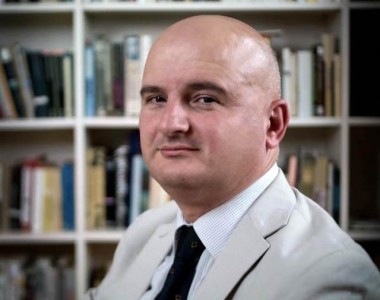
InterPressNews sat down to talk with political expert and Tbilisi State University professor, Korneli Kakachia, on acute issues of Georgia’s internal and external policy.
- Recently Britain’s Foreign Minister has paid an official visit to Georgia; now The French High Executive is planning to visit our country. Against the backdrop of Ukraine’s present developments, when the country is about to finalize the association pact, the determination of High ranking European officials to visit Georgia must be a propitious sign for us…
-- I agree with you; against the background of Ukraine’s current on-goings, the EU states must not slacken their attention to Ukraine and Georgia, as at this point in time, out of the Eastern Partnership states, only these two countries are moved by a strong desire to move closer to Europe; and neither do they lack recourses to realize this will of theirs.
Hence, these high-level official visits in Georgia cannot be viewed as accidental; in Brussels as well as in Paris, they do understand the importance of supporting the Georgian people’s political aspirations in the present state of play; precisely this has fueled the French President’s desire to visit Georgia. I am deeply convinced that Francois Oland’s official visit in Georgia will be as successful as those of other western leaders. I am sure that after this visit, the bilateral relations between Georgia and France will be even more broadened.
- Ukraine has still come under the spotlight -- the entire world’s eyes are set on it again. On May 7, Vladimir Putin issued some statements thanks to which he made it clear that he has refused to back up the separatists; he did also call for them to put the referendum scheduled for May 11 on hold. Despite the Russian leader’s appeal, in terms of the referendum results, the Kremlin expressed its hope –by issuing a relevant statement-- that the Referendum results will be put into practice through civilized means. Can the statement from the Kremlin make us deduce that the Kremlin wants Kiev to cede Donetsk and Lugansk by transferring their ownership to Russia? And do you think the sanctions against Russia have yielded a desired result? What Putin’s decision to “back down” can mean?
-- In my opinion, throughout the entire world there is not a single man who would give credit to Putin’s statement. Unfortunately, the ongoing developments in this part of Ukraine have proven the opposite. The sanctions imposed against it, has simply made Russia to gear to the role of an “objective and unbiased arbiter”; in this way, does it plan to put a blindfold over the eyes of International Community leaders. Although, if we keep a close eye to the current going-on and if we carefully listen to the rhetoric of the Kremlin leaders, it will become evident that those at the helm of Russia strain to achieve their long-cherished goal and strip Ukraine of its sovereignty; if Russia fails to realize this objective, then it will endeavor to disintegrate the country and form the so-called Novorossiya (New Russia), that is intended to incorporate the southern and eastern regions of Ukraine as well as the separatist region of Trans-Dniester.
If Russia succeeds in translating the aforementioned intention into action, this “artificially created” entity will undoubtedly share Crimea’s fate. In order to thwart Russia in realizing its corrupt plans, the West must stiffen the already set sanctions.
All this does not seem to be enough though; Ukraine must also manage to cope with its challenge by holding presidential elections that will finally bring a legitimate government into power. Only in this case will they manage to curb Russia’s imperialistic aspirations. I do hope that the Ukrainian people will successfully negotiate their challenge and will continue to fight for its freedom and independence to the last breath.
- Recently, the issue of covert monitoring has immensely excited our public; the statement from the Prosecutor’s Office saying that there is a big chance that the covert monitoring practice has been employed by the people at the previous Government’s service has even more obscured this matter. Georgia must be the only country, where reports are rife that the opposition covertly monitors the Government. Even if it is so, the Prosecutor’s Office must have notified them that the bugs and surveillance devices have vanished before the Rustavi-2 TV Company shed light on this issue. Do the latest developments push us to think that the effective state agencies formed by the Nationals (as Nationals themselves claim) have vanished along with this power? How would you evaluate the issue of covert monitoring, which has recently become a part of ongoing debate? Could you tell us to what may all this point?
- First of all, I want to emphasize that the Government’s comments over the issue of covert monitoring are definitely untrustworthy and even a bit comical. The public has been left with the impression that while executing their missions, the law enforcement agencies do employ the practice instilled by the former government.
Our authorities have found it difficult to clarify their own position because of the fact that they took power precisely in the wake of the people’s strong protest against covert monitoring. And today the Government has found itself on the horns of dilemma — it has to draw the line between protecting its legitimate interests and the people’s inviolable right to lead a personal life. I would put it straight and say that not only the government is faced with this problem today; we, the people, face it too. However, the tone of voice in which the Government talks regarding the covert monitoring is really inauspicious for it. The Prime Minister’s initial strict evaluations – that became less blunt later -- of Public sector were indisputably alarming.
We have been left with the impression that the leadership is either really inapt to preside over the law enforcement agencies or it is deliberately attempting to impose this idea on the public and, in this way, step away from its entrusted duties. In a nutshell, I do think that the Government must pass strong laws to regulate the covert monitoring practice, and by doing, this it must minimize the instances of employing this practice by the law enforcement agencies.
-If the Prosecutors Office was consistent and worked effectively, it would have given us names of those people who are to be held accountable for the disappearance of those expensive listening devices that had been installed by the Government. In your opinion what has prevented the body from taking this at first sight very simple step?
-I still think that the Prosecutor’s Office as well as the entire State Management System is entirely “out of shape.” Following through with this case is their and only their obligation, especially if they had kept the information regarding this case before. The Prosecutor’s Office presumably thought that by destroying the files showing the people’s personal life and by stiffening charges on covert monitoring, they would eradicate the covert monitoring practice. Their allegation saying that these devices were being employed by the people under the influence of the previous government is truly beyond me. If they knew this, the issue must have been handled earlier; and if they have dug up this information only know, this does not really speak well of them.
However, I do think that if a relevant political will emerges, they will manage to rectify the drawbacks surrounding this issue. And, most importantly, while investigating such issues, the public control mechanism must be strong; if the Prosecutor’s office bungles its job the best possible way out from this standstill would be to form a Parliament Investigation Commission that would objectively look into this immensely high-profile case.
- Let’s assume that the National Movement recorded and than presented these secret materials to the Rustavi-2 TV Company. What kind of political objective could they have set while taking this step? And did they manage to achieve their goal?
- Without concrete facts, it’s difficult to cast light on this matter. However, if we still assume this, the National Movement’s motive having incited them to take this step must be their determination to reinstate its image and exonerate itself from the wrongdoing it committed while secretly monitoring the people’s private lives. They know perfectly well that the public’s attitude regarding this subject has remained unchanged.
Thus, their matrix today is “Look at Him, He is worse than me”; in this way do they aim to defame the present authorities by showing the people that despite their promises no positive changes can be detected in this direction thus far. They must be hoping that scandals like this will incrementally make people challenge the legitimacy of the present Government, and this will, by all odds, play into their own hands.
- How would you assess the existing situation in the run up to the forthcoming elections? How big of a chance does the National Movement stand to set up in the local state institutions? Or does it stand to lose the status of a key opposing party? Can the National Movement be replaced with Burjanadze’s United Opposition, for instance?
- The local self-government elections can be defined as a landmark event that will enable us to adequately evaluate Georgia’s future political atmosphere. And its results are paramount for each and every political figure running in the race.
In my opinion, the voter turnout in the forthcoming elections is not expected to be high; as today a new political force that can present the constituency with any kind of innovation has not surfaced so far. Against this backdrop, despite fair diatribe against the Georgian Dream, it will presumably win its seat in the upcoming elections through inertia.
As for the political power that will take second position in these elections, as it happened during the previous elections, a decision on this issue is likely to be hammered out by the so-called non-aligned voters, the number of which has reportedly hit around 30 percent. At this point in time, it is really difficult to predict which force these people will vote for. Whether this way or that, I do think that the National Movement will retain their status of the Georgian Dream’s core opposing force at least before the next Parliamentary elections.
When it comes to evaluating the pre-election environment, we must point out that by and large, it has remained radically polarized. As in the bygone days, today also the political parties have refused to focus on the issue paramount for the country; they are still concentrated on certain inpiduals and are endeavoring to discredit them; and you know, this is becoming boring.
- Our Defense Minister’s statement regarding the necessity of installing air defense system in Georgia has sparked discrepancy and has also brought certain not so pleasant issues to the surface: 1. No one knows what made them think that Mr. Alasania would urge NATO to install an anti-missile system in Georgia in order to defend it from Russia’s aggression; 2. Statements from Irina Imerlishvili and Manana Kobakhidze directly points to the fact that the leading party is not an united entity; 3. It’s difficult to comprehend why did Alasania’s statement triggered aggression from our people that long to live in an independent state? What kind of comment could you release over this “misunderstanding?”
- The controversy triggered by the issue must presumably ascribed to the fact that this important statement had not been agreed on with the leading party; and this, obviously, brought a relevant response from the Government as well as the people. We can argue regarding the fact of whether or not the Defense Minister is entitled to make arbitrary statements, however, if we look over the statement carefully, we will come to an incontrovertible conclusion as per which Alasania had brought up a quite positive and rational initiation; the core aim of his announcement is to boost the country’s defense system and remind our allies of the facts that Georgia is still under a threat of Russia’s overwhelming aggression. In the present state of play, the aforementioned statement seems to be prompted by our Defense Minister’s desire to lead the country out of the present critical situation. However, against the present political background, it would be better to discuss this issue behind the scenes instead of throwing it into the mix as a point of hot discussions.
Generally speaking, it is immensely desirable to found our defense and security policy on the principles of real policy rather than confine it to some idealistic approaches; as Barbara Conri’s statement as per which our historic experience clearly shows that big states are reluctant to sacrifice themselves for their small allies really corresponds with reality. Thus, Georgia must necessarily adopt a realistic and promising foreign policy, the core political imperative of which will be to retain a sovereign and independent state.
Koba Bendeliani
InterPressNews