The strategic plan of 2020 will share the fate of those having been shelved and forgotten -- Koba Kikabidze
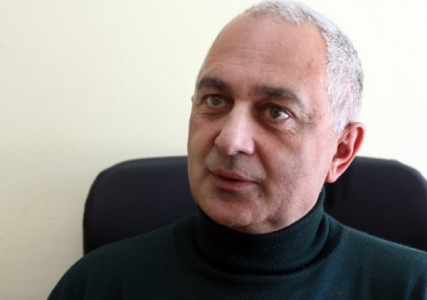
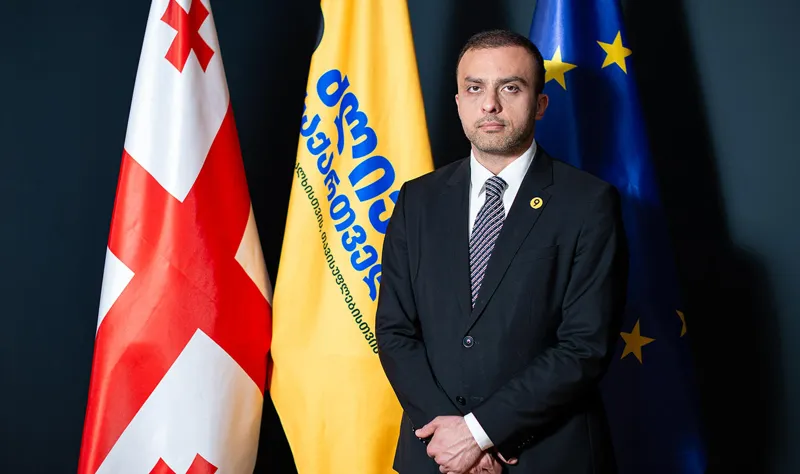
InterPressNews sat down with Project Manager of NGO “Strategic Initiatives Agency,” Koba Kikabidze, to discuss the prospects of Georgia’s economic advancement.
-- We are well aware of the fact that the political processes have their own dynamics as well as laws and the public follows these processes extremely carefully. Although the economic standing of the country is also immensely important for the people as it plays a role in the quality of their life. The acting authorities have reiterated that our business has been released from pressure and our economy is incrementally advancing; however, we do not need to be extremely versed in this sphere to conclude that they’ve failed to provide their people with jobs in those recently built enterprises; neither have they succeeded in releasing new high-quality products we can proudly export to foreign countries. Some experts are optimistic about the future and they positively evaluate the present situation in the country, while others claim that Georgia is suffering from economic stagnation. What could you say regarding this issue?
-- I want to make some opening remarks before answering your question: before coming into power via revolution, the former authorities had outlined their policy accurately – they knew perfectly well what kind of objectives they had to realize, what kind of results they wanted to get and how they were going to tackle the economic issues. Their intention to build a nation corporation through their pseudo liberal leverages rather than a nation state could be defined as a paradigm shrouded in the veil of Neoliberalism. However, they failed to realize that their counterweight force would one day emerge… Today, the National Movement has simply turned into a denomination with its perpetual charismatic comedian leaders and with some kind of ideological doctrine.
Let us now turn to the present authorities. Before taking up the reigns of Georgia, the Georgian Dream had elaborated an economic doctrine that was oriented on social issues, and that was included in the country’s inclusive strategic development plan of 2020 having been proven to be rather eclectic and unsystematic. This plan has been more or less executed in such directions as healthcare system, agriculture etc; however, the signs proving that they have elaborated any kind of systematic policy to boost the country’s industrial potential have not, unfortunately, surfaced thus far.
As it seems, the strategic plan of 2020 will share the fate of those having been shelved and forgotten. However, it should also be noted that some positive institutional tendencies in this direction can be seen in the country. I mean the recently founded Regional Development Council as well as their intention to create an Innovative Development Commission that is expected to become a tool helping them in elaborating a well-formulated strategy thanks to which they will precipitate breakthroughs in our economy and will move the country forward.
- The Dream Government has failed to live up to the Georgian people’s expectations and to increase the number of our enterprises. They’ve failed to deliver on their promise of building 100 factories; however, it’s also a fact that they have taken some measures in this direction. In your opinion, why has the government failed to build the new factories and enterprises in our country? Have they simply refused to try and involve our country in The World Division of Labor?
- It’s without question that in order to improve the country’s economic standing, the Government must first handle this issue in different regions. The present authorities have taken really rational steps in this direction. They have adopted some effective measures to carry out the project “Produce in Georgia” as well as other projects by the Co-investment fund. Although they still have much more left to do in this direction and they have to deal with the Law on the Country, the Region’s Strategic Planning, Innovations and Competitiveness earlier than other issues. Likewise, they have to tackle the issues linked to different regions and municipalities of Georgia.
As for the last part of your question, regarding that I would simply state that in this particular case we simply face a deficit in competent researchers and decision-making public figures that could offer the present top officials some rational recommendations to help them advance our economy.
- The EU has allocated as much as 30 million Euros to Georgia for its rural development. If we believe our Prime Minister, the Georgian Government is making arduous efforts to create prospects for our regions to develop economically. However, the issue of effectively using the 30 million Euros from the EU has not been raised thus far. As far as we are concerned, they have drawn up the strategic development plans for all 7 regions of Georgia. Although none of these plans are working today. Could you tell us why?
- Right, the rural development strategy has already been elaborated for the regions of Georgia and it has been adopted as a state program. Different experts from the EU, mainly the former European officials worked on the elaboration of the aforementioned strategy. The methodology on which the strategy was founded is rather obsolete and the modern European states do not use this strategy nowadays. On top of that, the regional governmental agencies that are responsible for executing this strategy lack the necessary professional skills and experience. Consequently, the vicious circle of incompetence starts precisely here.
-- On what is the rural development system founded in Europe? What is economic clustering and how is it used in the rural the development planning process?
- The innovative development strategy is the foundation of Europe’s regional development. However, if we don’t look at it more carefully and don’t figure out the constituent elements of the region that are the so-called regional assets, we will fail to create this innovative development strategy. The starting point for all strategies is trust between the Government and the citizens of a country, three main pillars for a cluster strategy – innovations, talented people and the existence of a networking system. The word cluster was defined by the Harvard University Professor, Michael Porter who says that a business cluster is a geographic concentration of interconnected businesses, suppliers, and associated institutions in a particular field. Clusters are considered to increase the productivity with which companies can compete, nationally and globally. In our day-to-day world, the cluster development strategy is a methodological instrument in the regions’ development planning process.
-- In what manner can we adapt the development of our regions to the European standards and norms?
- A unique chance to move closer to Europe has fallen into the hands of Georgia today. Innovative cluster planning is a tool we must use to achieve success in this direction. We are simply obliged to use the experience of the European states and gear this experience to Georgia’s reality.
-What kind of European business clusters must the government implement in Georgia today? Plus, on what should it the spend 30 million Euros that the EU has allocated for our country?
-- There are two kinds of clusters: old and new. Fortunately, we have a rather great deal of old clusters such as vineyard and winemaking clusters, agricultural and other clusters. Some clusters such as tourism and transport corridor clusters were remolded as well.
All these clusters must be used rationally and their development prospects must also be created in a way that is comparable to that of the civilized world.
As for those 30 million Euros, if I were in the present authorities’ shoes, I would use these funds to create Georgia’s regional assets map. This would enable us to find out what kind of human and financial resources we have to finally create our regional development strategy.
Koba Bendeliani
InterPressNews