Today, the relations between Russia and Abkhazia are built up according to their own algorithms and this process has absolutely nothing to do with Tbilisi
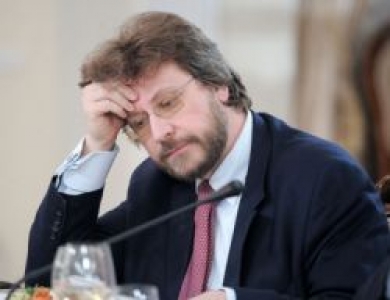
InterPressNews sat down with Fyodor Lukyanov, Chairman of the NGO “the Council on Foreign and Defense Policy” as well as the editor-in-chief of journal “Russia in Global Politics” to discuss the goals and objectives of the recently signed agreement between Georgia and Abkhazia on “Alliance and Strategic Partnership” as well as the present developments in Ukraine and the hypothetical prospects of the Georgian-Russian relations.
--A deal between Moscow and Sokhumi has already been negotiated. It’s true that the deal has been defined as an agreement on “Alliance and Strategic Partnership”; however, official Tbilisi has evaluated it as a step towards the annexation of Abkhazia. As a matter of fact, the International Community has also condemned this so-called agreement. What kind of comment could you issue regarding this matter?
- I cannot really get how Russia has annexed Abkhazia from Georgia by simply finalizing this agreement with the Abkhazian Government? On the contrary, this is just a document completed between the two states and it changes nothing in the end. The fact that Abkhazia is reliant on Russia and its assistance has never been a secret for any country including Georgia.
We can attach different names to these formats. After the Cold War, the notion of strategic partnership has been denigrated and devaluated. They’ve defined everything as a strategic partnership. I, of course, pay attention to the formulations; however, at the same time I know that all these formulations are conditional. By finalizing this agreement, the parties have, in fact, once again demonstrated their close relations. Russia has always recognized Abkhazia’s sovereignty even without this deal. Thanks to it, it just once again showed this. Therefore, I stress, the agreement has been sewn up between the two states which is why I’ve failed to see any signs of annexation on this particular occasion.
--While touching upon the aforementioned agreement, all international organizations have strongly emphasized that it cannot be viewed as legal on the international level since the International Community has refused to recognize any elections having been conducted in Abkhazia after the ethnic cleansing against Georgians was launched there. By the way, by supporting the OSCE-Budapest (1996) and Lisbon resolutions (1999), Russia also recognized that Georgians were subjected to ethnic cleansing in the breakaway region of Georgia. What kind of a conclusion can we draw today? Is Russia for ethnic cleansing on this or that territory now or does ethnic cleansing simply fall in its hands on this particular occasion?
-No way, Russia is not encouraging this practice. As you know, Russia has always recognized Abkhazia’s sovereignty. It did this in 2008, and it has never recanted its sovereignty since then. Nothing else, including the position of the International Community, matters for Russia today. Russia has recognized each and every election having been held in the region thus far. Once again I stress, Russia proclaimed its final position in terms of Abkhazia in 2008. Russia recognized sovereignty of the region, and it does understand that its position does not coincide with that of the rest of the world; however, we all know that this precedent is neither the first nor the last.
- You probably know that the aforementioned agreement has triggered discrepancy from the Abkhazian people. In addition, you must also be informed that the number of those who are against this agreement outnumber those who support it. Moreover, a large number of the Abkhazian people think that this agreement has stripped them off their sovereignty and has made their region a province of Russia. However, Moscow has given the cold shoulder to the Abkhazian people by ignoring the reality. Could you tell us why? Can we presume that precisely this deal has resulted in the austere of President Anakvab? Does this give any ground to think that Mr. Anakvab was against integration with the Federation of Russia?
- Right it’s not a secret that the aforementioned deal has sparked a massive backlash from the Abkhazian people. This issue has become a point of hot debates and heated discussions. Abkhazia abounds with supporters of this agreement as well as those who are opposed to it. The only thing we’ve left to do now is to see the difference between these two parties. As far as I am concerned, in Abkhazia, absolutely no one is against building ties with Russia. If some are against this, their number is very few. Obviously, we can argue about how Abkhazians could have legalized these ties with Russia and such discussions have already been launched in Abkhazia.
As for Anakvab, regarding this issue I can say that political events in Abkhazia move extremely swiftly; situation there is immensely turbulent. Consequently, Anakvanb was deposed of because of one reason – the people were dissatisfied with his government as well as the steps taken by him. The people were discontent with his ruling style as well as the dark economic background in the region.
Anakvab’s resignation has nothing to do with Abkhazia’s integration with Russia. Abkhazia’s integration with Russia and not its annexation as some try to define this process in Georgia is a step towards Abkhazia’s sovereignty. I emphasize it’s a step forward and not backwards. Moreover, if Abkhazia succeeds in convincing the partners of Russia that it longs to join the Eurasian Union it will significantly boost its status; however, as far as you can see, this has not happened thus far.
As for the deal, despite the fact that it has stimulated opinion clashes in the Abkhazian public, not only the Abkhazian Government but also the left-wing party has finally supported it.
- In your opinion, by signing this agreement, what kind of message did Moscow want to deliver to Tbilisi? Had Russia held any consultations with Tbilisi before the agreement was negotiated?
-- Moscow recognized Abkhazia as a sovereign state a long time ago. Why should it have held any consultation with Tbilisi? It’s beyond any kind of logic, is it not?
As for the message Moscow wanted to convey to Tbilisi, what kind of a message are you talking about? Moscow has its own dynamics in the relations with Abkhazia. I cannot really say that everything in this direction is running smoothly though. We cannot deny the fact that the Abkhazian government as well as the people are, let’s say, rather tough customers. Today, the relations between Russia and Abkhazia are built up according to their own algorithms and this process has absolutely nothing to do with Tbilisi.
- Generally, similar statements are publicized as soon as they are signed; however, on this particular occasion, this has not happened. Could you tell us why? Can we presume that some kind of secret articles have been included in this deal? Or can we assume that Putin and Khajimba have held some behind-the-scenes negotiations?
- To tell the truth, I am clueless regarding the procedures similar deals must undergo before they are publicized. However, I exclude the inclusion of any secret article in this agreement as everything in terms of Abkhazia is absolutely clear even without this.
- Upon the completion of the deal, President Putin sated that while holding negotiations with Mr. Khajimba, he largely focused on the issue of the Abkhazian railroad. As you know, Abkhazian people crusaded against their move to open the railway as they thought that this would have resulted in uncontrollable immigration of the Georgian people in Abkhazia. The Georgian experts surmise that Moscow persuaded Sokhumi to restore the railroad after ensuring it that the Georgian people would not have returned in the regions of Abkhazia except Gali. Can this theory be close to the truth?
- Frankly speaking, I fall short of information regarding this issue and it would be better for me not to speculating about it.
- As a matter of fact, some Georgian experts also don’t rule out that by reopening the Abkhazian railway, Russia is getting ready to declare a war on Georgia. You might remember that before the Russian-Georgian war of 2008, Russia renovated the section of Abkhazian railroad to Ochamchire…
--I cannot really get for what on earth Russia must launch a war against Georgia? What kind of an objective can it have? To what this step can lead us? In 2008, we were faced with a radically different situation. Abkhazia and South Ossetia have absolutely different statuses in those days. To say the least of it, Tbilisi’s policy in relation to Russia was a really far cry from that of today. Apart from the militarist rhetoric, the Georgian Government pursued militarist policy as well. Nothing similar is happening today. Thank Goodness, the Georgian authorities are not getting ready for a war. Plus, Russia also does not see any necessity to proclaim a war with Georgia. If the Georgians have hammered this idea into their mind they can let their imagination roam wildly and imagine anything on earth. However, today Russia does not really care about Georgia and the possibility of launching a war against it is simply excluded.
-- We can understand that the Kremlin has ignored a move from the International Community to condemn this agreement; however, it’s also a fact that the Georgian authorities intend to raise this issue at the international level. In addition, hypothetically they will urge them to discuss the issue of Abkhazia in Ukraine’s context. Therefore, sanctions against Russia might be set because of Georgia too. I do not think that this falls within Russia’s interests today…
-Making Russia go against its will and do what it does not desire is simply excluded. Theoretically, it is possible to link the issue of Ukraine with that of Georgia; but in my mind, the West will not put this matter on the top of its agenda today. I do not think that focusing on the Russian-Georgian war of 2008 suit them at this point in time. Although even by doing this they will change nothing in particular in the end. What will they achieve by urging Russia to pull its troops back from Donbass and Crimea as well as Abkhazia and South Ossetia? Absolutely nothing. Russia will turn a deaf ear to these directives anyway. If Russia has not complied with their two instructions thus far, now it will ignore three of them. Will Georgia benefit from this? I don’t really think so…
- I have no idea whether or not the Georgian authorities will stop holding dialogue between Karrasin and Abashidze; however, this issue has been repeatedly raised in Tbilisi…
- Frankly speaking, it’s beyond me to understand what they want to achieve by reversing this format. Let’s assume for a minute, they took this step. What then? What will their next step be? Apparently, this dialogue cannot resolve all problems between Georgia and Russia; however, if the necessity for this surfaced it could deescalate the situation. Actually, I do not think that the situation will be aggravated but … Of course, they can reverse this format but how will they benefit by doing this? Will this bring about any positive changes for them? This decision by the Georgian authorities might hurt Russia but only a bit.- Against this background, what prospects shine on Georgia and Russia? After completing this agreement, do we stand a chance to broaden our relations?
- This agreement has actually triggered a massive backlash; however, it has not drawn any kind of changes in the Russian-Georgian relations. These relations have neither worsened nor improved. The aforementioned deal has simply once again shown that Russia and Abkhazia have close relations and the prospects for improving the Russian-Georgian relations have been left unchanged.Koba Bendeliani
InterPressNews