Business activities beyond barbed wire
Last year, British NGO International Alert issued a report saying that Abkhazia imports 40 percent of its goods from Georgia.
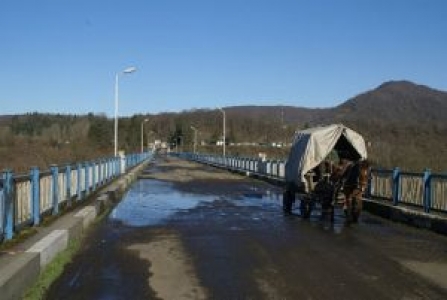
After the 2008 Russian-Georgian War, Georgia’s Parliament implemented a law regarding “Georgia’s Occupied Territories,” according to which people in Abkhazia and Ossetia cannot carry out economic activities. However, despite this, Georgia is shipping different types of products to Abkhazia via Enguri as well as some bypass roads.
Georgians as well as citizens of the occupied regions are involved in these activities. We have interviewed some of them. At their request, we have changed their names.
Nani Lakirbaia, resident of Gali: “The official ban has not brought any change to our trading system. They mainly import nuts into Abkhazia via Enguri Bridge while exporting different products from the region. Everything is officially kept under wraps; however, all of us are on top of things here. Around 80 per cent of Georgian products are imported to Abkhazia via Enguri Bridge, while 20 percent via different by-pass roads. They ship around 50 tons of cargo, mainly clothes, food, household items etc., to Abkhazia per week.
Zugdidi is being strictly controlled, however. If an Abkhazian farmer has no opportunity to sell nuts and citrus in Zugdidi at a more or less beneficial price, he will have to sell them in Gali at a miserably low price to someone who will then make a fortune from a Russian farmer’s poor harvest.
Abkhazians use bypass roads to ship these products to the region. The so-called border guards fine them very often; however, the locals pay the fine and carry on. What else can they do? Can they just throw these products away?
As far as I am concerned, residents of Samegrelo go to Abkhazia in search of construction jobs; however, they are putting their lives at risk by doing so, since when you leave Samegrelo for Abkhazia, you need a guard who will ensure your safety, but for a rather solid price. However, Abkhazians frequently go to Tbilisi to receive medical treatment.”
Elza Muzaeva, resident of Gori: “For years, I have been making my living by transporting different products to Tskhinvali from Tbilisi. I purchase clothes, different household items and other products at the Lilo market and import them to the region of Tskhinvali via North Ossetia. I already have my own customers and receive orders from them. Products we ship are rather expensive here which is why this business is rather lucrative for us.
A short time ago, I found a job for my sister in Tskhinvali. She is now working at a restaurant making Georgian food and has a rather high salary.
We are ethnic Ossetians with lots of relatives in the region of Tskhinvali as well as Gori. We frequent these regions whenever we want and I must say that running your own business is rather difficult here without a “patron” in the government.
After the August war, running business in the region of Tskhinvali with its astronomical taxes is in fact, an impossible dream. Especially today, when most locals suffer from poverty.”
Vazha Beridze, economic and political expert: “Our authorities do not discuss this issue officially with the Russian occupants who implemented a puppet regime in the region. Obviously, the Law on Occupied Territories does not envision trade or economic relations between Georgia and these regions; however, this law does not hamper them from exporting products from the occupied territories for private or other purposes. Naturally, we can label this as economic activity; however, this doesn’t make them legal.
If you ask me, this spontaneous process is not bad for us; it can easily result in thawing relations between Georgia and its breakaway regions, and one fine day we might even start a dialogue with Abkhazians and Ossetians. As far as we know, they are currently discussing restoration of the Ergneti Market and the new government spurs people to get involved in similar activities.”
One day of Ergneti
On the threshold of the New Year, with support from the EU and the UN Development Fund, a market was opened in Ergneti for a day. “Tskhinvali of the Future” organized the event. As the organizers stressed, the action was not in any way linked with the trade area once known as Ergneti Market associated with illegal trading. According to unofficial information, annual turnover at the Ergneti Market was 150 million USD.
The one-day event aimed to help the locals who sustained serious financial losses during the war to sell their products. However, residents of the occupied regions could not manage to cross the border and get involved in the event.