


Mikheil Sarjveladze: The President is obliged to agree with the Government and the Parliament and make a decision on the issue of a specific visit after that - the opposite happened, she first planned and then started thinking how to explain all this
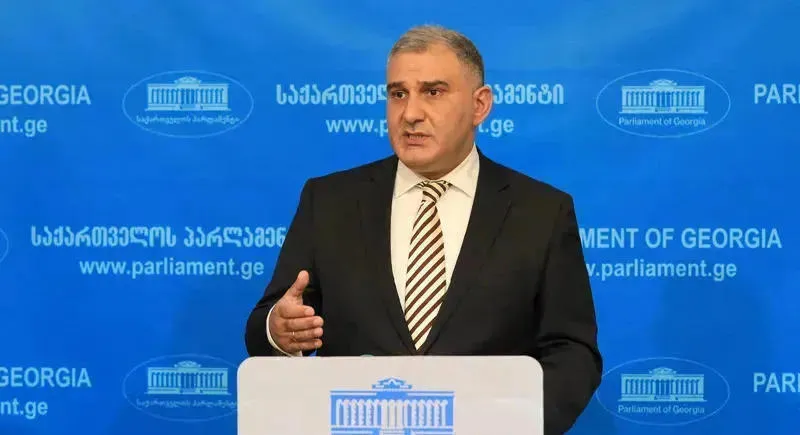
If the President wants to make her own contribution to getting the candidate status, she is obliged to agree with the Government and the Parliament and make a decision on a specific visit after that, and not the other way around - first plan the visit and then come up with reasons why she can travel to Germany or Israel without an agreement, Georgian Dream MP Mikheil Sarjveladze stated.
According to Sarjveladze, "the opposite happened, she first planned and then started thinking how to explain all this".
Sarjveladze drew attention to the Constitution and noted that according to the Constitution, the Government is the one which plans and implements foreign policy together with the Parliament.
"The foreign representative rights of the President are limited and the approval of the Government is mandatory. This is the dogma of the Constitution. When Salome Zurabishvili became the President, she knew exactly what the function, competence and authority of the President were. When such visits are planned, it requires an agreement with the Government. The explanation made later, as if this campaign and trips were initiated for negotiations with the EU countries, so that obtaining the candidate status would be encouraged in some way and work would be done in this direction, at least in some cases, when it comes to visits to non-EU countries, all of this seems like arguments used for entourage, and not real reasoning.
In fact, visits were planned, which seemed to lack justification, and later, in order to justify travel to any state, the issue of status was presented.
We should all try to plan our activities in accordance with the Constitution and not the other way around - first plan and bring the norms of the Constitution to the events we plan," said Sarjveladze.
Sarjveladze also says that there may be risks if the visits are not agreed upon, and these risks are not so hypothetical. According to Sarjveladze, "the spread of non-agreed positions with foreign partners can create some dissonance and problems".
"The risk in relation to her visits could be to offer manipulative interpretations, including to foreign colleagues. Care must be taken here. There may be a danger that the disagreement of the positions will create some inconvenience and raise questions about the situation that exists in Georgia and which is important for getting the status. The agreement has its own function and importance, and it cannot be undermined," said Mikheil Sarjveladze.
According to the government administration, Salome Zurabishvili was refused visits to Ukraine, Germany, Bulgaria, the Czech Republic, Switzerland, Poland, Belgium, Denmark, Israel and the Arab Emirates.










