


Shalva Papuashvili: The five richest non-governmental organizations manage more money than all political parties, taken together, in the non-election period
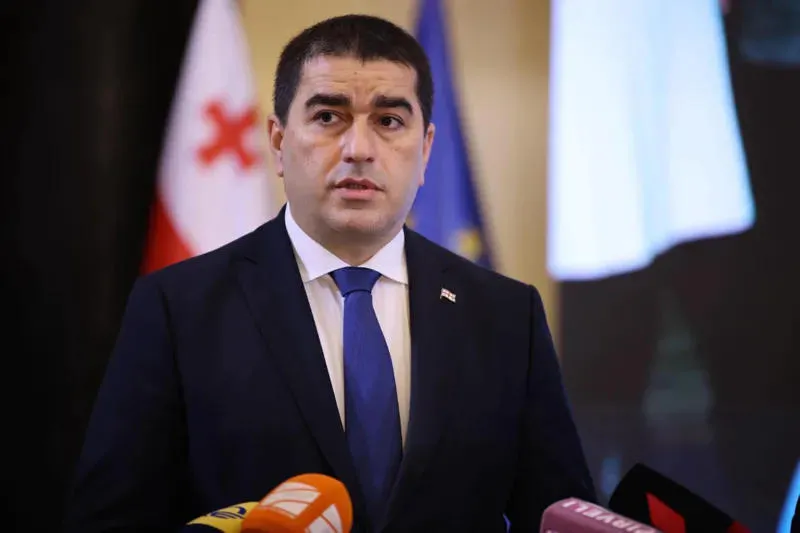
The five richest non-governmental organizations manage more money than all political parties, taken together, in the non-election period – the Chairman of the Parliament of Georgia Shalva Papuashvili makes this announcement. As Papuashvili points out, the fact that non-governmental organizations are accountable not to the people, but to the donors, raises the issue of the donors' responsibility.
According to his explanation, they can no longer avoid this responsibility, as if they are not responsible for the content of the activities of non-governmental organizations."After successfully obtaining the status of a candidate country of the European Union, Georgia is preparing to join the negotiations with the European Union regarding its access to the EU. This time we are working on "9 steps". We know that this period will be full of challenges for our integration into the European Union, as the accession process coincides with the parliamentary elections scheduled for the end of the year. That is why we will need serious efforts to strengthen our democracy.
While obtaining the status of a candidate for the European Union, the government of Georgia in the same will do everything to successfully pass the next stage. However, it is important that the Georgian civil society be active, benevolent and constructive in this process.
Recently, some good signs have appeared in this regard, such as the ongoing cooperation between the Parliament and the Georgian National Platform of the Eastern Partnership Civil Society Forum (abbreviated as the National Platform), which unites about 200 non-governmental organizations and is formally recognized by the European Union.
The government of Georgia welcomes the involvement of civil society. But some serious issues remain unresolved, which ultimately goes down to issues of trust and political non alliance. The recent actions of some non-governmental organizations, in this sense, do not contain any signs of progress. The latest Eastern Partnership Index report that these NGOs recently have written is unfairly directed against Georgia. Organizations that participated in the preparation of this report later left the National Platform.
Apparently, being in the "national platform" their only goal was to distort the truth in the process of preparing the index. Abusing their membership of the Platform and then leaving it was simply wrong, since the "National Platform" is a civil society union recognized by the European Union and is an important channel of civil society relations with the government.
Moreover, the same non-governmental organizations that distorted the results of the "Index" are now trying to manipulate the "9 steps to the EU" process.They insist that they want to join the current discussion despite the fact that they left the "National Platform" at their own decision after being dissatisfied with the results of the elections for the leadership of the platform.
This kind of behavior harms the cooperation between the Parliament and the "National Platform" and clearly shows that some non-governmental organizations can be an obstacle to the democratic process.
The zero-sum logic of their behavior resembles the similar actions made by the radical parties: as soon as they are dissatisfied with the results of the process, they immediately confront the process itself and try to either disrupt the process or, if they fail to disrupt it, abandon it.However, this article does not serve to question the legitimacy or role of civil society.
Our task is to find such a framework of joint action that will bring the best results for our country in the 2024 elections, on the path of EU integration.
Let's start with a simple truth: you can't equate non-governmental organizations and civil society, because civil society is a much broader concept. Therefore, non-governmental organizations, which do not represent subjects elected by the people, must answer two main questions in order to gain the right to represent the public and participate in the policy-making process.
The first issue is that non-governmental organizations are almost entirely financed from abroad, not by Georgian philanthropists or interest groups. The second problem is attempts by non-governmental organizations to influence political decisions, which raises questions about their political connections. Let's dive into these problems and find ways to solve them.
It is clear that some NGOs are quite wealthy. They would be richer than most of political parties if they were registered as such. The five richest NGOs manage more money than all political parties combined, during non-election periods.
At the same time, all this money comes from foreign sources. The question arises, why? In Georgia, both people and businesses donate money to political parties, including opposition parties. This means that there is no danger of political retaliation.
Moreover, quite a lot of money is spent on charity, which means that both residents and businesses are quite open-handed. Considering these factors, it is surprising that non-governmental organizations have not been able to convince people and businesses to receive funding from them, and that is why they are almost completely dependent on foreign countries," says Papuashvili.
In addition, according to the chairman of the parliament, the fact that some non-governmental organizations are richer than political parties is problematic in another way as well.
"Well-funded non-governmental organizations work with small parties and help them develop. And the benefits obtained by the smaller parties from this cooperation give them the leverage of undue influence over these parties. This was clearly seen in the election of the Public Defender, which was one of the recommendations of the European Union.
When the non-governmental organizations felt that there was a consensus on the candidature of the Public Defender in the Parliament, behind closed doors, they began to put pressure on the smaller parties to refrain from voting for the Public Defender. And that happened only and only because the non-governmental organizations did not like the candidate of the public defender.
The main problem of foreign funding is opacity. There is no plausible explanation as to why these finances should be opaque. It is reality that non-governmental organizations have never experienced persecution for their activities, at least after Georgian Dream came to power.Politically active organizations do not consider themselves accountable neither to the wider civil society nor to the democratically elected government. The fact that some of them left the "national platform" is a good example of such irresponsibility, since the parliament and other representatives of the civil society learned about their decision post facto, while the donors knew about their decision in advance.
The fact that non-governmental organizations are accountable not to the people, but to the donors, also raises the question of the responsibility of the donors. Donors can no longer avoid this responsibility by simply making a reservation that they are not responsible for the content of the activities of NGOs. A more serious approach is needed, since the civil society has become an influential political force," Papuashvili notes.According to his assessment, the second issue related to non-governmental organizations is their political intentions and aims. "We can clearly see the connection between some non-governmental organizations and former officials of Saakashvili's government (ministers, deputy ministers, members of parliament, etc.).It is not surprising that the civil sector became particularly active after the 2020 elections and, at some point, directly claimed to participate in the establishment of a technical government and expressed their wish to participate in the activities of this government. One of the non-governmental organizations - "Fair Elections" - was noticed in the distortion of the parallel counting of votes in the 2020 elections. In some paradoxical cases, some NGOs directly bear the name of the political party that created them.
These parties use the foreign money received from the organizations for political purposes. For example, the Internet publication "Tabula" and the non-governmental organization "Freedom Institute" are branches of the "European Georgia" party, while the non-governmental organizations "Droa" and "Khalkhistvis" directly bear the name of the parties that created them. These are cases of direct political influence of foreign funding of political groups, which is a gross violation of the Constitution.
besides funding, the political bias of some elite NGOs is problematic in other ways. They support radical political parties that directly attack the democratically elected government of Georgia and often declare it illegitimate. Political bias by non-governmental organizations strengthens radical political parties.
These non-governmental organizations become agents of radical influence, but avoid political responsibility. The key word here is responsibility. If the radicals were to achieve their goal and had overthrown the government in 2020-2022, who would have taken responsibility for the chaos and, most likely, the actions of the dictatorial group that would have come to power?
I doubt that NGOs or their donors would take responsibility. Georgia does not need radicalization in anything. And yet, some non-governmental organizations help the radicals to create problems for Georgia on its way to the European Union.
Finally, there are some steps we can take to address the dual challenge described above. The first step would be to increase financial transparency and fully disclose the activities of non-governmental organizations. For our part, the government of Georgia is exemplary in terms of transparency, which is confirmed by many authoritative international entities.
In 2016, there was a good start when 18 NGOs signed the "Transparency Declaration" and pledged to periodically publish their activities and finances on the web portal cso.ge (https://shorturl.at/djS25).
Some of the NGOs which are now suspected of the dishonesty described above were among the early enthusiasts of this portal. Unfortunately, the portal was abandoned in less than a year. However, now nothing prevents the revival of this project, except the good will of the NGOs themselves.
A second step towards solving the problem would be for donors to share responsibility for the activities carried out by NGOs using their names. Donors, in turn, can also make funding more transparent.
There are international mechanisms that would bring this approach within an ethical framework. In the Paris Declaration on Aid Effectiveness, donors and partner countries agreed to be accountable to each other. It would be good if we follow the spirit of this declaration.
Before the elections, we could make a public agreement that would make full disclosure of the funding and activities of non-governmental organizations that are connected to politics, either as observers or funders of election-related activities.
Such an initiative would make the activities of non-governmental organizations more reliable for all parties and would also promote constructive dialogue between the parties. Free and fair elections are a shared responsibility. The disinformation campaign to discredit the results of the 2020 elections shows that elections are not the sole responsibility of the government only.
Ergo, all active parties such as government, opposition, civil society, media and international entities, along with making political and financial contribution, should bear their share of responsibility for conducting free and fair elections", Shalva Papuashvili wrote on the social network.










