


Shalva Papuashvili: No one has the right to censor us and tell us to refrain from separating people by gender and to refer to neutral terms
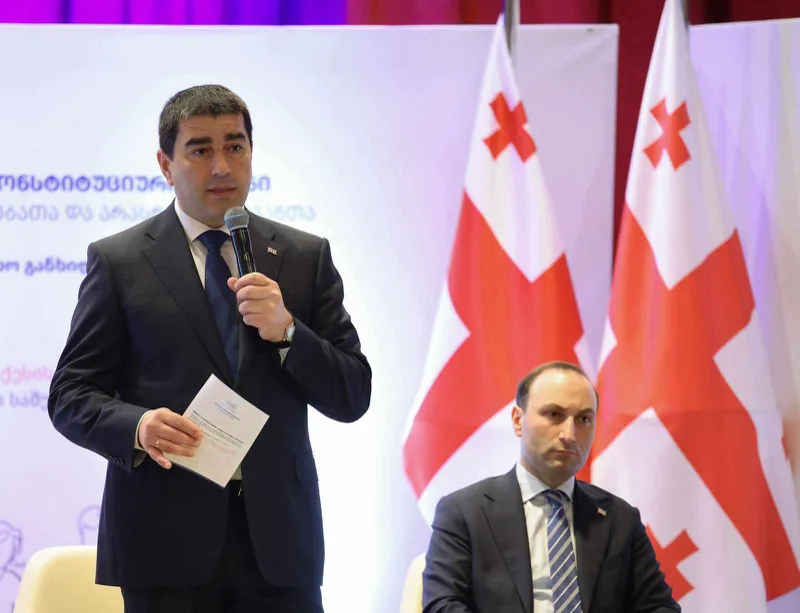
No one has the right to impose censorship on us and tell us that we should not enter into a relationship with others in the same way that people have addressed or perceived each other for thousands of years, but rather refrain from separating people by gender and use neutral terms, - Speaker of the Parliament Shalva Papuashvili said this in Borjomi, in connection with the constitutional amendments.
As the Chairman of the Parliament noted, the arrangement of a democratic country implies that power comes from the people.
"Citizen is the source of power that transfers this power for a certain period of time to a separate constitutional body for its implementation. This happens in the so-called based on the concept of indirect democracy, citizens elect their representatives to parliament, giving them a mandate to make laws and other decisions on their behalf for four years. However, there are issues on which the constitution says that the mandate you received at the election is not enough, and you need to go back to the citizens on this issue and ask them again and get their confirmation in order to make some legislative change. It refers to issues that are fundamental to public coexistence and what is fundamental to public coexistence and the organization of the state. All these issues are reflected in the constitution, and if the parliament decides to touch the foundation of the foundations, the main principles of state organization and social coexistence, this mandate is not enough," said the Chairman of the Parliament.
According to Shalva Papuashvili, the draft constitutional law regulates five issues.
“The first issue is that any legal form of marriage is only between a man and a woman; second - adoption only in couples where there is a man and a woman; Third - any medical intervention related to sex change is prohibited; Fourth - in all documents, only male or female is indicated as gender and no other indication, and fifth - no one, neither the state nor a private institution, has the right to indicate to a citizen of Georgia how he should address others and forbid him to use terms where gender is presented. - said the Chairman of the Parliament.
On May 17, the organizing commission of the general public discussion will finish its work and present the results of the meetings held in the cities of Georgia to the Parliament.










