


Shalva Papuashvili: The participation of foreign politicians in the anti-government protest is a symptom of the fact that the Russian government has transferred part of its worldview to its fiercest opponents, especially in the Baltic countries
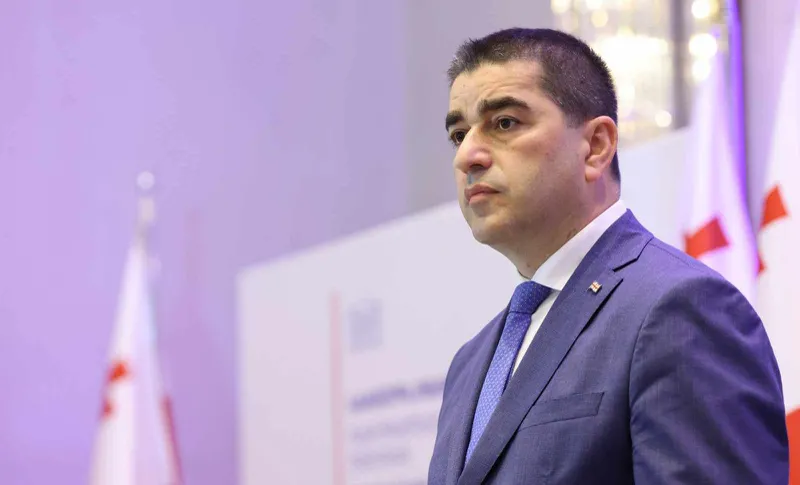
Foreign politicians’ joining of radical anti-government rallies in Tbilisi is not just an unfriendly act against Georgian people. It is also a symptom that the Russian government has imparted some of its worldview to its staunchest opponents, especially in the Baltics, the Chairman of the Parliament of Georgia, Shalva Papuashvili, writes on the social network.
According to him, the Georgian government has long proven its commitment to European and Euro-Atlantic values and policies.
"Addressing a rally of exalted youth, led by the radical opposition parties against the government, and calling them the ‘whole nation’ is something that you would expect from a Soviet or Russian propagandist, not a foreign minister of a EU member state. And helping to topple a democratically elected government just because you do not like their legislation is out of the Soviet handbook.
Some in the governments of our Baltic partners have been carried away a bit too much by their own rhetoric. Imagining the world in monochrome brought them to the state where anyone who does not copy their rhetoric automatically becomes a foe; the foes should be dealt with by any means available; and diplomacy gets replaced with propaganda. Anyone familiar with Soviet and contemporary Russian history would swiftly recognize the pattern.
All this is wrong. The Georgian government has long proved its commitment to European and Euro-Atlantic values and policies. Now, with the ever-elusive prospect of NATO membership amidst the regional geopolitical turmoil, Georgia has to deal with dramatic foreign challenges mostly on its own. One of these challenges is unaccountable foreign money, which freely flows into Georgia’s political system, including the radical groups. The new legislation on transparency of foreign influence is to deal with this challenge. The legislation has precedents in the West, is constitutional, proportional, and within the limits of democratic governance. Simply calling this law ‘Russian’ does not make it undemocratic, and, moreover, does not justify attacks on the Georgian government.
Some who are affected by this legislation protest it. Protests are often radical and violent. Foreign dignitaries’ joining these protests, in blatant disregard of Georgia’s sovereignty and diplomatic practice, in the name of ‘democracy and human rights’, is hypocrisy at best, and subversion at worst.
Georgia needs friends and support, not hypocrisy and subversion. We have had enough of those from the North already", the Speaker of the Parliament wrote on X.










