


Shalva Papuashvili: Foreign actors, NGOs, and media undermine democracy by hindering informed political choices
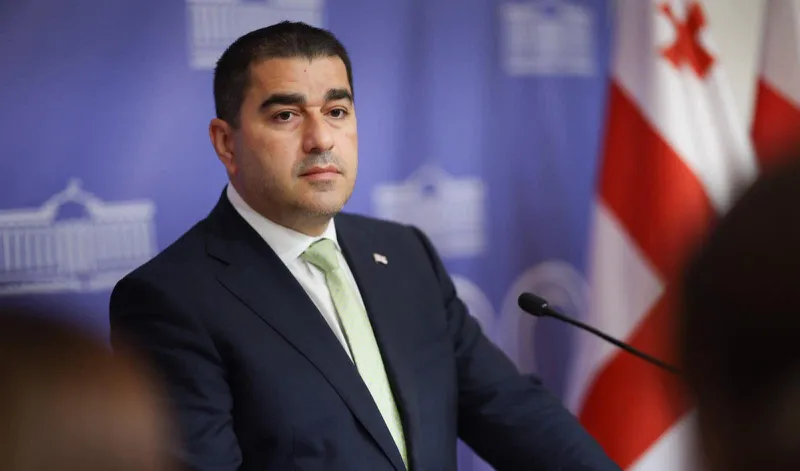
Foreign actors, non-governmental organizations (NGOs), and the media, rather than contributing to the improvement of Georgia's democratic environment, are instead depriving citizens of the right to make informed political choices, according to Shalva Papuashvili, Chairman of the Parliament of Georgia, in a recent post on the social network "X".
Papuashvili criticized certain politically engaged civil society organizations and media outlets, accusing them of compromising democracy under the guise of being "impartial" election observers. He expressed concern that the integrity and independence of these entities are often overlooked, calling for a critical reexamination of their roles, free from bias and entrenched stereotypes.
"In our region, any government critique of NGOs or media is hastily labeled as anti-democratic harassment," Papuashvili wrote. "However, refusing to question the integrity and independence of civil society organizations and the media is, paradoxically, undemocratic in itself. Such an approach suggests these groups operate in someone's interests and that criticism of them is considered taboo."
The chairman pointed out that civil society should serve as an intermediary between the state and the individual, but it must not become politicized. He argued that merely because an NGO representative or journalist is not officially running for office does not mean they are not engaging in politics. "Many of them are political activists in practice, even if they don't bear the title," Papuashvili said, noting that several NGO figures are closely associated with formal political parties, some even forming new political entities, such as the party "Freedom Square," born out of the NGO "Eastern European Centre for Multiparty Democracy."
Papuashvili also cited the recent case where Georgia’s Anti-Corruption Bureau designated the NGO "Choose Europe" as a politically motivated entity, a decision criticized by civil society groups. Shortly after, two leading figures of this NGO were placed in key positions on the opposition’s electoral party list, further blurring the lines between NGOs and political parties.
"The political agendas of certain NGOs and media outlets are apparent. Their narratives, choice of topics, and constant calls for regime change align seamlessly with opposition political parties," he continued. Papuashvili specifically mentioned organizations such as the Soros Foundation, Transparency International, and Georgian Young Lawyers’ Association (GYLA), as well as television networks like "Mtavari," "Pirveli," and "Formula," accusing them of functioning as propaganda arms for the opposition.
Moreover, Papuashvili raised concerns about the financial entanglements between NGOs, media, and political parties, claiming that these organizations often serve as direct financial supporters or campaign organizers for opposition movements. He accused them of hosting politically motivated events like "democracy festivals" and acting as financial conduits for party activities, drawing attention to the significant foreign funding flowing into these organizations.
"Georgian law explicitly prohibits foreign funding of politicians and parties, and any direct or indirect foreign involvement in political financing is both illegitimate and illegal," he asserted. Papuashvili expressed alarm over the open defiance of some NGOs, who he claimed intend to disregard foreign transparency laws, challenging the state's authority in doing so.
In conclusion, Papuashvili emphasized that instead of enhancing Georgia’s democratic environment, foreign actors, NGOs, and media are distorting the electoral landscape in favor of specific political parties, thus undermining the electorate's ability to make informed choices.










