Lela Jejelava: It is correct for no party to enter the elections until the ‘National Movement’ is banned — if anyone enters a cleared field, it will be difficult to justify that it is not Ivanishvili’s project
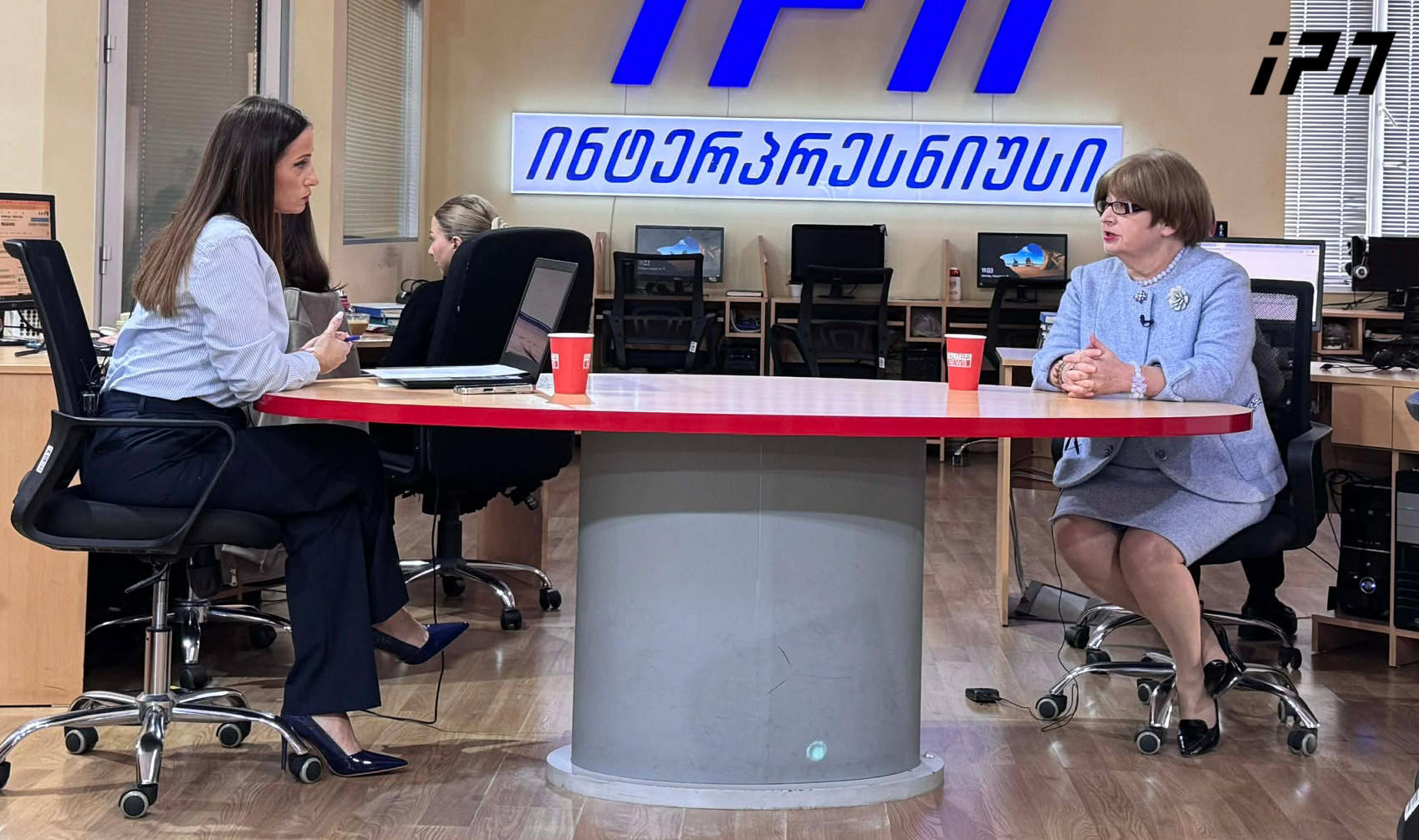
Analyst Lela Jejelava commented on Palitra News’ program Day’s Newsroom, stating that Irakli Kobakhidze quickly backtracked on his earlier statement regarding the suspension of EU integration until 2028 and now clumsily claims that “Georgian Dream” has not refused European integration.
She noted that the steps taken by “Georgian Dream” contradict European standards and the obligations Georgia needed to meet before joining the EU.
“Over the past year, perhaps nothing but misfortune has fallen upon the Georgian people. The fate and future of the Georgian state belongs to the Georgian people, not any political party — especially when the legitimacy of that government is in question, both domestically and internationally. Kobakhidze quickly retracted his statement about suspending EU integration until 2028, and today he clumsily asserts that ‘Georgian Dream’ has not refused European integration. Yet the world heard clearly how he stated that negotiations with the EU would stop until 2028. But how does he intend to reach 2028 — by trampling human rights, through isolation, countless political prisoners, ignoring his own people and opponents, and exhausting domestic resources?
During the COVID pandemic, ‘Georgian Dream’ refused financial assistance from the European Reconstruction Bank, opting instead for the Asian Development Bank — an early indicator. This was followed by the arrests of Nika Melia, Nika Gvaramia, and others. ‘Georgian Dream’ continually demonstrated that it had no intention of following European standards. The practice of taking people hostage, as done by other dictators, was also used by Bidzina Ivanishvili. After the adoption of the ‘Russian Law,’ many laws were passed that clearly contradicted European standards and obligations necessary for EU accession,” Jejelava said.
Regarding the criticism of German Ambassador Peter Fischer by “Georgian Dream” and attending the protest against him, Jejelava noted that diplomats often monitor public sentiment and the substance of political processes:
“Ambassadors do not convey messages demanding a change of government. I would ask Kakha Kaladze, who insulted Peter Fischer while he was a propagandist for Mikheil Saakashvili’s government, and simultaneously promoted Armani and Saakashvili. Back then, EU representatives, including the ambassador, attended protests against Saakashvili. Why didn’t they raise objections then? Attending protests is a way for ambassadors to observe the sentiment and substance of the processes. Today, Georgians are protesting for their European future, and the German ambassador may show solidarity — this does not mean they dictate the will of the Georgian people.”
Jejelava also commented on the daily protests on Rustaveli Avenue, saying they reflect societal growth:
“The past year has shown that society has matured and there has been a turning point in public consciousness. Georgians are emotional and make spontaneous decisions, but this year-long routine was unexpected. The desire and effort of the Georgian people for the country to return to the right path were so great that they achieved what seemed impossible. We owe a debt to those standing daily on Rustaveli Avenue and to the prisoners of conscience. It was a very difficult year, with disappointments and repression — people went to prison, faced enormous fines — yet the public demonstrated unity, overcoming fear, commitment, and self-sacrifice. Meanwhile, within ‘Georgian Dream,’ some changes are occurring; they are becoming more isolated, which is painful for them. Internal problems exist within the party, and despite any stated motivation for fighting corruption, it is clear that the country has been shaped by corruption over the past 13 years, which negatively impacts them.”
On political party trust, Jejelava noted: “Some of the population has lost trust in political parties, which ‘Georgian Dream’ and Bidzina Ivanishvili worked hard to achieve. But political processes cannot exist without politicians. In extreme situations, a politician may act politically without party interests. When three political actors are illegally restrained, how can we say there is a political process or that parties function meaningfully? The National Movement did not kill the political process. After November 7, Saakashvili resigned, taking political responsibility. We also have examples of political accountability after mistakes and missteps. In 2011, Saakashvili’s opposition and Ivanishvili acted according to external interests — the recent 3-billion-dollar philanthropy, which was Russian money, was clearly meant to serve Russian state interests.”
Regarding legal persecution of opposition politicians and banning parties, Jejelava said the people’s protests can stop these processes:
“The people can stop these repressions and, with pressure from Western allies, counter ‘Georgian Dream.’ Sabotage is no longer a joke when the government blames the president for starting a war, as cited by separatists and Russians, and then wants to prosecute someone for sabotage. The prosecution’s use of vague political definitions like ‘hostile foreign force’ is absurd.
As for Giorgi Gakharia, Ivanishvili believes Gakharia betrayed him for not keeping silent, unlike Garibashvili or Liluashvili. Gakharia is clearly being politically persecuted despite our personal stance toward him.”
Finally, Jejelava commented on Tamar Chergoleishvili, leader of the Federalist Party, who refuses to enter elections until the United National Movement is unbanned:
“Tamar Chergoleishvili’s position is politically and morally justified. It is impossible for a political party to compete with ‘Georgian Dream’ in a non-competitive environment. When Ivanishvili forcibly cleared the field, it will be very difficult for anyone to justify that it is not Ivanishvili’s project if they enter that cleared field.”