Tinatin Bolokadze, member of “Coalition for Change”: We have been dissidents for a year already - as for Melia and Saakashvili, the ‘National Movement’ should be part of the unity - the ‘red lines’ exist only with Gakharia’s party
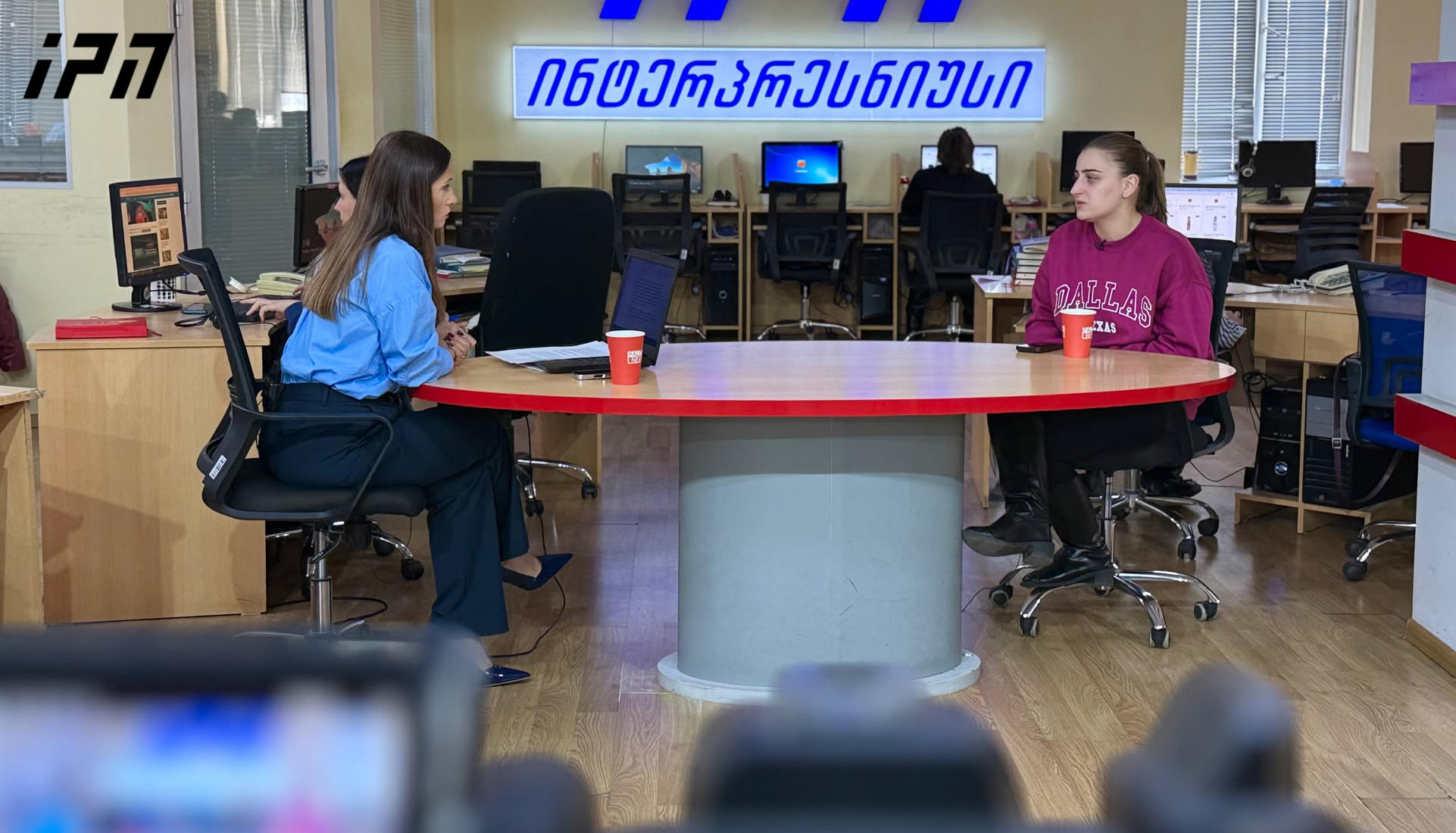
Currently, the “red lines” exist exclusively with Giorgi Gakharia’s party because it is a party that collaborates with the regime and legitimizes the parliament it sits in, Tinatin Bolokadze, a member of the “Coalition for Change,” said on PalitraNews’ program “Day’s Newsroom.”
According to her, the coalition’s position is that where there are no “red lines,” cooperation should take place with everyone.
"At present, the ‘red lines’ exist solely with Giorgi Gakharia’s party because it is the party that collaborates with the regime and legitimizes the parliament it sits in. Even in this case, the ‘red line’ would dissolve if the party decided to join the struggle that the Georgian people have been pursuing for a year — a struggle of non-cooperation, non-recognition, and continuous protest. Unfortunately, Gakharia betrayed the protest because, despite people being on the streets for a year, we don’t see his party there; they are not engaged in the protest and are not on the side of the people,” Bolokadze stated.
Regarding the relationship between the “Coalition for Change” and the “National Movement,” and Nika Melia’s statement about not being able to share a space with Mikheil Saakashvili — whom he called “sold out to Ivanishvili” — Bolokadze explained that despite differences, unity across the political spectrum involved in the protest is necessary now.
"We have been cooperating with the ‘National Movement’ for a long time, both domestically and internationally. On certain issues, our interests and positions differ — for example, our positions regarding October 4 were very different, and we assessed that day differently. However, despite this, I believe that now is not the time to refuse cooperation due to personal disagreements. Now is the time to unite the entire opposition spectrum, civil society, and everyone involved in the protest. Of course, the ‘National Movement’ should be one of those included in this unity,” Bolokadze said.
When asked how the struggle should continue if leading parties are banned, and whether she agrees with Nika Melia that “the time for dissidence has come,” Bolokadze responded that “we have already been dissidents for a year.”
"We have been dissidents for a year, especially in the past year. In general, in this country, being a dissident is already considered patriotism. When people end up in prison, they even say they marked it in their CV because in 2025, at this point in the country’s history, being in prison makes you a true patriot. Dissidents are patriots, unlike those who occupy the ranks of ‘Georgian Dream,’” she said.
She also commented on Nika Melia’s recent sentencing in the case involving throwing water at a judge, where he was sentenced yesterday to 1 year and 6 months in prison, calling it “dictatorial justice.”
*"This is not Melia’s first case. For years, they have tried to portray him as a violent politician, as if he were trying to harm someone. This began during the protests, when he was accused of attempting to storm parliament or something similar. Due to the investigative commission, his arrest is a very striking fact: the day before court, about 20 police officers intercepted him while he was heading to a broadcast. When you look at such protests in developed, civilized countries, you see how they are treated, and then see how people are punished in your own country for such protests — it’s very unjust. But nothing is surprising after what we see every day on the streets.
This is dictatorial justice. In 2025, we see the contours of a regime transitioning from authoritarianism to dictatorship. Until now, we called it an authoritarian regime; now we have entered dictatorship,”* Bolokadze stated.
Regarding another coalition leader, Zurab Japaridze, who refused early release, Bolokadze said that “even if Zurab Japaridze had agreed, it was not a guarantee that he would be released early.”
"Information spread as if his consent would automatically secure his release, which was not the case. It’s simply a procedural matter: first, Zurab needed to express his willingness, and then the matter would be considered. His principled position was that he would not cooperate with the regime at any level,” she said.
The coalition representative also reacted to Parliament Speaker Shalva Papuashvili’s assessment of Japaridze: “Zurab Japaridze dramatizes, and what happens around him is a tragedy without heroes.”
"It is indeed a tragedy what is happening around us in the form of ‘Georgian Dream.’ The regime now needs politicians and parties that will cooperate with them. Authoritarian regimes need collaborative parties most of all, as a form of legitimization. Accordingly, they try in every way to co-opt the political spectrum,” Bolokadze concluded.