Irakli Kobakhidze: No one can forbid criticism, but the forms of hatred we see on social media and beyond require a response - You remember how "they" even wrote songs containing insults
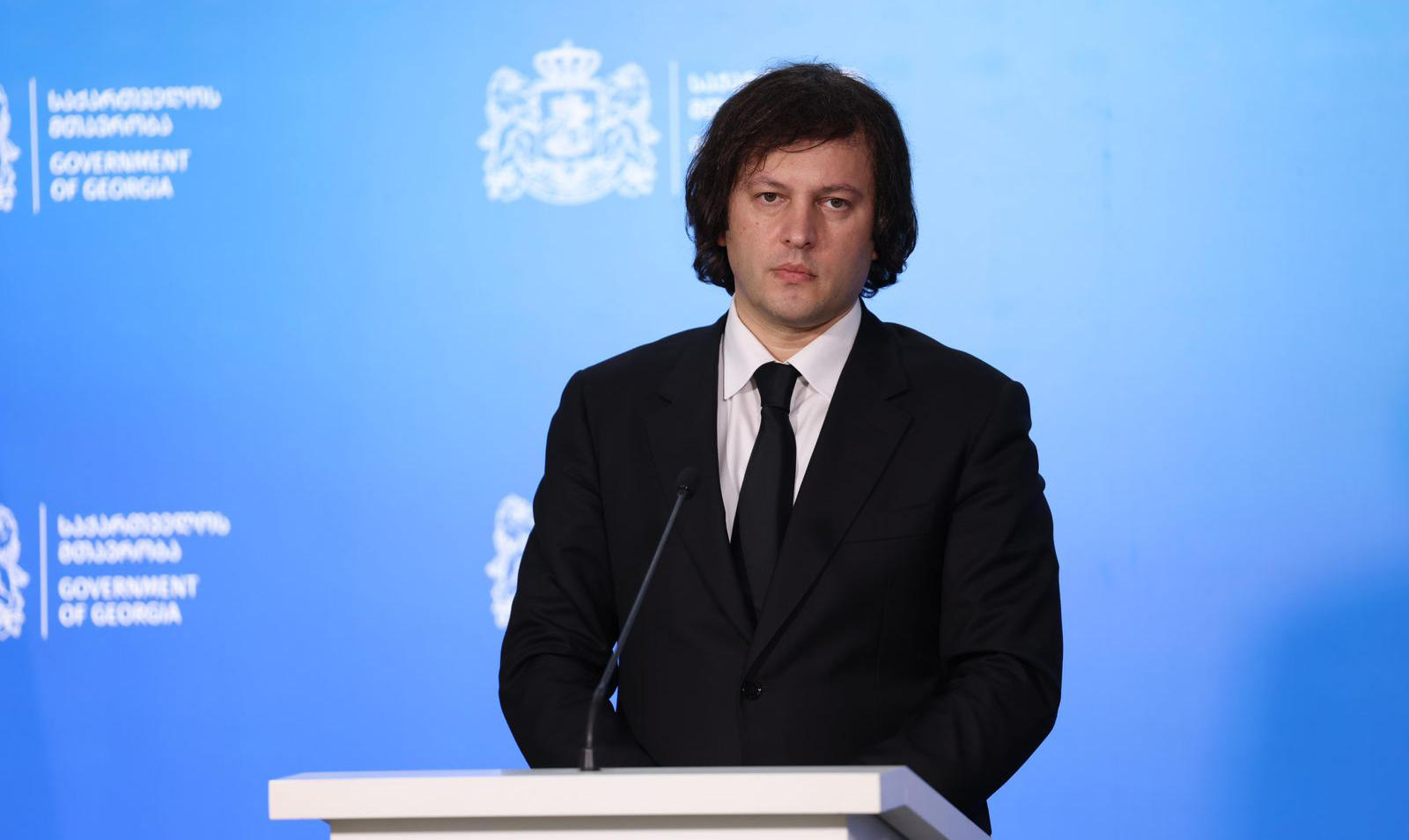
“A proper line must be drawn between freedom of expression and hate speech. This is fundamentally important. No one can forbid anyone from criticizing, and such criticism may even be expressed in harsh forms. However, when it comes to forms of hatred, such as insults, which we often see both on social media and beyond, all of this requires a response,” Georgian Prime Minister Irakli Kobakhidze said while speaking about the creation of a special department within the Ministry of Internal Affairs.
According to the head of government, the key issue is establishing proper practice.
“We were somehow dragged into a vicious circle of polarization and hatred. Hatred was deliberately being sown in our society, and the same thing happened in the political sphere. Representatives of the opposition recalled harsh statements made by members of our team, and of course, that was true. But where did all of this begin, and how did it begin? There were direct hate campaigns, and not only in politics. They started these campaigns and then received responses.
When they were not getting responses from the Orthodox Church, why did they continue spreading hatred? Why were they writing things about the Patriarchate - I do not even want to repeat the words - and so on? They were not receiving responses there either. Why did they maintain this one-sided stream of hatred toward the Church when there was no answer coming from it? When you are in politics, naturally you will also receive responses. This is a problem, because when someone imposes hatred on you, you are then forced to respond, and that creates the vicious circle we have seen in our country and in our politics. We must free ourselves from this.
For this, the approach must not be one-sided. The rules are already established by law - what is prohibited and what sanctions apply for violations are all defined in legislation. The only thing that did not exist until now was a specific enforcement mechanism, and now a concrete institutional mechanism has been created within the Ministry of Internal Affairs. An enforcement lever is now emerging, which will ensure that we gradually escape this vicious cycle of hatred. They are very nervous about this because hatred and lies are their main political weapons,” Kobakhidze said.
According to him, consequences should follow proportionally to the extent parties violate the law.
“It is important to establish proper practice. As for campaigns, you may recall certain statements made by representatives of our team and so on. But on their side, you remember that they even ‘wrote’ specific songs containing insults toward mothers. They massively and collectively circulated those songs. Their television stations, parties, and NGOs spread them joyfully. They were happy about it, and this was promoted systematically. Have you ever seen anything similar from the ruling team or the government? What they were doing was shameful.
We also have other examples where they received no response. I am speaking specifically about the Orthodox Church. There was no response, yet the stream of hatred toward the Orthodox Church, clergy, the Patriarch, the Patriarchate, and the institution in general did not stop. Society clearly sees where this stream of hatred originates.
One of the main reasons we adopted the transparency law - which they later labeled the ‘Russian law’ - was precisely that these hate campaigns in Georgia were funded by European money and by money from the former American administration, through USAID, NED, EED, and these organizations. Hatred toward the government, institutions, and Orthodox institutions was financed with that disgraceful money, and that is why the transparency law was adopted, the law they called Russian. We had not adopted a Georgian law on this for years. In reality, if the level of polarization has decreased and our country has become more stable, one of the main contributions to that has been the transparency law,” Irakli Kobakhidze said on Imedi TV.
For reference, a special department will be established within Georgia’s Ministry of Internal Affairs, whose main function will be the systematic monitoring of hate speech, offensive campaigns, and aggressive communication in the public sphere, along with appropriate legal responses.
According to Vice Prime Minister and State Minister for Coordination of Law Enforcement Structures Mamuka Mdinaradze, the state has an obligation to ensure an environment where differing opinions are protected, while at the same time the encouragement of hatred, hostility, and insults is deemed unacceptable.