The procedure for hearing the President’s annual address will conclude immediately after the speech – the speeches currently provided for under the Rules of Procedure will no longer take place
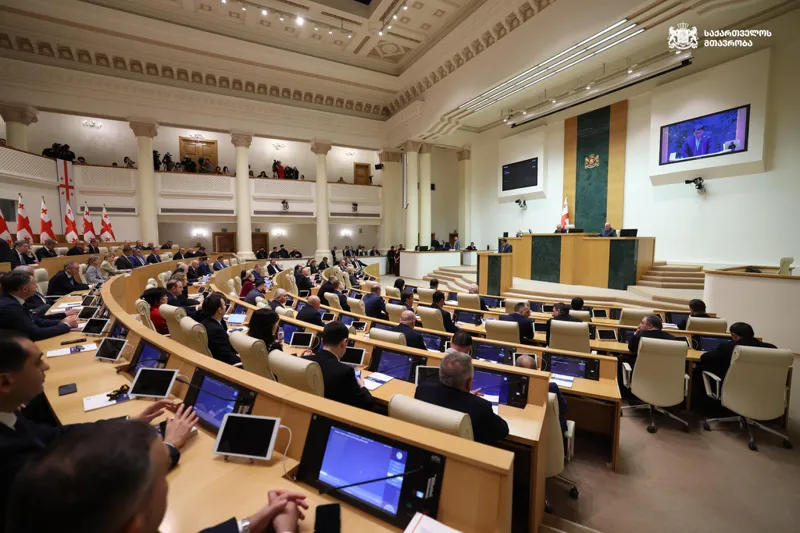
The procedure for hearing the President’s annual address at a plenary session of Parliament will conclude immediately after the President finishes delivering the speech. The speeches currently provided for under the Rules of Procedure will no longer be held.
A number of amendments are being introduced to Parliament’s Rules of Procedure, including changes to Article 220, which governs the procedure for the President’s annual address.
Under the current rules, once the President has finished speaking at a plenary session, the chairs of parliamentary factions and the leader of the parliamentary majority are entitled to address the chamber. The President may also deliver concluding remarks. After the hearing procedure is completed, the plenary session is adjourned.
Under the proposed amendments, however, the hearing procedure will end immediately after the President’s annual address. Parliament will then be able to continue its work and proceed to other items on the agenda.
The amendments were proposed by Speaker of Parliament Shalva Papuashvili. According to Papuashvili, the President’s address should not become a subject of political debate and the President should not be drawn into partisan political disputes.
“If we look at the experience of other countries where presidents deliver addresses—for example, the United States and a number of other countries—the procedure concludes after the President’s speech, and there are no debates, questions, or answers afterward. This is because the President’s report is, above all, an address to society, and Parliament provides the President with a platform to present an annual assessment of the country’s development and communicate it to the public.
The presidency, as an institution, is not a participant in day-to-day politics, political battles, or debates, and we should not turn it into one.
These kinds of follow-up speeches and concluding remarks inevitably draw the President into partisan political debates and encourage the President to take specific political positions. Ultimately, this diminishes the significance of the presidency as a non-partisan institution that is not involved in everyday politics,” Papuashvili said at a meeting of Parliament’s Procedural Issues Committee, where he presented the amendments for their first reading.
The proposed amendments to the Rules of Procedure will be considered by Parliament under an expedited procedure.