Kakha Kakhishvili on the construction of the checkpoint in Chorchana: "I learned about this fact post factum, through the media; no official information regarding this matter had reached the Government Administration"
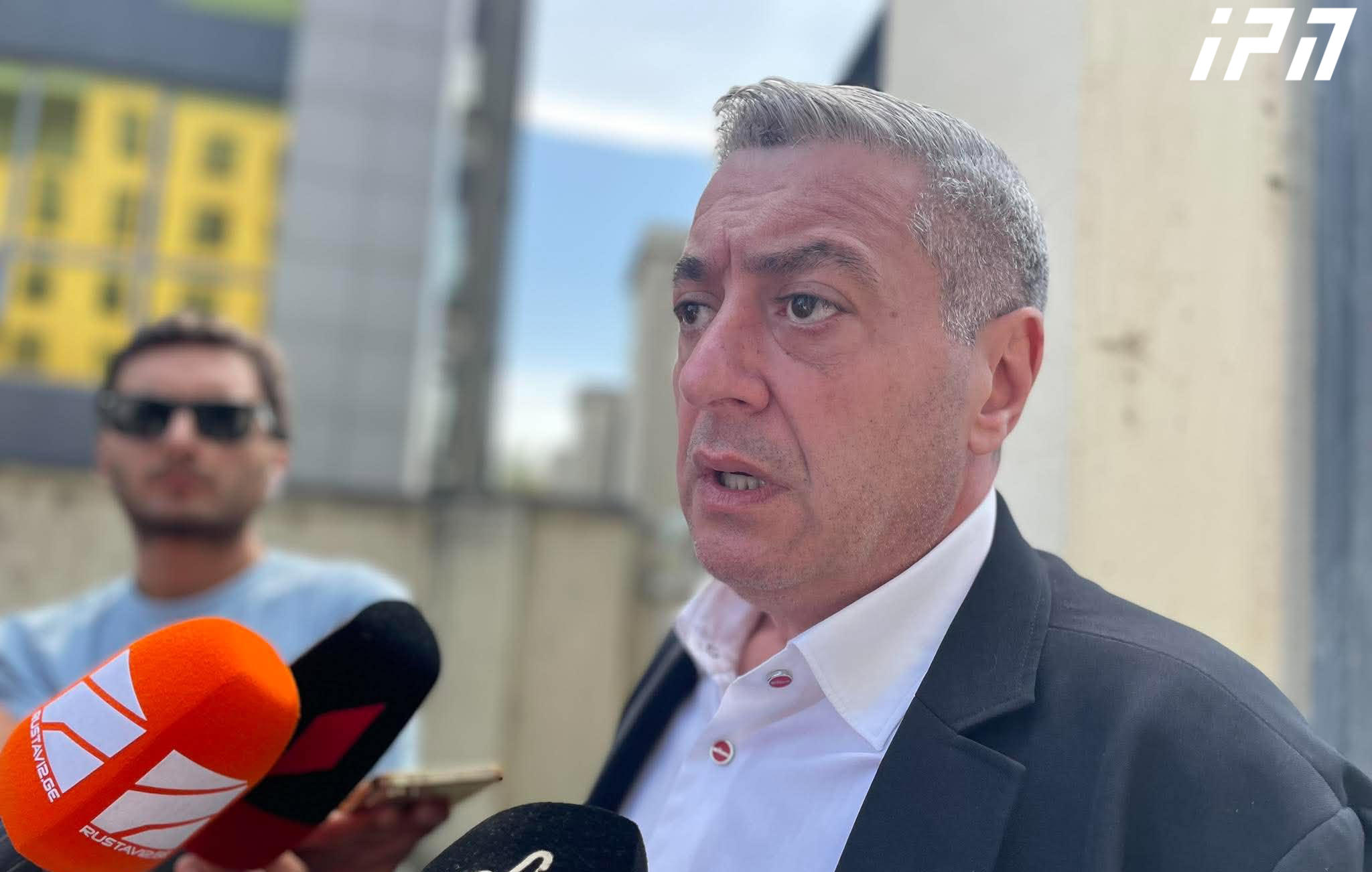
"I learned about this fact post factum, through the media; no official information regarding this matter had reached the Government Administration," Kakha Kakhishvili, the former Head of the Government Administration, stated when speaking to journalists after testifying at the Tbilisi City Court regarding the so-called Chorchana case.
According to Kakhishvili, his duties included reviewing all correspondence received by the Government Administration. The question concerned whether any official correspondence regarding this matter had been received during my tenure as Head of the Government Administration. No official information on this subject was received, because all documentation submitted to the Government Administration for consideration at cabinet meetings reached the Prime Minister through me. I would review and flag the materials, and then we would jointly set the agenda.
As for direct communication between a minister and the Prime Minister—naturally, they communicate with each other daily; they might even speak ten times a day. The Head of the Government Administration is not privy to such interactions, nor could they be, as this type of communication falls outside the scope of the Head of Administration's knowledge. The Head of the Government Administration is only aware of matters submitted officially—in the form of a letter or a written request for review.
I learned about this incident post factum, through the media. The courts are currently deliberating on whether any harm occurred; therefore, I do not wish to discuss the merits of the case today or offer assessments that might complicate the situation for the decision-makers. I can only speak to the facts related to my authority as Head of the Administration included reviewing all official correspondence submitted to the Government Administration for consideration. No such matters were officially submitted.
The minister and the prime minister maintained direct communication. Naturally, situations arise where a prime minister might consult with a specific minister twenty times a day; they wouldn't necessarily report that to me. To put it simply, the prime minister is the minister's superior; consequently, they naturally consult on any issue—whether related to personnel, structure, or other matters. Consultations without official documentation occur naturally among ministers as well, not just between the prime minister and a minister.
[Regarding whether Mamuka Bakhtadze was informed] I cannot rule it out; how could I rule out something I do not know?
Unlike a minister, the Head of the Government Administration does not hold a political office; therefore, the Head of the Administration could not interfere in the activities of the political team unless, for instance, the prime minister requested my presence at the discussion of such matters. When I was a minister, of course, I did attend. I was a political officeholder and, consequently, participated in the discussion of political decisions; however, at that time, I served as the Head of the Administration," stated Kakhi Kakhishvili.
Former Minister of Internal Affairs and former Prime Minister Giorgi Gakharia is the accused in the so-called Chorchana case. Charges have been brought against Giorgi Gakharia under Article 25 and Article 117, Part 3, Sub-clause "m," as well as Article 333, Part 2 of the Criminal Code of Georgia; these offenses carry a penalty of up to 13 years of imprisonment. According to the charges, Giorgi Gakharia unilaterally decided to erect an additional police checkpoint near the village of Chorchana along the occupation line. As a result, approximately one hundred hectares of forest came under the control of occupation forces, leading to various illegal activities and the movement of heavy military equipment toward populated areas; furthermore, the homes of residents from the Khashuri Municipality villages of Kobi and Tsnelisi ended up within the occupied territory.