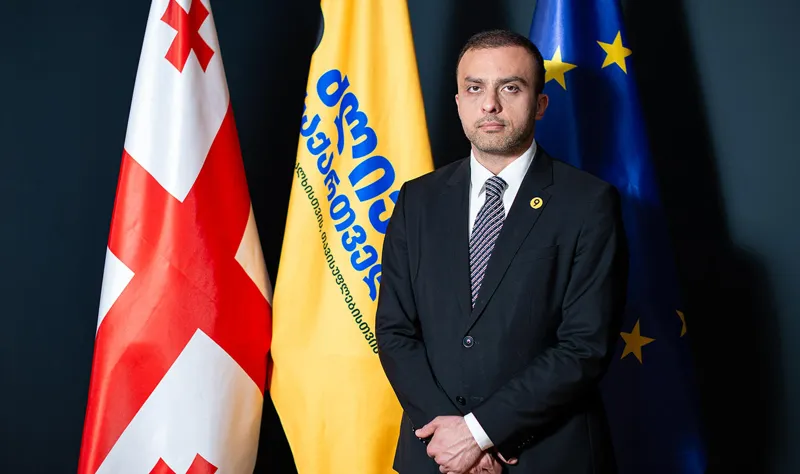
Mikheil Saakashvili: Beyond violence, there are many problems in prisons—sanitary conditions and food quality have deteriorated, and bringing in movies on flash drives has been banned; there are many senseless restrictions that I refuse to comply with, and I urge others to do the same
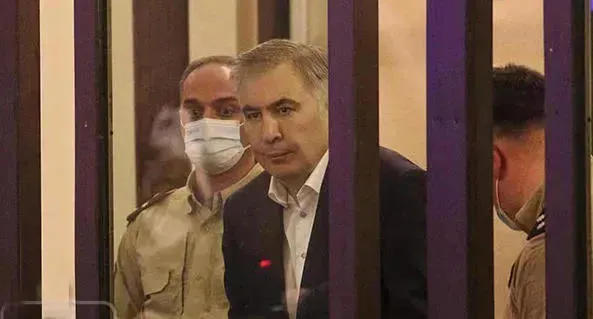
"Beyond violence, there are many other problems in prisons—especially recently, many senseless restrictions have been imposed; I do not and will not comply with them, and I urge others to do the same," Georgia's third president, Mikheil Saakashvili, writes on his Facebook page from prison.
As Saakashvili notes, "The prison population needs to be reduced by at least half, with the proviso that dangerous criminals are not released and the 'thieves-in-law' subculture—which has returned to prisons—is neutralized once again.”
“Beyond the issue of violence, there are many other problems in prisons. I have been in captivity for over five years now, and I can share my observations and experiences with you.
Over these years, the condition of the well-functioning prison blocks built during the National Movement era has deteriorated sharply due to neglect. Sanitary conditions have worsened significantly—especially in the last two or three years, apparently due to rising corruption—and food quality has plummeted catastrophically over the past two years. Most of the food is simply inedible, and at the same time, it is no longer possible to bring food in from the outside; while it used to be possible to receive parcels daily, now it is allowed only twice a month.
Recently, they banned the practice of bringing in movies on flash drives (which had provided a way for prisoners to pass the time).
I served as Minister of Justice during the Shevardnadze era and remember how horrific the prisons were back then; we subsequently demolished them and built new ones. Among other projects, we had initiated the construction of large penitentiary facilities meeting Norwegian standards prior to 2012. The 'Kotsi' [Georgian Dream] halted those projects. Instead, they built extensions onto existing facilities. For instance, an addition was built onto the Rustavi prison—where I am currently held—and a month ago, the structure cracked; a large fissure appeared between the old section and the part added by the "Kotsi" [ruling party] regime. I have to step over it every time I move through the corridor (how symbolic!).
Lately, in particular, they have imposed many senseless restrictions—rules I do not and will not obey, and I urge others to do the same. Don't let them push their fingers any deeper; speak up! Things couldn't possibly get any worse. Personally, I protest everything very loudly.
Since the institution of the Public Defender has effectively ceased to exist, it is crucial to demand regular access to prisons for a commission comprising representatives of civil society organizations and prisoners' family members. They must be given the opportunity to speak with prisoners, understand the rationale behind restrictions, challenge arbitrary limitations, raise the issue of the fair application of parole, and personally monitor food quality and sanitary conditions. They should also be able to hold the prison administration accountable for corruption. I say all this based on my personal experience and the fact that I learned things here that I could not have known from the outside—while also acknowledging that, alongside those imprisoned unjustly, the majority consists of genuine criminals from whom the general public must be protected; however, this must be done within a civilized and humane framework.
Ultimately, after much reflection, I have concluded that the prison population needs to be reduced by at least half—provided that dangerous offenders are not released and the 'thieves-in-law' subculture, which has resurfaced in prisons, is neutralized once again. It is unbearable to see that, under the 'Kotsi' [ruling party] administration, crime in the country is once again being orchestrated from within prisons," writes Saakashvili.