Head of Europe Division at Konrad Adenauer Foundation: The Georgian government did not offer us the opportunity to modify the political content of projects or to continue our work under different thematic conditions
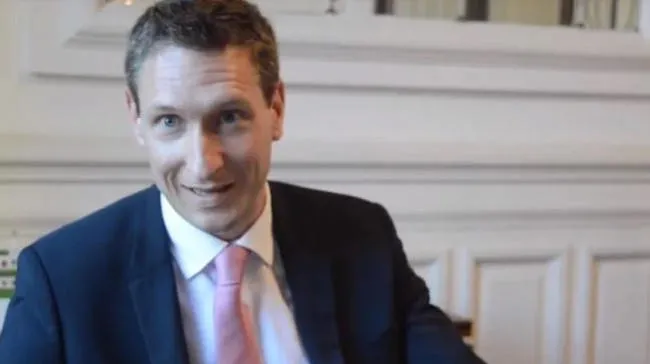
At no point were we offered an opportunity to discuss alternative programmes, modify project content or continue our work under different thematic conditions. No such conversation took place. On the contrary, the rejection of our applications formed part of a broader effort to reduce foreign political influence in Georgia and additional applications would likewise have little prospect of approval, Stefan Reith, Head of the Europe and North America Division at the Konrad Adenauer Foundation, said in an exclusive interview with InterPressNews. He responded to a question regarding comments made by the Speaker of the Georgian Parliament, Shalva Papuashvili, who had claimed that the foundation received a proposal from the Georgian government to abandon projects of a political nature—in which case the grant would have been approved.
As Stefan Reith noted, "No such conversation took place."
"At no point were we offered an opportunity to discuss alternative programmes, modify project content or continue our work under different thematic conditions. No such conversation took place. On the contrary, the message communicated to us through diplomatic channels was that the rejection of our applications formed part of a broader effort to reduce foreign political influence in Georgia and that additional applications would likewise have little prospect of approval," he noted.
Furthermore, Stefan Reith spoke in detail about the Konrad Adenauer Foundation projects, explaining the foundation's mission and objectives in Georgia; he noted that while their mandate was political in nature, it was never partisan, and that their goals align with the objectives enshrined in the Georgian Constitution.
„Our work has been directed towards strengthening democratic institutions, parliamentary development, civic participation, political education, the rule of law and constructive public dialogue.
Over the years, we developed particularly close relationships with representatives of the United National Movement during periods when it held political responsibility, while never limiting our engagement to a single party or political camp. We have maintained working contacts with governments, parliamentary representatives and a variety of political parties across Georgia's democratic spectrum, regardless of whether they were in government or opposition.
Such engagement forms part of the Foundation's mandate to facilitate dialogue, exchange experiences and share expertise. It does not constitute participation in Georgia's political competition. The principles governing German political foundations, including the requirement to maintain an appropriate distance from day-to-day party competition, guide our activities both in Germany and abroad.
Throughout our presence in Georgia, we have conducted our work openly and transparently. Our activities, publications, conferences and partnerships have been communicated publicly through our website, social media channels and public events. We have never concealed our objectives, our values or our partners.
We have supported discussions on constitutional development, democratic governance, European and Euro-Atlantic integration, regional cooperation and Georgia's long-term strategic interests. These are not foreign objectives. They are goals reflected in Georgia's Constitution, pursued by successive governments and supported by a large majority of the Georgian people.
We believe that Georgia is not becoming European; Georgia is European. Our aim has been to support the country in translating its historic European identity into strong institutions, sustainable prosperity, national resilience and closer cooperation with Europe and the transatlantic community.
For many years, support for Georgia's European integration has been one of the central pillars of our work. Together with Georgian partners and often with the support of the European Union, we have implemented projects designed to strengthen the knowledge, institutions and professional capacities required for closer integration with the EU. This has included supporting parliamentarians, local decision-makers, civil servants, experts, journalists, civil society actors and young leaders throughout the country, including in Georgia's regions.
Our objective has never been merely to discuss Europe, but to help prepare Georgia for the opportunities and responsibilities that come with deeper integration into the European family. We have contributed to public understanding of the European Union, encouraged informed debate on reforms and supported practical cooperation between Georgian and European institutions.
The European aspirations of Georgia did not originate outside the country. They emerged from Georgian society itself and have been affirmed repeatedly through democratic processes, public opinion and constitutional commitments. Supporting that aspiration has therefore meant supporting a path chosen by Georgia itself.
Dialogue has always been at the heart of our work. We have promoted exchanges across political divides, supported interreligious dialogue and worked closely with churches and faith communities. We believe that mutual respect, open discussion and a willingness to learn from one another are essential for democratic development and social cohesion.
Building bridges between Georgia, Germany and Europe has been another central part of our mandate. We have worked to deepen understanding of Georgia among political decision-makers, academics and the wider public in Germany and Brussels, highlighting the country's history, culture, achievements and aspirations. We have consistently advocated closer engagement with Georgia and greater appreciation of its importance as a European partner," said Stefan Reith in an interview.